
You are using an out of date browser. It may not display this or other websites correctly.
You should upgrade or use an alternative browser.
You should upgrade or use an alternative browser.
Aubervijan News
- Thread starter Aubervijr
- Start date

Aubervijr
Participant
Saint Constantijn Broadcasting Association
Sint Constantijn Omroepvereniging
Monday, 4th of July, 2022
8:00 AM
Ex-Chancellor Christian Floran Stan van Bunschoten dies, aged 97
Former conservative Chancellor Christian Floran Stan van Bunschoten has died 'peacefully' after suffering from a stroke at his residence in central Saint-Constantin.
Current Chancellor Johannes van der Capellen described him as a "a man who defined Aubervijr for decades, and will continue to do so for many decades to come", and offered his condolences to his family.
Van Bunschoten served as Chancellor from 1978 until 1990, and is one of the most influential Chancellors ever, loved by the people for his values and the way he stood up for the working class.
He refused the offer of a state funeral in his will, instead asking to be buried with his wife in a quiet ceremony. The ceremony, however, will be conducted with full military honours in nine days, in Saint Paul's Church, within his birth-town of Marum.
The Aubervijan flag was lowered to half-mast over the Chancellor's Residence, as well as over the President's Residence and the Houses of Parliament. Parliament has been recalled by the President in order to pay tribute, and will meet at noon today.
Christian van Bunschoten was born Samuel Christian Floran Stan van Bunschoten II on the 13th of May, 1925 to a wealthy, yet ill father Samuel I and his mother, Elise. Samuel Sr suddenly had taken ill with meningitis two days before Van Bunschoten birth and he died hours after he was born. Elise named Christian after Samuel, as per his wishes but couldn't bring herself to call him Samuel, so instead called him Christian.
Van Bunschoten studied mathematics at the University of Minnertsga, where he met who would become the first woman Chancellor of Aubervijr, Anneliese Rentmeester, who also studied mathematics there, however studied other subjects later on. Anneliese would later go on to become Chancellor, and Van Bunschoten would serve under her for 12 years - and 6 years as her depute.
Van Bunschoten married Margaretha Loman, a descendant of 19th-century Chancellor Sepp Loman, in 1938. Margaretha gave birth to twins, Eduard and Mila, however the couple divorced in 1943. Van Bunschoten then married Hendrika Anholts in 1945, and they had three children - Steven, Antonie and Sanne.
He thereafter graduated as a barrister, and in 1954 was invited to sit as a conservative MP, which he did until his retirement from politics following the 1990 general election.
Having prior served as secretary for business under Anneliese Rentmeester for 6 years, and then as her depute in her second term, he successfully won the party leadership elections of 1978, beating MP Jan Doorn. He then won the general election in the same year, and then won re-election in 1984. Anneliese would die in 1982 from cancer, at the age of 61, and Van Bunschoten attended her funeral, describing her as a teacher and friend, and added "she was much smarter than I will ever be".
Gerard Lucas Bezuidenhout, who replaced Van Bunschoten following the completion of his second term and subsequent retirement, described Van Bunschoten as a wise and passionate man, who stood up for what he believed in and did so with ferocious competency.
He was well liked by the public for helping the working class throughout his tenure, and was described by left-wing MPs as "the best of a bad bunch". Despite facing heavy criticism from inside his party at several points during his tenure, he always managed to keep the party united.
In his last public interview, conducted in March 2014, Van Bunschoten stated that he no longer supported the Conservative Party after a string of controversies associated with the party, and admitted to voting for the Republican Party, a moderate split from the party in the 2008 elections.
He stated he would be voting for them again in the 2014 elections that were in June, and suffered heavy criticism from Conservative Party loyalists, despite being one of the main reasons the Conservative Party continued to gain traction.
He criticised the Social Democratic Party's motion to ban parties they deemed "extremist", calling it a violation of the rights of a citizen in 2021, and urged Parliament not to pass the bill - which was his final public statement.
He died aged 97, which is the oldest a Chancellor has ever been. His lifestyle, especially as he first became Chancellor, involved heavy smoking and a dram of whiskey with lunch and champagne in the evenings, but he later smoked cigars instead of cigarettes as he grew older.
Following the death of his wife Hendrika in 2010, when she was 83, Van Bunschoten stayed positive, remarking to Sanne that "Hendrika wouldn't want me to mourn" - and was determined to live as long as he possibly could, which is safe to say, he did well.
Sint Constantijn Omroepvereniging
Monday, 4th of July, 2022
8:00 AM
Ex-Chancellor Christian Floran Stan van Bunschoten dies, aged 97
Former conservative Chancellor Christian Floran Stan van Bunschoten has died 'peacefully' after suffering from a stroke at his residence in central Saint-Constantin.
Current Chancellor Johannes van der Capellen described him as a "a man who defined Aubervijr for decades, and will continue to do so for many decades to come", and offered his condolences to his family.
Van Bunschoten served as Chancellor from 1978 until 1990, and is one of the most influential Chancellors ever, loved by the people for his values and the way he stood up for the working class.
He refused the offer of a state funeral in his will, instead asking to be buried with his wife in a quiet ceremony. The ceremony, however, will be conducted with full military honours in nine days, in Saint Paul's Church, within his birth-town of Marum.
The Aubervijan flag was lowered to half-mast over the Chancellor's Residence, as well as over the President's Residence and the Houses of Parliament. Parliament has been recalled by the President in order to pay tribute, and will meet at noon today.
Christian van Bunschoten was born Samuel Christian Floran Stan van Bunschoten II on the 13th of May, 1925 to a wealthy, yet ill father Samuel I and his mother, Elise. Samuel Sr suddenly had taken ill with meningitis two days before Van Bunschoten birth and he died hours after he was born. Elise named Christian after Samuel, as per his wishes but couldn't bring herself to call him Samuel, so instead called him Christian.
Van Bunschoten studied mathematics at the University of Minnertsga, where he met who would become the first woman Chancellor of Aubervijr, Anneliese Rentmeester, who also studied mathematics there, however studied other subjects later on. Anneliese would later go on to become Chancellor, and Van Bunschoten would serve under her for 12 years - and 6 years as her depute.
Van Bunschoten married Margaretha Loman, a descendant of 19th-century Chancellor Sepp Loman, in 1938. Margaretha gave birth to twins, Eduard and Mila, however the couple divorced in 1943. Van Bunschoten then married Hendrika Anholts in 1945, and they had three children - Steven, Antonie and Sanne.
He thereafter graduated as a barrister, and in 1954 was invited to sit as a conservative MP, which he did until his retirement from politics following the 1990 general election.
Having prior served as secretary for business under Anneliese Rentmeester for 6 years, and then as her depute in her second term, he successfully won the party leadership elections of 1978, beating MP Jan Doorn. He then won the general election in the same year, and then won re-election in 1984. Anneliese would die in 1982 from cancer, at the age of 61, and Van Bunschoten attended her funeral, describing her as a teacher and friend, and added "she was much smarter than I will ever be".
Gerard Lucas Bezuidenhout, who replaced Van Bunschoten following the completion of his second term and subsequent retirement, described Van Bunschoten as a wise and passionate man, who stood up for what he believed in and did so with ferocious competency.
He was well liked by the public for helping the working class throughout his tenure, and was described by left-wing MPs as "the best of a bad bunch". Despite facing heavy criticism from inside his party at several points during his tenure, he always managed to keep the party united.
In his last public interview, conducted in March 2014, Van Bunschoten stated that he no longer supported the Conservative Party after a string of controversies associated with the party, and admitted to voting for the Republican Party, a moderate split from the party in the 2008 elections.
He stated he would be voting for them again in the 2014 elections that were in June, and suffered heavy criticism from Conservative Party loyalists, despite being one of the main reasons the Conservative Party continued to gain traction.
He criticised the Social Democratic Party's motion to ban parties they deemed "extremist", calling it a violation of the rights of a citizen in 2021, and urged Parliament not to pass the bill - which was his final public statement.
He died aged 97, which is the oldest a Chancellor has ever been. His lifestyle, especially as he first became Chancellor, involved heavy smoking and a dram of whiskey with lunch and champagne in the evenings, but he later smoked cigars instead of cigarettes as he grew older.
Following the death of his wife Hendrika in 2010, when she was 83, Van Bunschoten stayed positive, remarking to Sanne that "Hendrika wouldn't want me to mourn" - and was determined to live as long as he possibly could, which is safe to say, he did well.
Last edited:
Aubervijr
Participant
Eemshaven Broadcasting Association
Saturday, 6th of October, 2023
Former government minister Calvin Faber jailed for six and a half years
Calvin Faber has been sentenced to six years and six months in prison after he was found guilty of corruption and tax evasion charges in court.
Eemshaven Police first began investigating Faber in September of 2017. At this time, Faber was serving as Minister for Transport in Rudolf Verstege’s Conservative government. Verstege was already suspicious of Faber, but was initially unaware of the police investigation until January 2020, when Verstege chose to suspend Faber.
Faber’s bank account received eight payments of 125,000 kruijns from June 2014 to January 2020, adding up to around 1,000,000 kruijns in total. These transactions were unexplained and were not part of his salary, and were deemed ‘suspicious’. These payments were revealed to have come from Josep Baas, a businessman, and a member of the Liberal Party.
Following Faber’s suspension from Parliament, a number of allegations came forward from MPs, accusing Faber of bribery and blackmail. The Commonwealth Revenue and Customs Service (CMRC) then opened a separate investigation into Faber, on grounds of tax evasion.
The CMRC visited Faber’s residence three times, and Faber started to pay his taxes following these visits, however he did not pay the money he owed prior.
However, the investigation into Faber’s crimes was postponed by Verstege, and was resumed by Chancellor Johannes van der Capellen after the Conservative Party lost the 2020 election. Police had to start from scratch with their investigation, and further inquiries dismissed Verstege as a possible suspect in the scandal that was unfolding.
Faber was first arrested in December of 2021, and was released on the condition he attended a number of court hearings, and was charged with tax evasion, bribery, blackmail and various other corruption charges, alongside Baas. Faber pleaded not guilty, and his court dates were delayed until January of 2023.
Faber’s appeal for a suspended sentence was rejected, and he was subsequently sentenced to six and a half years in prison. Faber has also been barred from ever returning to a position of power within Aubervijan politics, and several Conservative MPs have since resigned/been suspended due to their involvement with the scandal. Baas pleaded guilty and was sentenced to three years in prison, but could be released after a year and a half if his behaviour in prison is good.
Chancellor Van der Capellen has praised the outcome, stating that Aubervijr will not stand for, nor cooperate with corruption. Faber and Baas have been described as a ‘ring’ which infected Aubervijan politics. Van der Capellen made it clear that corruption will never go unpunished, and corruption always be found out, one way or another.
Saturday, 6th of October, 2023
Former government minister Calvin Faber jailed for six and a half years
Calvin Faber has been sentenced to six years and six months in prison after he was found guilty of corruption and tax evasion charges in court.
Eemshaven Police first began investigating Faber in September of 2017. At this time, Faber was serving as Minister for Transport in Rudolf Verstege’s Conservative government. Verstege was already suspicious of Faber, but was initially unaware of the police investigation until January 2020, when Verstege chose to suspend Faber.
Faber’s bank account received eight payments of 125,000 kruijns from June 2014 to January 2020, adding up to around 1,000,000 kruijns in total. These transactions were unexplained and were not part of his salary, and were deemed ‘suspicious’. These payments were revealed to have come from Josep Baas, a businessman, and a member of the Liberal Party.
Following Faber’s suspension from Parliament, a number of allegations came forward from MPs, accusing Faber of bribery and blackmail. The Commonwealth Revenue and Customs Service (CMRC) then opened a separate investigation into Faber, on grounds of tax evasion.
The CMRC visited Faber’s residence three times, and Faber started to pay his taxes following these visits, however he did not pay the money he owed prior.
However, the investigation into Faber’s crimes was postponed by Verstege, and was resumed by Chancellor Johannes van der Capellen after the Conservative Party lost the 2020 election. Police had to start from scratch with their investigation, and further inquiries dismissed Verstege as a possible suspect in the scandal that was unfolding.
Faber was first arrested in December of 2021, and was released on the condition he attended a number of court hearings, and was charged with tax evasion, bribery, blackmail and various other corruption charges, alongside Baas. Faber pleaded not guilty, and his court dates were delayed until January of 2023.
Faber’s appeal for a suspended sentence was rejected, and he was subsequently sentenced to six and a half years in prison. Faber has also been barred from ever returning to a position of power within Aubervijan politics, and several Conservative MPs have since resigned/been suspended due to their involvement with the scandal. Baas pleaded guilty and was sentenced to three years in prison, but could be released after a year and a half if his behaviour in prison is good.
Chancellor Van der Capellen has praised the outcome, stating that Aubervijr will not stand for, nor cooperate with corruption. Faber and Baas have been described as a ‘ring’ which infected Aubervijan politics. Van der Capellen made it clear that corruption will never go unpunished, and corruption always be found out, one way or another.
Last edited:
Aubervijr
Participant
Eemshaven Broadcasting Association
30th of November, 2023
Former President Olivier Stoepker dies aged 89
Former President of Aubervijr, Olivier Stoepker, has died in Eemshaven General Hospital (EGH) on Wednesday night, his family have announced. A statement by the Stoepker family read;
“It is with great sadness that we announce the death of our beloved husband, father, grandfather and great-grandfather, Olivier Cley Theodore Stoepker. He died peacefully in EGH surrounded by family late on Wednesday night. Please respect our privacy at this difficult time. Thank you.”
The family also paid tribute to Mr Stopeker’s achievements, and confirmed plans for memorials in both his hometown of Piaam and Eemshaven.
Mr Stoepker served as President from 1990 to 2002, having failed twice to become Chancellor, losing in both the 1978 and 1984 elections.
Former Chancellor, Gerard Bezuidenhout, who served at the same time as Mr Stoepker’s tenure, made a rare statement, saying Mr Stoepker was “a great man” and added that he will miss his “dear friend”. Mr Bezuidenhout has been living in recluse since his retirement in 2008 due to health concerns.
Mr Stoepker led the Liberal Party from 1978 to 1984. Mr Stoepker promised his party that they would be the dominant party in Parliament by 1984, but after losing seats following the 1984 elections, he resigned.
In 1990, he was elected as President by the Houses of Parliament, with his running mate becoming the first ever woman Vice President - Manon Thijssen.
In a statement, Mrs Thijssen said that Mr Stopeker was “a warm and kind gentleman who always put others before himself”. She added; “What’s more, Olivier was my friend for many years. He took the time to listen to me when nobody else did, and I can never thank him enough”.
Chancellor Johannes van der Capellen and current President Coenraad van Rijckevorsel have joined in offering their condolences. In a statement, Mr Van der Capellen said “Mr Stoepker was a brilliant, inspirational man. Although we did not always see eye to eye, my respect for Mr Stoepker is unwavering, and I offer my deepest condolences to his family”.
Mr Van Rijckevorsel made a separate statement, where he said “Every politician should aspire to be like Mr Stoepker. Even in the hardest of times, he always wore a warm smile. He was a strong leader, and Aubervijr will never forget him.”
Mr Stoepker retired from politics following the expiration of his second term in 2002, and lived a relatively quiet life with his family. He is known to have suffered from Alzheimer’s, but his family have not yet confirmed his cause of death.
30th of November, 2023
Former President Olivier Stoepker dies aged 89
Former President of Aubervijr, Olivier Stoepker, has died in Eemshaven General Hospital (EGH) on Wednesday night, his family have announced. A statement by the Stoepker family read;
“It is with great sadness that we announce the death of our beloved husband, father, grandfather and great-grandfather, Olivier Cley Theodore Stoepker. He died peacefully in EGH surrounded by family late on Wednesday night. Please respect our privacy at this difficult time. Thank you.”
The family also paid tribute to Mr Stopeker’s achievements, and confirmed plans for memorials in both his hometown of Piaam and Eemshaven.
Mr Stoepker served as President from 1990 to 2002, having failed twice to become Chancellor, losing in both the 1978 and 1984 elections.
Former Chancellor, Gerard Bezuidenhout, who served at the same time as Mr Stoepker’s tenure, made a rare statement, saying Mr Stoepker was “a great man” and added that he will miss his “dear friend”. Mr Bezuidenhout has been living in recluse since his retirement in 2008 due to health concerns.
Mr Stoepker led the Liberal Party from 1978 to 1984. Mr Stoepker promised his party that they would be the dominant party in Parliament by 1984, but after losing seats following the 1984 elections, he resigned.
In 1990, he was elected as President by the Houses of Parliament, with his running mate becoming the first ever woman Vice President - Manon Thijssen.
In a statement, Mrs Thijssen said that Mr Stopeker was “a warm and kind gentleman who always put others before himself”. She added; “What’s more, Olivier was my friend for many years. He took the time to listen to me when nobody else did, and I can never thank him enough”.
Chancellor Johannes van der Capellen and current President Coenraad van Rijckevorsel have joined in offering their condolences. In a statement, Mr Van der Capellen said “Mr Stoepker was a brilliant, inspirational man. Although we did not always see eye to eye, my respect for Mr Stoepker is unwavering, and I offer my deepest condolences to his family”.
Mr Van Rijckevorsel made a separate statement, where he said “Every politician should aspire to be like Mr Stoepker. Even in the hardest of times, he always wore a warm smile. He was a strong leader, and Aubervijr will never forget him.”
Mr Stoepker retired from politics following the expiration of his second term in 2002, and lived a relatively quiet life with his family. He is known to have suffered from Alzheimer’s, but his family have not yet confirmed his cause of death.
Aubervijr
Participant
Harlingen Broadcasting Association
Wiebe Groeneveld resigns as leader of Labour Party
10th of June, 2024
9:37 AM
Wiebe Groeneveld has resigned as leader of the Labour Party, which he has led since 2015.
Mr Groeneveld released a statement this morning, which read; “I have decided to resign as the Labour Party’s leader with immediate effect. It was a hard decision to make, but I feel it is the right one. I will continue to serve an MP, and will not leave the party. I have dedicated my career to this party and I do not intend to stop now.”
He added; “I need to do what I feel is right, not just for myself, but for my family and the party. I feel it is the right time for me to take a step back and now focus on the community I represent in parliament.”
Mr Groeneveld’s depute, Andries ‘Dries’ Hoogstraten, will assume leadership of the party until a leadership election is held, which is currently being scheduled.
Rumours surrounding Mr Groeneveld’s resignation have been circulating for months. However, the Harlingen Broadcasting Association’s political editor, Heidi Kamp, reported that he was not intending to resign before the upcoming 2027 election.
His resignation follows the midterm polls, which occurred in April, earlier this year. Labour lost out to the Social Democrats across the country and saw their biggest decrease in popularity since 2009.
Mr Groeneveld added that Labour would need a new leader to repair the party’s relationship with the Aubervijan people, adding that he was no longer capable and had simply run out of energy.
Two MPs have currently been nominated to succeed Mr Groeneveld; Claes Jorissen and Hilda Kerckhoff. Mr Jorissen is an experienced Labour MP who was sitting as an MP since the 1990s. Ms Kerckhoff is a younger and somewhat less experienced politician. Most of her nominations come from the younger members of the party, who think Ms Kerckhoff can lead the party into a new era.
Mr Hoogstraten was also nominated, however he turned down the opportunity.
The party will hold a ballot to formally elect their new leader, with the vote due to close on the 20th of June.
Mr Groeneveld’s decision to resign has been met with mixed reactions across the party. A Labour spokesperson said that ‘Wiebe’s leadership will be missed’, whilst another said stepping down was ‘a hard decision, but the right decision’.
Mr Jorissen has already confirmed he will be standing in the leadership election. There is a distinct possibility that Ms Kerckhoff could remove herself from the election and instead back Mr Jorissen, which would likely mean that Ms Kerckhoff would serve as the party’s depute leader.
Wiebe Groeneveld resigns as leader of Labour Party
10th of June, 2024
9:37 AM
Wiebe Groeneveld has resigned as leader of the Labour Party, which he has led since 2015.
Mr Groeneveld released a statement this morning, which read; “I have decided to resign as the Labour Party’s leader with immediate effect. It was a hard decision to make, but I feel it is the right one. I will continue to serve an MP, and will not leave the party. I have dedicated my career to this party and I do not intend to stop now.”
He added; “I need to do what I feel is right, not just for myself, but for my family and the party. I feel it is the right time for me to take a step back and now focus on the community I represent in parliament.”
Mr Groeneveld’s depute, Andries ‘Dries’ Hoogstraten, will assume leadership of the party until a leadership election is held, which is currently being scheduled.
Rumours surrounding Mr Groeneveld’s resignation have been circulating for months. However, the Harlingen Broadcasting Association’s political editor, Heidi Kamp, reported that he was not intending to resign before the upcoming 2027 election.
His resignation follows the midterm polls, which occurred in April, earlier this year. Labour lost out to the Social Democrats across the country and saw their biggest decrease in popularity since 2009.
Mr Groeneveld added that Labour would need a new leader to repair the party’s relationship with the Aubervijan people, adding that he was no longer capable and had simply run out of energy.
Two MPs have currently been nominated to succeed Mr Groeneveld; Claes Jorissen and Hilda Kerckhoff. Mr Jorissen is an experienced Labour MP who was sitting as an MP since the 1990s. Ms Kerckhoff is a younger and somewhat less experienced politician. Most of her nominations come from the younger members of the party, who think Ms Kerckhoff can lead the party into a new era.
Mr Hoogstraten was also nominated, however he turned down the opportunity.
The party will hold a ballot to formally elect their new leader, with the vote due to close on the 20th of June.
Mr Groeneveld’s decision to resign has been met with mixed reactions across the party. A Labour spokesperson said that ‘Wiebe’s leadership will be missed’, whilst another said stepping down was ‘a hard decision, but the right decision’.
Mr Jorissen has already confirmed he will be standing in the leadership election. There is a distinct possibility that Ms Kerckhoff could remove herself from the election and instead back Mr Jorissen, which would likely mean that Ms Kerckhoff would serve as the party’s depute leader.
Last edited:
Aubervijr
Participant
2024 General Election: What’s happened, and what happens next
By Anton Brands & Adam van Houten
ABV News in Harlingen & Enschede
23 June 2024
Johannes van der Capellen’s Sociaal-Democratische Partij (SDP) has secured a second consecutive majority in the Parliament of Aubervijr following yesterday’s general election, with voters delivering a resounding endorsement of his leadership and party’s direction.
 Van der Capellen, visibly elated during a late-night interview on the eve of election day with ABV’s Saskia Garritsen.
Van der Capellen praised his party’s performance while speaking to supporters gathered outside het Kanselierhuis; the Chancellor’s official residence in Harlingen. “We stood by the people, and they stood by us,” he said, raising a glass with senior cabinet members in what observers described as a confident but humble victory appearance.
While both the Conservative Party and the Social Alternatives lost seats compared to the 2020 election, they fell short of unseating the SDP, which retained its dominant position in the 800 seat legislature with 290 seats. The SDP's long term coalition partner, the Democratic Centre, equally lost seats compared to 2020.
In a speech delivered from the Kanseliersterras just after sunrise, Van der Capellen struck a statesmanlike tone:
“I am glad the Aubervijan people have placed their trust and faith in this government. It is clear to see that we have - and will continue to - serve you, the people, to the utmost of our ability.” He went on to promise an “acceleration” of the country’s ongoing period of unprecedented economic growth, pledging continued investment in infrastructure, healthcare, and educational reform.
President Coenraad van Rijckevorsel released a brief statement congratulating Van der Capellen and the SDP on their victory, calling the result “a clear mandate” and stating that he looks forward to “continued, constructive cooperation.”

Since taking office in 2020, Johannes van der Capellen has steadily grown into one of Aubervijr’s most recognisable and respected political figures.
Born in Enschede to a middle-class family, his father a civil engineer, his mother a university lecturer, Johannes initially served as a military legal advisor, before moving into academia as a constitutional law professor. He entered politics in his late 30s, quickly rising through the ranks of the SDP thanks to his legal precision, dry wit, and refusal to engage in the kind of political showmanship that characterised the previous decade.
“Van der Capellen made his voters proud with how he ran the country,” said ABV’s chief political correspondent, Lambert Baack. “We spoke to hundreds of voters across April, and the consensus was striking: they described him as impossible to rattle.”
Van der Capellen’s first term was defined by fiscal pragmatism and social moderation. His government introduced reforms to streamline bureaucracy and reduce inefficiencies while maintaining key welfare protections, a balancing act that earned him praise from moderates across the spectrum.
He is known for emphasising “measurable progress over ideological noise”, and famously quipped that “coalitions are not dinner parties, they’re rescue missions”, a line that has since become shorthand for his no-nonsense leadership style.
Even rivals within the Conservative Party and the Social Alternatives have acknowledged his debating skills, describing his tone as “calm, sardonic, and razor-sharp”. His ability to defuse tension with subtle humour, coupled with his mastery of parliamentary procedure, has made him a formidable presence in the Huis.
Within the SDP, Van der Capellen is widely seen as the unifying force that brought the party back from the brink of fragmentation; a stabilising leader in an era that had been marked by coalition volatility and voter fatigue.
Reactions from Opposition Leaders
Reactions from opposition leaders arrived swiftly following the confirmation of the SDP’s landslide victory. Gregoor Dejaeghere, leader of the Conservative party - now confirmed as the second-largest party in the Parliament - issued a formal statement within minutes of the final tally:
“I’d like to congratulate Johannes and his party on their comprehensive victory in tonight’s election. The electorate has spoken, and we respect that result.”
He continued: “I also want to take this moment to thank all those who placed their trust in our party. We’ve made significant gains, and we do not take that support lightly. We will continue to stand firm on our principles of economic responsibility, national cohesion, and cultural continuity, and we will not waver in our duty to hold this government accountable.”
 Dejaeghere’s tone was respectful but unmistakably resolute, signalling the party's intention to assert itself more forcefully over the next term as the SDP’s principal challenger.
Meanwhile, Lillian Evenepoel, leader of the Social Alternative Party, now Parliament’s fourth largest party, delivered her own remarks from party headquarters in Deventer. Speaking before a modest but energized crowd of supporters, Evenepoel struck a more impassioned tone:
“To the people of Aubervijr - thank you. We’ve grown in strength, in clarity, and in voice. We may not have won tonight, but we have been heard.”
“I congratulate Chancellor Van der Capellen and his party on their result. But let it be clear; this election was not a blank cheque. Millions of Aubervijans voted for change, for labour, for dignity. We will stand in Parliament with courage, and we will fight every step of the way to deliver a just economy and a fairer society.”

Evenepoel congratulating her colleagues on a strong result in last night’s elections.
Evenepoel’s speech was received with chants of “arbeid! arbeid!” from the crowd, and her party’s internal figures expressed satisfaction at their consistent upward momentum since the 2017 collapse. Analysts expect the Social Alternatives to be a louder voice in Parliament, especially on cost-of-living and housing issues.
So, What’s Next?
With the SDP securing a decisive lead in Parliament, attention now shifts to the business of governance. Despite Chancellor Johannes van der Capellen’s enduring popularity and reputation for competence, the SDP has fallen well short of an outright majority. 290 seats out of 800 tells a clear story: voters admire him, but Aubervijr’s political terrain remains fragmented, pluralistic, and ideologically diverse.
The result is commanding but far from conclusive. Van der Capellen now faces a strategic crossroads: attempt to govern as a minority with tactical support from smaller parties, or pursue a confidence-and-supply framework that offers more predictable legislative stability without the full entanglements of coalition government.
Our political analysts believe Van der Capellen will opt for the latter; confidence and supply agreements with Democratic Centre, which formed the basis for his 2020-2024 coalition government. The DC share a broad alignment with the SDP on fiscal pragmatism, institutional reform, and progressive but measured social policy. These arrangements would allow the SDP to maintain policy leadership while securing issue based support on major legislative packages; housing, energy, infrastructure, welfare recalibration and beyond.
However, Van der Capellen will govern under heightened scrutiny. The Conservative Party remains as a resurgent force, despite having lost seats, they appear to have consolidated the centre right opposition. Meanwhile, the Social Alternatives continues to galvanise support among the lower middle class and organised labour.
The next few weeks promise negotiations behind closed doors as Van der Capellen and his team shape their second term agendas, form key alliances and prepare the next Cabinet. Key policy questions loom, from housing reform and continued energy independence to infrastructure expansion and welfare recalibration. With the electorate delivering a vote of confidence but not carte blanche, the Chancellor is expected to lead with a pragmatic, consensus-driven approach.
Coalition manoeuvres, cabinet shifts and legislative priorities now dominate the political conversation in Harlingen. The new government is expected to be formally sworn in before the end of the month.
The Cabinet: Who Stays, Who Goes?
Van der Capellen is yet to unveil his second-term cabinet, but our political analysts expect it to be familiar. Of course, new aspects have to be taken into account; perhaps quiet reshuffling and of course, strategic inclusion. Van der Capellen will retain key loyalists in senior positions while no doubt extending a cautious hand to allied parties who may back his minority government. The previous cabinet was broadly seen as competent and cohesive, with several ministers gaining reputations for effectiveness and discretion. Many are expected to return, while others may be moved or dismissed depending on political strategy and cooperational demands.
So, who stays?

Behind the speeches, press conferences and votes lies the quiet engine room of the SDP: Johannes van der Capellen and Wilco Faber, pictured above.
Who may be reshuffled or promoted?
New faces?
Portfolios under scrutiny?
What will the new government tackle first?
Though alliance building will occupy much of the coming weeks, ABV’s political desk understands that several major policy areas are already being drawn up behind the scenes.
Top of the list, as stated earlier, is housing. With urban affordability continuing to strain lower and middle-income families, the SDP is expected to revive a shelved 2023 housing bill that would expand public and private development incentives while simultaneously tightening speculation regulations. A renewed National Housing Accord is expected to be tabled before summer recess.
Energy independence is another pressing issue. Aubervijr’s slow transition away from imported fossil fuels over the past decade has accelerated since 2017, but supply instability during last winter’s cold snap revealed gaps in resilience. The Ministry of Energy is likely to prioritise new subsidies for wind and nuclear capacity, alongside fast-tracked infrastructure projects in key coastal regions,
Education reform is also set to return to the floor. While the SDP’s first term focused on higher education investment, their second will likely expand support for vocational training and regional universities, with emphasis on digital skills, research innovation and rural access.
On the fiscal front, Van der Capellen is expected to maintain his cautious, balanced approach. Though pressure from the Social Alternatives may push the government to increase spending on healthcare and pensions, insiders expect the Chancellor to hold the line on deficit targets, opting for measured social investment over sweeping overhauls.
In addition, several administrative efficiency reforms are being finalised. These include digitalisation of civil services, restructuring of interministerial councils, and potential changes to how regional funds are allocated to underperforming provinces.
None of this will be without difficulty. Even with broad policy alignment among supporting parties, Van der Capellen’s government will need to navigate a deeply fragmented Parliament, and a revitalised opposition eager to exploit any misstep.
But if the SDP’s second term mirrors the first, observers expect progress to continue, as it has done for the past four years; quiet, pragmatic and unmistakably Aubervijan.
Many parties already have their eyes set on the 2028 elections. Van der Capellen will be constitutionally obligated to step-down from party leadership, in accordance with the two-term limit. But for the next four years, Aubervijr is, once again, Social Democratic.
By Anton Brands & Adam van Houten
ABV News in Harlingen & Enschede
23 June 2024
Johannes van der Capellen’s Sociaal-Democratische Partij (SDP) has secured a second consecutive majority in the Parliament of Aubervijr following yesterday’s general election, with voters delivering a resounding endorsement of his leadership and party’s direction.
Van der Capellen praised his party’s performance while speaking to supporters gathered outside het Kanselierhuis; the Chancellor’s official residence in Harlingen. “We stood by the people, and they stood by us,” he said, raising a glass with senior cabinet members in what observers described as a confident but humble victory appearance.
While both the Conservative Party and the Social Alternatives lost seats compared to the 2020 election, they fell short of unseating the SDP, which retained its dominant position in the 800 seat legislature with 290 seats. The SDP's long term coalition partner, the Democratic Centre, equally lost seats compared to 2020.
In a speech delivered from the Kanseliersterras just after sunrise, Van der Capellen struck a statesmanlike tone:
“I am glad the Aubervijan people have placed their trust and faith in this government. It is clear to see that we have - and will continue to - serve you, the people, to the utmost of our ability.” He went on to promise an “acceleration” of the country’s ongoing period of unprecedented economic growth, pledging continued investment in infrastructure, healthcare, and educational reform.
President Coenraad van Rijckevorsel released a brief statement congratulating Van der Capellen and the SDP on their victory, calling the result “a clear mandate” and stating that he looks forward to “continued, constructive cooperation.”
The President gave a warm address despite his stoneface expression throughout.
A Leader Who Won the Nation
Since taking office in 2020, Johannes van der Capellen has steadily grown into one of Aubervijr’s most recognisable and respected political figures.
Born in Enschede to a middle-class family, his father a civil engineer, his mother a university lecturer, Johannes initially served as a military legal advisor, before moving into academia as a constitutional law professor. He entered politics in his late 30s, quickly rising through the ranks of the SDP thanks to his legal precision, dry wit, and refusal to engage in the kind of political showmanship that characterised the previous decade.
“Van der Capellen made his voters proud with how he ran the country,” said ABV’s chief political correspondent, Lambert Baack. “We spoke to hundreds of voters across April, and the consensus was striking: they described him as impossible to rattle.”
Policy, Pragmatism, and Power
Van der Capellen’s first term was defined by fiscal pragmatism and social moderation. His government introduced reforms to streamline bureaucracy and reduce inefficiencies while maintaining key welfare protections, a balancing act that earned him praise from moderates across the spectrum.
He is known for emphasising “measurable progress over ideological noise”, and famously quipped that “coalitions are not dinner parties, they’re rescue missions”, a line that has since become shorthand for his no-nonsense leadership style.
Even rivals within the Conservative Party and the Social Alternatives have acknowledged his debating skills, describing his tone as “calm, sardonic, and razor-sharp”. His ability to defuse tension with subtle humour, coupled with his mastery of parliamentary procedure, has made him a formidable presence in the Huis.
Within the SDP, Van der Capellen is widely seen as the unifying force that brought the party back from the brink of fragmentation; a stabilising leader in an era that had been marked by coalition volatility and voter fatigue.
Reactions from Opposition Leaders
Reactions from opposition leaders arrived swiftly following the confirmation of the SDP’s landslide victory. Gregoor Dejaeghere, leader of the Conservative party - now confirmed as the second-largest party in the Parliament - issued a formal statement within minutes of the final tally:
“I’d like to congratulate Johannes and his party on their comprehensive victory in tonight’s election. The electorate has spoken, and we respect that result.”
He continued: “I also want to take this moment to thank all those who placed their trust in our party. We’ve made significant gains, and we do not take that support lightly. We will continue to stand firm on our principles of economic responsibility, national cohesion, and cultural continuity, and we will not waver in our duty to hold this government accountable.”
Meanwhile, Lillian Evenepoel, leader of the Social Alternative Party, now Parliament’s fourth largest party, delivered her own remarks from party headquarters in Deventer. Speaking before a modest but energized crowd of supporters, Evenepoel struck a more impassioned tone:
“To the people of Aubervijr - thank you. We’ve grown in strength, in clarity, and in voice. We may not have won tonight, but we have been heard.”
“I congratulate Chancellor Van der Capellen and his party on their result. But let it be clear; this election was not a blank cheque. Millions of Aubervijans voted for change, for labour, for dignity. We will stand in Parliament with courage, and we will fight every step of the way to deliver a just economy and a fairer society.”
Evenepoel congratulating her colleagues on a strong result in last night’s elections.
So, What’s Next?
With the SDP securing a decisive lead in Parliament, attention now shifts to the business of governance. Despite Chancellor Johannes van der Capellen’s enduring popularity and reputation for competence, the SDP has fallen well short of an outright majority. 290 seats out of 800 tells a clear story: voters admire him, but Aubervijr’s political terrain remains fragmented, pluralistic, and ideologically diverse.
The result is commanding but far from conclusive. Van der Capellen now faces a strategic crossroads: attempt to govern as a minority with tactical support from smaller parties, or pursue a confidence-and-supply framework that offers more predictable legislative stability without the full entanglements of coalition government.
Our political analysts believe Van der Capellen will opt for the latter; confidence and supply agreements with Democratic Centre, which formed the basis for his 2020-2024 coalition government. The DC share a broad alignment with the SDP on fiscal pragmatism, institutional reform, and progressive but measured social policy. These arrangements would allow the SDP to maintain policy leadership while securing issue based support on major legislative packages; housing, energy, infrastructure, welfare recalibration and beyond.
However, Van der Capellen will govern under heightened scrutiny. The Conservative Party remains as a resurgent force, despite having lost seats, they appear to have consolidated the centre right opposition. Meanwhile, the Social Alternatives continues to galvanise support among the lower middle class and organised labour.
The next few weeks promise negotiations behind closed doors as Van der Capellen and his team shape their second term agendas, form key alliances and prepare the next Cabinet. Key policy questions loom, from housing reform and continued energy independence to infrastructure expansion and welfare recalibration. With the electorate delivering a vote of confidence but not carte blanche, the Chancellor is expected to lead with a pragmatic, consensus-driven approach.
Coalition manoeuvres, cabinet shifts and legislative priorities now dominate the political conversation in Harlingen. The new government is expected to be formally sworn in before the end of the month.
The Cabinet: Who Stays, Who Goes?
Van der Capellen is yet to unveil his second-term cabinet, but our political analysts expect it to be familiar. Of course, new aspects have to be taken into account; perhaps quiet reshuffling and of course, strategic inclusion. Van der Capellen will retain key loyalists in senior positions while no doubt extending a cautious hand to allied parties who may back his minority government. The previous cabinet was broadly seen as competent and cohesive, with several ministers gaining reputations for effectiveness and discretion. Many are expected to return, while others may be moved or dismissed depending on political strategy and cooperational demands.
So, who stays?
- Wilco Faber, Van der Capellen’s Deputy, right-hand man and most trusted ally, will almost certainly retain his position.
- Minister of Finance, Arend Bouwman, credited with managing the Republic’s strong fiscal record, is expected to retain his role.
- Minister of State for Defence and National Security, Coen Stegeman, is unlikely to be moved amid continued continental uncertainty.
- Melanie Peeters, Minister of State for Social Policy and Labour, earned praise for her reforms in worker protections and welfare optimisation, and is expected to retain her role.
- Minister of State for Culture, Sport and National Identity, Samuel Lenssen, remains a key bridge to nationalist-liberal factions and is seen as ideologically dependable. He too, is likely to retain his role.
Behind the speeches, press conferences and votes lies the quiet engine room of the SDP: Johannes van der Capellen and Wilco Faber, pictured above.
Who may be reshuffled or promoted?
- Christian Naessens, currently Minister of Trade and Industry, may be promoted to a Minister of State role, possibly taking over Economic Development or Finance in the long term.
- Jakob Stenvers, Minister of Justice, may be moved or replaced amid recent judicial controversies. Our political insiders suggest Sara Koelmans, current deputy minister to Stenvers, is the front-runner to succeed him. Another name that has been suggested is Marinus de Wilde, a former judge turned Member of Parliament. He has had extensive experience with sentencing policy.
- Sophie Molenaar, Minister of Health, could shift to a higher-profile post after deftly managing recent healthcare reforms. However, some suggest Van der Capellen wants someone experienced and loyal to keep these reforms going, indicating she may instead stay in her position.
New faces?
- Lillian Sinnaeve, currently the Presidential Envoy, has been tipped to receive a more prominent ministerial role due to her rising profile within the SDP.
- Thomas Fonteyn may be appointed to reflect the party’s expected confidence and supply alliances. Vicky Manders is a name from the Democratic Centre that has been mentioned.
Portfolios under scrutiny?
- Ministries such as Tourism, Sport and Media may see consolidation or reshuffling, especially as Van der Capellen pursues efficiency across government departments.
- A renewed focus on Energy and Housing could lead to expanded responsibilities or the appointment of new councils or committees.
What will the new government tackle first?
Though alliance building will occupy much of the coming weeks, ABV’s political desk understands that several major policy areas are already being drawn up behind the scenes.
Top of the list, as stated earlier, is housing. With urban affordability continuing to strain lower and middle-income families, the SDP is expected to revive a shelved 2023 housing bill that would expand public and private development incentives while simultaneously tightening speculation regulations. A renewed National Housing Accord is expected to be tabled before summer recess.
Energy independence is another pressing issue. Aubervijr’s slow transition away from imported fossil fuels over the past decade has accelerated since 2017, but supply instability during last winter’s cold snap revealed gaps in resilience. The Ministry of Energy is likely to prioritise new subsidies for wind and nuclear capacity, alongside fast-tracked infrastructure projects in key coastal regions,
Education reform is also set to return to the floor. While the SDP’s first term focused on higher education investment, their second will likely expand support for vocational training and regional universities, with emphasis on digital skills, research innovation and rural access.
On the fiscal front, Van der Capellen is expected to maintain his cautious, balanced approach. Though pressure from the Social Alternatives may push the government to increase spending on healthcare and pensions, insiders expect the Chancellor to hold the line on deficit targets, opting for measured social investment over sweeping overhauls.
In addition, several administrative efficiency reforms are being finalised. These include digitalisation of civil services, restructuring of interministerial councils, and potential changes to how regional funds are allocated to underperforming provinces.
None of this will be without difficulty. Even with broad policy alignment among supporting parties, Van der Capellen’s government will need to navigate a deeply fragmented Parliament, and a revitalised opposition eager to exploit any misstep.
But if the SDP’s second term mirrors the first, observers expect progress to continue, as it has done for the past four years; quiet, pragmatic and unmistakably Aubervijan.
Many parties already have their eyes set on the 2028 elections. Van der Capellen will be constitutionally obligated to step-down from party leadership, in accordance with the two-term limit. But for the next four years, Aubervijr is, once again, Social Democratic.
Last edited:
Aubervijr
Participant
Statement from the Office of the Chancellor of the Republic of Aubervijr
Verklaring van het Bureau van de Kanselier van Republiek Aubervijr
As of the 11th of January, 2026.
The Government of Aubervijr is closely monitoring reports of a serious naval incident in the Tangerine Sea involving the forces of Scalvia and Sainaam.
Any exchange of fire in a region of strategic importance is a matter of significant concern for national and continental stability. Aubervijr urges restraint by all parties while the circumstances of the incident are clarified, and stresses the importance of preventing further escalation or miscalculation.
The National Security Council has convened to assess the implications for regional stability and maritime security. Given the proximity of the incident to Aubervijan maritime approaches and key regional sea lanes, the situation is being reviewed with appropriate seriousness. Relevant maritime authorities have issued precautionary guidance to civilian shipping operating in the wider Tangerine Sea region.
Aubervijr supports de-escalation, the protection of civilian life and the use of diplomatic channels to contain tensions. Aubervijr's intelligence and maritime authorities are actively assessing the evolving situation in close coordination with partners and will continue to review our position as further information becomes available.
Aubervijr will raise the incident within the Association of Nations and supports collective diplomatic efforts to prevent further escalation.
The Ministry of Foreign Affairs is reviewing travel guidance for the region and advises citizens to remain alert to official updates. These updates may appear suddenly as the situation continues to develop.

Johannes van der Capellen
Chancellor of the Republic of Aubervijr
Kanselier van de Republiek Aubervijr
Verklaring van het Bureau van de Kanselier van Republiek Aubervijr
As of the 11th of January, 2026.
The Government of Aubervijr is closely monitoring reports of a serious naval incident in the Tangerine Sea involving the forces of Scalvia and Sainaam.
Any exchange of fire in a region of strategic importance is a matter of significant concern for national and continental stability. Aubervijr urges restraint by all parties while the circumstances of the incident are clarified, and stresses the importance of preventing further escalation or miscalculation.
The National Security Council has convened to assess the implications for regional stability and maritime security. Given the proximity of the incident to Aubervijan maritime approaches and key regional sea lanes, the situation is being reviewed with appropriate seriousness. Relevant maritime authorities have issued precautionary guidance to civilian shipping operating in the wider Tangerine Sea region.
Aubervijr supports de-escalation, the protection of civilian life and the use of diplomatic channels to contain tensions. Aubervijr's intelligence and maritime authorities are actively assessing the evolving situation in close coordination with partners and will continue to review our position as further information becomes available.
Aubervijr will raise the incident within the Association of Nations and supports collective diplomatic efforts to prevent further escalation.
The Ministry of Foreign Affairs is reviewing travel guidance for the region and advises citizens to remain alert to official updates. These updates may appear suddenly as the situation continues to develop.
Johannes van der Capellen
Chancellor of the Republic of Aubervijr
Kanselier van de Republiek Aubervijr
Last edited:
Aubervijr
Participant
Statement from the Office of the Chancellor of the Republic of Aubervijr
Verklaring van het Bureau van de Kanselier van Republiek Aubervijr
As of the 12th of January, 2026
The Government of Aubervijr is deeply concerned by the confirmed escalation in the Tangerine Sea and the loss of life reported yesterday evening. We extend our condolences to the families of the Scalvian personnel killed in this incident and recognise the seriousness of a situation in which armed engagements are now occurring in close proximity to major civilian air and maritime routes.
Aubervijr notes with grave concern the confirmation that live fire has occurred against unarmed aircraft and that further military actions are ongoing. The Tangerine Sea is not only a strategic body of water but a vital corridor for international trade, civilian aviation and maritime traffic, including Aubervijan commercial and civilian vessels. Any sustained instability in this region poses direct risks to civilian safety and wider regional stability.
Given the proximity of the incident to key civilian and commercial routes, Aubervijr has moved to a heightened state of preparedness to ensure the safety of navigation and airspace. In this context, Aubervijr is now issuing maritime safety bulletins and operational guidance for civilian traffic transiting the Tangerine Sea, with the aim of minimising disruption while reducing the risk of congestion, miscalculation, and accidental incidents. Aubervijan authorities are also sharing relevant hydrographic, meteorological and traffic-density data with regional partners to support safe passage and maintain situational awareness during this period of heightened uncertainty.
In response, the Government has convened an extraordinary meeting of the National Security Committee and has raised maritime and aviation readiness levels in southern approaches. Relevant civilian authorities have been instructed to issue updated travel and maritime advisories and Aubervijan naval and air surveillance assets are being tasked to enhance situational awareness in coordination with partners.
Aubervijr will not allow unlawful or destabilising actions to disrupt the free and safe movement of civilian maritime and air traffic. Civilian shipping and aviation operating in accordance with international law will continue to transit the Tangerine Sea and its surrounding airspace. Aubervijr is taking all necessary measures to ensure that this activity can proceed safely, confidently and without intimidation.
Aubervijr is in active and continuous contact with partner governments to exchange information, de-conflict civilian movements and ensure transparency regarding developments in the area. Relevant intelligence and satellite-derived information is being assessed as a matter of urgency to establish a clear and accurate picture of events as they unfold.
Aubervijr strongly urges all parties to exercise maximum restraint and to avoid actions that risk further escalation or miscalculation. The Government supports the immediate involvement of relevant international and multilateral mechanisms, including the Association of Nations, to prevent further deterioration and to safeguard civilian life and freedom of navigation.
While Aubervijr is not pursuing escalation, it will not hesitate to act decisively to protect civilian life and lawful international activity should circumstances require. It is equally clear that the safety of civilians, the integrity of international sea lanes and regional stability are core national interests. The Government will continue to take all necessary measures to protect these interests and will adjust its posture as the situation develops.
Further statements will be issued as additional verified information becomes available.

Johannes van der Capellen
Chancellor of the Republic of Aubervijr
Kanselier van de Republiek Aubervijr
Verklaring van het Bureau van de Kanselier van Republiek Aubervijr
As of the 12th of January, 2026
The Government of Aubervijr is deeply concerned by the confirmed escalation in the Tangerine Sea and the loss of life reported yesterday evening. We extend our condolences to the families of the Scalvian personnel killed in this incident and recognise the seriousness of a situation in which armed engagements are now occurring in close proximity to major civilian air and maritime routes.
Aubervijr notes with grave concern the confirmation that live fire has occurred against unarmed aircraft and that further military actions are ongoing. The Tangerine Sea is not only a strategic body of water but a vital corridor for international trade, civilian aviation and maritime traffic, including Aubervijan commercial and civilian vessels. Any sustained instability in this region poses direct risks to civilian safety and wider regional stability.
Given the proximity of the incident to key civilian and commercial routes, Aubervijr has moved to a heightened state of preparedness to ensure the safety of navigation and airspace. In this context, Aubervijr is now issuing maritime safety bulletins and operational guidance for civilian traffic transiting the Tangerine Sea, with the aim of minimising disruption while reducing the risk of congestion, miscalculation, and accidental incidents. Aubervijan authorities are also sharing relevant hydrographic, meteorological and traffic-density data with regional partners to support safe passage and maintain situational awareness during this period of heightened uncertainty.
In response, the Government has convened an extraordinary meeting of the National Security Committee and has raised maritime and aviation readiness levels in southern approaches. Relevant civilian authorities have been instructed to issue updated travel and maritime advisories and Aubervijan naval and air surveillance assets are being tasked to enhance situational awareness in coordination with partners.
Aubervijr will not allow unlawful or destabilising actions to disrupt the free and safe movement of civilian maritime and air traffic. Civilian shipping and aviation operating in accordance with international law will continue to transit the Tangerine Sea and its surrounding airspace. Aubervijr is taking all necessary measures to ensure that this activity can proceed safely, confidently and without intimidation.
Aubervijr is in active and continuous contact with partner governments to exchange information, de-conflict civilian movements and ensure transparency regarding developments in the area. Relevant intelligence and satellite-derived information is being assessed as a matter of urgency to establish a clear and accurate picture of events as they unfold.
Aubervijr strongly urges all parties to exercise maximum restraint and to avoid actions that risk further escalation or miscalculation. The Government supports the immediate involvement of relevant international and multilateral mechanisms, including the Association of Nations, to prevent further deterioration and to safeguard civilian life and freedom of navigation.
While Aubervijr is not pursuing escalation, it will not hesitate to act decisively to protect civilian life and lawful international activity should circumstances require. It is equally clear that the safety of civilians, the integrity of international sea lanes and regional stability are core national interests. The Government will continue to take all necessary measures to protect these interests and will adjust its posture as the situation develops.
Further statements will be issued as additional verified information becomes available.
Johannes van der Capellen
Chancellor of the Republic of Aubervijr
Kanselier van de Republiek Aubervijr
Last edited:
Aubervijr
Participant
BREAKING: Coenraad van Rijckevorsel to resign as President of Aubervijr

By Anton Brands & Adam van Houten
ABV News in Harlingen & Enschede
January 28th, 2026
Coenraad van Rijckevorsel has announced his intention to resign his post as President of Aubervijr later this year, bringing his second term to an unexpected and early conclusion. Van Rijckevorsel will formally step down as soon as his successor is elected, sometime in early June.
In a brief statement released early this morning, Van Rijckevorsel cited “personal considerations and a desire to ensure a smooth handover, rather than any immediate political or security developments”. He added the timing of his resignation is intended to allow for a structured and constitutionally sound transition of the office.
The announcement was notable for its restraint. No further detail was provided regarding the personal considerations referenced, and the President made clear that his decision was unconnected to current domestic or international developments. Government officials have echoed this framing, emphasising continuity and stability.
Johannes van der Capellen confirmed shortly afterwards that constitutional procedures for the appointment of both an interim presidency and long-term successor are already in place, indicating the decision has been been under consideration for some time.
In a statement released by the Chancellery, he said the government is “fully prepared to manage the transition in accordance with the Constitution, without disruption to the functioning of the Republic”.
Under Aubervijan law, the Presidency is a non-executive role serving as the head of state and a constitutional guarantor rather than a centre of political power. The President acts to uphold the constitutional order, ensure continuity of state institutions and safeguard the lawful functioning of government. However, the President does not direct policy or exercise executive authority, or participate in day-to-day political decision-making.
Van Rijckevorsel was first elected on 10 May 2020, following a joint sitting of the Parlement and the Beraad, which selected the former President of the Beraad to serve as President of the Republic. Prior to his election, he had built a reputation as a cautious institutional figure, having spent much of his career in constitutional and parliamentary roles. His tenure as President of the Beraad was marked by an emphasis on procedural neutrality, inter-party cooperation and strict adherence to constitutional norms - qualities that later underpinned his largely non-executive presidency.
Reaction across the political spectrum so far has been measured. Senior figures from both governing coalition and opposition parties have praised Van Rijckevorsel’s commitment to stability and his decision to prioritise a procedurally defined transition. Several have described his announcement as “consistent with his approach to the office”.
While speculation about the precise reasons behind the resignation are likely to continue, officials have been careful to discourage it. A senior government source said simply that “Coenraad has chosen a moment that serves the Republic, not himself”.
Details regarding the timing of the resignation and the appointment of an interim President are expected to be clarified in the coming weeks. The Beraad is expected to play a formal role in confirming the transitional arrangements, with no indication that the process will deviate from established precedent. For now, the government has sought to maintain normality. As one senior official put it, “this is not a crisis. It is a constitutional process, unfolding as intended”.
Coenraad van Rijckevorsel pictured earlier this week in Alkmaar.
By Anton Brands & Adam van Houten
ABV News in Harlingen & Enschede
January 28th, 2026
Coenraad van Rijckevorsel has announced his intention to resign his post as President of Aubervijr later this year, bringing his second term to an unexpected and early conclusion. Van Rijckevorsel will formally step down as soon as his successor is elected, sometime in early June.
In a brief statement released early this morning, Van Rijckevorsel cited “personal considerations and a desire to ensure a smooth handover, rather than any immediate political or security developments”. He added the timing of his resignation is intended to allow for a structured and constitutionally sound transition of the office.
The announcement was notable for its restraint. No further detail was provided regarding the personal considerations referenced, and the President made clear that his decision was unconnected to current domestic or international developments. Government officials have echoed this framing, emphasising continuity and stability.
Johannes van der Capellen confirmed shortly afterwards that constitutional procedures for the appointment of both an interim presidency and long-term successor are already in place, indicating the decision has been been under consideration for some time.
In a statement released by the Chancellery, he said the government is “fully prepared to manage the transition in accordance with the Constitution, without disruption to the functioning of the Republic”.
Under Aubervijan law, the Presidency is a non-executive role serving as the head of state and a constitutional guarantor rather than a centre of political power. The President acts to uphold the constitutional order, ensure continuity of state institutions and safeguard the lawful functioning of government. However, the President does not direct policy or exercise executive authority, or participate in day-to-day political decision-making.
Van Rijckevorsel was first elected on 10 May 2020, following a joint sitting of the Parlement and the Beraad, which selected the former President of the Beraad to serve as President of the Republic. Prior to his election, he had built a reputation as a cautious institutional figure, having spent much of his career in constitutional and parliamentary roles. His tenure as President of the Beraad was marked by an emphasis on procedural neutrality, inter-party cooperation and strict adherence to constitutional norms - qualities that later underpinned his largely non-executive presidency.
Reaction across the political spectrum so far has been measured. Senior figures from both governing coalition and opposition parties have praised Van Rijckevorsel’s commitment to stability and his decision to prioritise a procedurally defined transition. Several have described his announcement as “consistent with his approach to the office”.
While speculation about the precise reasons behind the resignation are likely to continue, officials have been careful to discourage it. A senior government source said simply that “Coenraad has chosen a moment that serves the Republic, not himself”.
Details regarding the timing of the resignation and the appointment of an interim President are expected to be clarified in the coming weeks. The Beraad is expected to play a formal role in confirming the transitional arrangements, with no indication that the process will deviate from established precedent. For now, the government has sought to maintain normality. As one senior official put it, “this is not a crisis. It is a constitutional process, unfolding as intended”.
Last edited:
Aubervijr
Participant
Your peace or mine?: de Striid, 25 years on
ABV News
Harlingen & Enschede
3rd of February, 2026
On the 3rd of February, 2001, Roelaandt van Owen was walking home from a night of drinking with his friends. It was a winter evening in Almelo. The ground was icy, the air brisk. CCTV from a nearby apartment block captured a black coupe driving up alongside Van Owen. The vehicle slowed down on the road as a man in the passenger seat lowered a window, leaning out to speak to Van Owen, who stopped to talk with them. A minute or two later, the coupe then pulled away and Van Owen continued walking. Later that night, Almelo Police received a phone call reporting the sounds of gunshots in the quiet residential area of Getouwenstraat. A second call reported they had found the unconscious body of a man at a doorstep, severely injured by several shots to the back of his torso. That man was Roelaandt van Owen.
Roelaandt van Owen was an ex-soldier and veteran of de Striid, or Operation Ides. He was born on October 14th, 1952 and served in the Aubervijan Army, attached to the 3e Territoriaal Infanteriebataljon from 1971 to 1983. After serving throughout de Striid, Corporaal Van Owen left the Army in 1983 and transferred to the Prison Service. He was employed as an officer, in charge of the infamous B-wing of Stienwei Finzenis, where violent paramilitarists, alongside violent criminals, political offenders and organised criminals were held. Van Owen was well known for his discipline and no-nonsense attitude, with inmates referring to Van Owen as ‘Fûsten’ - Fists. Van Owen ran his wing as a form of riot control, frequently clashing with prisoners during disturbances and becoming a hated, but respected, figure within the prison.
Unitarist prisoners grew to respect Van Owen as a passionate and patriotic man who, in their words, “loved his country enough to risk his life for it”. Former inmates and later testimony describe a prison culture in which, during repeated disturbances between guards and nationalist prisoners, unitarists were at times released from their cells to assist officers in forcibly subduing opposing paramilitarists. For those imprisoned for involvement in Faursian separatism, this perceived collaborationism between prison staff and unitarist militiamen, many of whom were members of organisations designated as terrorists by the Aubervijan government decades earlier, came to symbolise a profound double standard. The anger it generated both inside and outside the prison was enduring. Contempt grew not only for Van Owen, but the entire prison system and the state authority it represented.
Prisoner testimony recalls how towards the end of 1985, an explosive was detonated in the so-called ‘Republykerwing’, the cell blocks where unitarists were held. Multiple former inmates claimed that explosive material was successfully smuggled into the prison inside tubs of butter and tubes of toothpaste, brought in during visits, alongside other components concealed in everyday, permitted items. These accounts, which ABV News cannot independently verify, became widely accepted within the prison at the time.
On October 31st, 1985, this explosive device was detonated beneath a staircase in D-wing, killing several unitarist prisoners and injuring others. The attack was followed days later by a retaliatory attack attributed to the Republikeinske Vrijwilligersassociatie launched from outside the prison perimeter, killing a prison officer and leaving Roelaandt van Owen injured, having been thrown from a chair in the blast.
Van Owen nevertheless continued to serve in the prison service. In late 1987, it became known within the prison that paramilitary organisations on both sides were negotiating with the Aubervijan government aiming to bring an end to the conflict. By this point, de Striid had been raging for 39 years, killing between 22,500 and 32,500 people and directly affecting up to 280,000, many of whom were injured, imprisoned or displaced. Paramilitary sources made it clear in early 1988 that a non-negotiable term of what would become known as the Wolvega Agreement involved the release and amnesty of all political prisoners.
The agreement was formally signed on the 5th of March, 1988. All sides agreed to:
The agreement was met with jubilation and outrage. Celebrations broke out in cities across Faursia and mainland Aubervijr, with bells rung in Mechelen and public gatherings held in Deventer and Alkmaar. But elsewhere, the response was more uncertain. Splinter groups on both sides immediately denounced the settlement as betrayal. Hardline elements within the Vrye Sosjale Organisaasje and the Ultraloyale Faursianen Strijdmacht issued statements rejecting the accord and threatening renewed attacks. Likewise, other organisations suffered internal schisms, with some commanders refusing to hand over weapons caches or abide by ceasefires. Sporadic violence continued into early 1989, including assassination attempts, arson attacks and bombings in both Enschede and Roermond.
Despite these setbacks, the Wolvega Agreement held. By mid-1989, over 80% of registered paramilitary arms had been surrendered and political representation shifted decisively toward the ballot box. The newly established Faursian Parliament held its first elections in 1990, under a proportional representation system identical to that of the Aubervijan national legislature. The elections, though deeply polarised, were conducted without violence and resulted in the formal institutionalisation of Faursian self-governance. The Fryske Demokrasy Kommisje and Demokratyske Frysk Front emerged as the leading pro-autonomy parties, while the MLRW and Republikeinse Gemeenschapsunie dominated the unitarist camp.
The peace, however, remained fragile. Some paramilitary movements outright rejected the peace process. The Nieuwe Republikeinse Front and the Republikeinse Defensiefederatie were particularly active in the early years of the new decade, orchestrating targeted bombings, assassinations and sabotage. In 1994, a coordinated attack on a police barracks in Leeuwarden left twelve people dead, including civilians. The following year, a car bomb in Enschede killed three journalists. The Aubervijan Army was repeatedly redeployed during this period to assist in crises and outbreaks of violence where local authorities became overwhelmed.
Roelaandt van Owen returned home to Almelo following the closure of Stienwei Finzenis, choosing not to re-enlist in the armed forces. He resumed civilian life as a bank clerk, joined veterans’ associations and volunteered as an instructor with the Aubervijan Army’s Kadets Force, a youth organisation sponsored by the Ministry of Defence.
This brings us back to the evening of the 3rd of February, 2001. Van Owen left friends and former colleagues at a local pub and by the end of the night he was found unconscious and severely injured on the doorstep of his home. Despite being rushed to Almelo Regional Hospital, he was pronounced dead on arrival, leaving behind a wife and three children.
Police later identified the perpetrators as two men, Jelte Rintjema and Sybren Wiersma, both former members of now-defunct separatist paramilitary organisations. The two men were arrested in April and July 1987 respectively, and were subsequently imprisoned at Stienwei Finzenis, where they were held in the prison’s D-wing. Both were released in March 1988 in accordance with the terms of the Wolvega Agreement.
Investigators said the pair had first traced Van Owen to Almelo in 1998. When they were apprehended by armed police, officers recovered documents linking Van Owen to his time in the prison service, alongside identification papers, newspaper clippings, and printed material taken from websites showing Van Owen, his family, his workplace, and his involvement in veterans’ associations.
Police believe the two men first traced Van Owen after a meeting of the Army Kadets. On the night of his death, returning from the pub, Van Owen noticed their vehicle and allowed it to pull up alongside him - the moment the black coupe was captured on CCTV. The two men claimed to have asked Van Owen for directions, with Van Owen showing no sign of recognising them. According to Rintjema’s account in police interviews, Van Owen remarked on their accents, asking, “you’re Faurzjeske, aren’t you?” and spoke to them with apparent warmth rather than hostility.
By the time Van Owen reached his front door later that night, it was already too late.
Van Owen would become the final victim of a conflict that had lasted four decades, killed years after the violence had formally ended. His death came to define what de Striid had meant for millions who lived through it: cycles of retaliation, tit-for-tat killings and violence that extended far beyond those directly involved. It spilled outward. Civilians were repeatedly caught in the middle of a war that was never theirs to fight - and many of them died as a result.
Rintjema and Wiersma were sentenced to life imprisonment without the possibility of parole, where they remain today. Many continue to ask what de Striid was ultimately worth. The Aubervijan government has since acknowledged its failures in Faursia, but resentment toward the Republic endures and in some quarters, remains as deep as ever.
For many Faursians, no statement or apology has been sufficient to bridge the divide that de Striid both exposed and entrenched - between unitarists and separatists and between Faursia and the Aubervijan state. Grievances rooted in centuries of marginalisation and political sidelining continue to shape how the conflict is remembered.
Today, Aubervijr works closely with Faursian institutions, collaborating on matters of governance and administration. Yet for those who lived through the violence, such cooperation has not erased the past. For some, it never will.
It remains difficult to move past de Striid and what Operatie Ides came to represent for many in Faursia - and for understandable reasons. Change has followed and Faursian voices are now heard more consistently than at any point in the past. Yet deep structural divides persist.
Faursia continues to suffer from chronic underinvestment in infrastructure when compared with wealthier Aubervijan provinces. Economic neglect is visible in the decline of traditional industries such as fishing, shipbuilding and small-scale agriculture, while centres like Enschede and Harlingen have continued to thrive. Tax revenue flows outward, but for many communities the returns remain difficult to identify in the form of sustained local investment.
A younger generation of Faursians - born to parents who lived through de Striid - has grown up with the perception that devolution amounts to only a partial settlement, rather than genuine equality. As a commonly cited Faursian saying now puts it: devolúsje sûnder herferdieling is neat mear as skyn - devolution without redistribution is nothing but pretence.
ABV News
Harlingen & Enschede
By Marieke Daalstra, senior society and history correspondent and Koen Vermeer, investigative domestic affairs correspondent
3rd of February, 2026
On the 3rd of February, 2001, Roelaandt van Owen was walking home from a night of drinking with his friends. It was a winter evening in Almelo. The ground was icy, the air brisk. CCTV from a nearby apartment block captured a black coupe driving up alongside Van Owen. The vehicle slowed down on the road as a man in the passenger seat lowered a window, leaning out to speak to Van Owen, who stopped to talk with them. A minute or two later, the coupe then pulled away and Van Owen continued walking. Later that night, Almelo Police received a phone call reporting the sounds of gunshots in the quiet residential area of Getouwenstraat. A second call reported they had found the unconscious body of a man at a doorstep, severely injured by several shots to the back of his torso. That man was Roelaandt van Owen.
Roelaandt van Owen was an ex-soldier and veteran of de Striid, or Operation Ides. He was born on October 14th, 1952 and served in the Aubervijan Army, attached to the 3e Territoriaal Infanteriebataljon from 1971 to 1983. After serving throughout de Striid, Corporaal Van Owen left the Army in 1983 and transferred to the Prison Service. He was employed as an officer, in charge of the infamous B-wing of Stienwei Finzenis, where violent paramilitarists, alongside violent criminals, political offenders and organised criminals were held. Van Owen was well known for his discipline and no-nonsense attitude, with inmates referring to Van Owen as ‘Fûsten’ - Fists. Van Owen ran his wing as a form of riot control, frequently clashing with prisoners during disturbances and becoming a hated, but respected, figure within the prison.
Unitarist prisoners grew to respect Van Owen as a passionate and patriotic man who, in their words, “loved his country enough to risk his life for it”. Former inmates and later testimony describe a prison culture in which, during repeated disturbances between guards and nationalist prisoners, unitarists were at times released from their cells to assist officers in forcibly subduing opposing paramilitarists. For those imprisoned for involvement in Faursian separatism, this perceived collaborationism between prison staff and unitarist militiamen, many of whom were members of organisations designated as terrorists by the Aubervijan government decades earlier, came to symbolise a profound double standard. The anger it generated both inside and outside the prison was enduring. Contempt grew not only for Van Owen, but the entire prison system and the state authority it represented.
Prisoner testimony recalls how towards the end of 1985, an explosive was detonated in the so-called ‘Republykerwing’, the cell blocks where unitarists were held. Multiple former inmates claimed that explosive material was successfully smuggled into the prison inside tubs of butter and tubes of toothpaste, brought in during visits, alongside other components concealed in everyday, permitted items. These accounts, which ABV News cannot independently verify, became widely accepted within the prison at the time.
On October 31st, 1985, this explosive device was detonated beneath a staircase in D-wing, killing several unitarist prisoners and injuring others. The attack was followed days later by a retaliatory attack attributed to the Republikeinske Vrijwilligersassociatie launched from outside the prison perimeter, killing a prison officer and leaving Roelaandt van Owen injured, having been thrown from a chair in the blast.
Van Owen nevertheless continued to serve in the prison service. In late 1987, it became known within the prison that paramilitary organisations on both sides were negotiating with the Aubervijan government aiming to bring an end to the conflict. By this point, de Striid had been raging for 39 years, killing between 22,500 and 32,500 people and directly affecting up to 280,000, many of whom were injured, imprisoned or displaced. Paramilitary sources made it clear in early 1988 that a non-negotiable term of what would become known as the Wolvega Agreement involved the release and amnesty of all political prisoners.
The agreement was formally signed on the 5th of March, 1988. All sides agreed to:
- The creation of the Faursian Parliament, a devolved legislature with full control over internal affairs such as policing, education, taxation, civil law and local governance.
- The withdrawal of Aubervijan Army forces from Faursia, save for a minimal ceremonial and logistical presence.
- A provision permitting Faursian independence, subject to a referendum approved by the central government in Harlingen and requiring a majority vote within Faursia itself.
- Amnesty and release of political prisoners and detainees, conditional on their disarmament and commitment to nonviolence.
- The disarmament and decommissioning of all paramilitary groups, supervised by an independent commission.
- Institutional reform, including the dissolution of the Speciale Beveiligingsafdeling and creation of a new regional police force, under shared Faursian–Aubervijan oversight.
- Legally binding guarantees of equality, non-discrimination and linguistic and cultural protection for both Unitarist and Separatist communities.
The agreement was met with jubilation and outrage. Celebrations broke out in cities across Faursia and mainland Aubervijr, with bells rung in Mechelen and public gatherings held in Deventer and Alkmaar. But elsewhere, the response was more uncertain. Splinter groups on both sides immediately denounced the settlement as betrayal. Hardline elements within the Vrye Sosjale Organisaasje and the Ultraloyale Faursianen Strijdmacht issued statements rejecting the accord and threatening renewed attacks. Likewise, other organisations suffered internal schisms, with some commanders refusing to hand over weapons caches or abide by ceasefires. Sporadic violence continued into early 1989, including assassination attempts, arson attacks and bombings in both Enschede and Roermond.
Despite these setbacks, the Wolvega Agreement held. By mid-1989, over 80% of registered paramilitary arms had been surrendered and political representation shifted decisively toward the ballot box. The newly established Faursian Parliament held its first elections in 1990, under a proportional representation system identical to that of the Aubervijan national legislature. The elections, though deeply polarised, were conducted without violence and resulted in the formal institutionalisation of Faursian self-governance. The Fryske Demokrasy Kommisje and Demokratyske Frysk Front emerged as the leading pro-autonomy parties, while the MLRW and Republikeinse Gemeenschapsunie dominated the unitarist camp.
The peace, however, remained fragile. Some paramilitary movements outright rejected the peace process. The Nieuwe Republikeinse Front and the Republikeinse Defensiefederatie were particularly active in the early years of the new decade, orchestrating targeted bombings, assassinations and sabotage. In 1994, a coordinated attack on a police barracks in Leeuwarden left twelve people dead, including civilians. The following year, a car bomb in Enschede killed three journalists. The Aubervijan Army was repeatedly redeployed during this period to assist in crises and outbreaks of violence where local authorities became overwhelmed.
Roelaandt van Owen returned home to Almelo following the closure of Stienwei Finzenis, choosing not to re-enlist in the armed forces. He resumed civilian life as a bank clerk, joined veterans’ associations and volunteered as an instructor with the Aubervijan Army’s Kadets Force, a youth organisation sponsored by the Ministry of Defence.
This brings us back to the evening of the 3rd of February, 2001. Van Owen left friends and former colleagues at a local pub and by the end of the night he was found unconscious and severely injured on the doorstep of his home. Despite being rushed to Almelo Regional Hospital, he was pronounced dead on arrival, leaving behind a wife and three children.
Police later identified the perpetrators as two men, Jelte Rintjema and Sybren Wiersma, both former members of now-defunct separatist paramilitary organisations. The two men were arrested in April and July 1987 respectively, and were subsequently imprisoned at Stienwei Finzenis, where they were held in the prison’s D-wing. Both were released in March 1988 in accordance with the terms of the Wolvega Agreement.
Investigators said the pair had first traced Van Owen to Almelo in 1998. When they were apprehended by armed police, officers recovered documents linking Van Owen to his time in the prison service, alongside identification papers, newspaper clippings, and printed material taken from websites showing Van Owen, his family, his workplace, and his involvement in veterans’ associations.
Police believe the two men first traced Van Owen after a meeting of the Army Kadets. On the night of his death, returning from the pub, Van Owen noticed their vehicle and allowed it to pull up alongside him - the moment the black coupe was captured on CCTV. The two men claimed to have asked Van Owen for directions, with Van Owen showing no sign of recognising them. According to Rintjema’s account in police interviews, Van Owen remarked on their accents, asking, “you’re Faurzjeske, aren’t you?” and spoke to them with apparent warmth rather than hostility.
By the time Van Owen reached his front door later that night, it was already too late.
Van Owen would become the final victim of a conflict that had lasted four decades, killed years after the violence had formally ended. His death came to define what de Striid had meant for millions who lived through it: cycles of retaliation, tit-for-tat killings and violence that extended far beyond those directly involved. It spilled outward. Civilians were repeatedly caught in the middle of a war that was never theirs to fight - and many of them died as a result.
Rintjema and Wiersma were sentenced to life imprisonment without the possibility of parole, where they remain today. Many continue to ask what de Striid was ultimately worth. The Aubervijan government has since acknowledged its failures in Faursia, but resentment toward the Republic endures and in some quarters, remains as deep as ever.
For many Faursians, no statement or apology has been sufficient to bridge the divide that de Striid both exposed and entrenched - between unitarists and separatists and between Faursia and the Aubervijan state. Grievances rooted in centuries of marginalisation and political sidelining continue to shape how the conflict is remembered.
Today, Aubervijr works closely with Faursian institutions, collaborating on matters of governance and administration. Yet for those who lived through the violence, such cooperation has not erased the past. For some, it never will.
It remains difficult to move past de Striid and what Operatie Ides came to represent for many in Faursia - and for understandable reasons. Change has followed and Faursian voices are now heard more consistently than at any point in the past. Yet deep structural divides persist.
Faursia continues to suffer from chronic underinvestment in infrastructure when compared with wealthier Aubervijan provinces. Economic neglect is visible in the decline of traditional industries such as fishing, shipbuilding and small-scale agriculture, while centres like Enschede and Harlingen have continued to thrive. Tax revenue flows outward, but for many communities the returns remain difficult to identify in the form of sustained local investment.
A younger generation of Faursians - born to parents who lived through de Striid - has grown up with the perception that devolution amounts to only a partial settlement, rather than genuine equality. As a commonly cited Faursian saying now puts it: devolúsje sûnder herferdieling is neat mear as skyn - devolution without redistribution is nothing but pretence.
Last edited:
Aubervijr
Participant
Presidential Race: Who's Who?
ABV News
Harlingen & Enschede
May 11 2026
As preparations continue ahead of next month's joint sitting of the Parlement and the Beraad, attention within the Harlingen political scene has increasingly shifted towards the question of who may ultimately succeed Coenraad van Rijckevorsel as President of Aubervijr. No formal candidates have yet declared their intention to seek the office and officials across both the Social Democratic/Democratic Centre coalition government and the Arbeidspartij-led opposition continue publicly to describe discussions as "preliminary". However, various negotiations and informal consultations have intensified significantly in recent weeks ahead of the joint sitting, expected to convene in late June.

Coenraad van Rijckevorsel, 61, announced his intention to resign as President in January of this year. His resignation announcement came as a surprise to commentators and analysts alike, whilst officials repeatedly framed the decision as orderly and personal rather than politically driven. Nevertheless it has sharpened the focus upon the stabilising role traditionally played by the Presidency within Aubervijr's constitutional structure. Van Rijckevorsel has never commented on the reasons for his resignation and announced he would leave office on June 30.
According to the Constitution, the President of Aubervijr is elected by a two thirds majority of both Parlement and the Beraad sitting in joint session - a deliberately high threshold intended to ensure broad consensus around the office rather than narrow partisan victory. The Presidency itself remains formally non-executive, serving primarily as a constitutional guarantor and symbolic head of state, but senior political figures privately acknowledge the office carries considerable influence. As a result, officials we've spoken to have increasingly described the coming vote as "less of a political contest" and more of an "exercise in building confidence". One senior official within the ruling coalition described the process as "simply finding the one person most people can live with".
Among the names most consistently discussed within parliamentary circles, as we understand it, is Tessa Dewaele, the current President of the Beraad, who is widely viewed by legislators and observers as the early frontrunner should she choose to accept the nomination. Dewaele has spent decades within Aubervijr's legislature and her tenure overseeing the Beraad has been marked by procedural discipline, caution and an often uncompromising interpretation of parliamentary rules. Those same qualities, however have also made her a controversial figure among the opposition and sections of the coalition government. Dewaele has repeatedly delayed or blocked proposed procedural reforms within the upper chamber on constitutional grounds, leading critics to accuse her of privately using institutional conservatism to obstruct political modernisation.

Attention has also turned towards Nicolaas ‘Nick’ Banning, 61, the Deputy President of the Beraad and widely viewed as representing a different institutional direction within Aubervijan politics. His supporters describe him as constitutionally rigorous while also possessing a more modern and publicly communicative political style than several other figures currently under discussion. Over recent years, Banning has developed a reputation as a highly capable negotiator and media performer, often defending the Beraad publicly during periods of dispute while simultaneously cultivating stronger relationships with legislators and Faursian blocs.

"One of the understated expectations of the Presidency is that the holder understands instinctively how Parlement is to behave under pressure", one senior legislator commented to us. "Some remain unconvinced that Nick has spent enough time inside elected politics itself." It remains unclear if he would be inclined to accept a nomination if he were approached.
Another increasingly discussed figure is Berend Hofmann, the current Presidential of the Constitutional Court, whose name has grained traction particularly among legal circles and conservatives. Hofmann has built a national reputation around strict textualism and a highly restrictive interpretation of authority. Over more than a decade on the Constitutional Court, including the past six years as its President - he has authored several landmark rulings limiting government powers and strengthening judicial oversight of emergency legislation.

Judith Kraaijeveld, the longstanding Chair of the Electoral Commission, has likewise emerged in recent weeks as a serious compromise possibility, particularly among centrist blocs seeking a candidate with legitimacy and limited political affiliation. Kraaijeveld has overseen four general elections since 2008, alongside constitutional referendums and several major electoral reforms during her tenure.

Despite growing speculation around individual candidates, senior political figures have continued to emphasise restraint and normality. Speaking briefly outside Kanselierhuis on Friday afternoon, Chancellor Van der Capellen declined to endorse any individual under consideration, stating only that "the Presidency belongs to Aubervijr as a whole, not to any government. The process of electing a new President involves a lot of broad consultation, serious discussion and consensus building, that's how it always has been."
Behind the scenes, however, officials familiar with ongoing discussions suggested negotiations have accelerated considerably since late April. Coalition representatives are believed to have begun informal outreach to opposition blocs in an effort to avoid the possibility of prolonged deadlock once voting begins. According to the Constitution, successive ballots continue until a candidate secures the two thirds majority, with no limit placed upon the number of rounds. While outright paralysis is considered to be unlikely, scholars noted this week that the threshold gives smaller factions and independent legislators unusually significant influence over the outcome.
"The system is designed to force compromise, not encourage it", Professor Willem de Graaf of the University of Harlingen said during a televised discussion on NBS Sunday evening. "You are not electing a politician to govern, you're electing a constitutional figure expected to command legitimacy across ideological and regional divides."
Several analysts have also noted that the political atmosphere surrounding this year's presidential selection differs significantly from previous cycles. ABV News understands that the date Van Rijckevorsel was originally set to leave office in July 2029 prior to his resignation will apply to the President that will be elected later next month unless he or she is reelected. For now, however, most politicians appear less interested in transformation than continuity.
"Nobody is looking for a political celebrity", one senior Beraad official said late last week. "The overwhelming mood - in both chambers - is that Aubervijr wants someone calm and trusted."
ABV News
Harlingen & Enschede
By Anton Brands, senior political correspondent and Elise Vermeer, constitutional affairs correspondent
May 11 2026
As preparations continue ahead of next month's joint sitting of the Parlement and the Beraad, attention within the Harlingen political scene has increasingly shifted towards the question of who may ultimately succeed Coenraad van Rijckevorsel as President of Aubervijr. No formal candidates have yet declared their intention to seek the office and officials across both the Social Democratic/Democratic Centre coalition government and the Arbeidspartij-led opposition continue publicly to describe discussions as "preliminary". However, various negotiations and informal consultations have intensified significantly in recent weeks ahead of the joint sitting, expected to convene in late June.
Coenraad van Rijckevorsel pictured last week.
Coenraad van Rijckevorsel, 61, announced his intention to resign as President in January of this year. His resignation announcement came as a surprise to commentators and analysts alike, whilst officials repeatedly framed the decision as orderly and personal rather than politically driven. Nevertheless it has sharpened the focus upon the stabilising role traditionally played by the Presidency within Aubervijr's constitutional structure. Van Rijckevorsel has never commented on the reasons for his resignation and announced he would leave office on June 30.
According to the Constitution, the President of Aubervijr is elected by a two thirds majority of both Parlement and the Beraad sitting in joint session - a deliberately high threshold intended to ensure broad consensus around the office rather than narrow partisan victory. The Presidency itself remains formally non-executive, serving primarily as a constitutional guarantor and symbolic head of state, but senior political figures privately acknowledge the office carries considerable influence. As a result, officials we've spoken to have increasingly described the coming vote as "less of a political contest" and more of an "exercise in building confidence". One senior official within the ruling coalition described the process as "simply finding the one person most people can live with".
Among the names most consistently discussed within parliamentary circles, as we understand it, is Tessa Dewaele, the current President of the Beraad, who is widely viewed by legislators and observers as the early frontrunner should she choose to accept the nomination. Dewaele has spent decades within Aubervijr's legislature and her tenure overseeing the Beraad has been marked by procedural discipline, caution and an often uncompromising interpretation of parliamentary rules. Those same qualities, however have also made her a controversial figure among the opposition and sections of the coalition government. Dewaele has repeatedly delayed or blocked proposed procedural reforms within the upper chamber on constitutional grounds, leading critics to accuse her of privately using institutional conservatism to obstruct political modernisation.
Dewaele pictured earlier this year.
"She believes institutions exist to restrain politics, not accelerate it", one senior government advisor said. "Whether you see that as wisdom or obstruction depends on where you sit." Nonetheless, even many critics acknowledge that Dewaele commands substantial respect across party lines. Several opposition figures privately described her as "predictable in the best way possible", "stable" and "serious" - qualities increasingly valued in a Presidency traditionally expected to remain above day to day political conflict. A member of Parlement described Dewaele as "the sort of woman you may disagree with constantly, but still trust".
Attention has also turned towards Nicolaas ‘Nick’ Banning, 61, the Deputy President of the Beraad and widely viewed as representing a different institutional direction within Aubervijan politics. His supporters describe him as constitutionally rigorous while also possessing a more modern and publicly communicative political style than several other figures currently under discussion. Over recent years, Banning has developed a reputation as a highly capable negotiator and media performer, often defending the Beraad publicly during periods of dispute while simultaneously cultivating stronger relationships with legislators and Faursian blocs.
Several coalition MPs have privately described Banning as "sharp", "calm under pressure" and "unusually" adept at translating constitutional matters into language more accessible to the wider public.
Concerns regarding Banning’s comparatively unconventional background continue to circulate quietly within parts of both chambers. Unlike several other figures linked to the Presidency, Banning has never served as a member of Parlement and built much of his career through advisory, procedural and administrative roles within the Beraad itself. While supporters argue this distance from partisan electoral politics strengthens his neutrality, critics question whether he possesses the same familiarity with Parlement in general, particularly coalition management and familiarity with procedure traditionally associated with former Presidents.
"One of the understated expectations of the Presidency is that the holder understands instinctively how Parlement is to behave under pressure", one senior legislator commented to us. "Some remain unconvinced that Nick has spent enough time inside elected politics itself." It remains unclear if he would be inclined to accept a nomination if he were approached.
Another increasingly discussed figure is Berend Hofmann, the current Presidential of the Constitutional Court, whose name has grained traction particularly among legal circles and conservatives. Hofmann has built a national reputation around strict textualism and a highly restrictive interpretation of authority. Over more than a decade on the Constitutional Court, including the past six years as its President - he has authored several landmark rulings limiting government powers and strengthening judicial oversight of emergency legislation.
His supporters argue that such independence is precisely what the Presidency requires.
Critics, however, acknowledge considerable unease regarding the prospect of a President known for such rigid constitutional interpretation. Several current and former ministers across the Van der Capellen, Driessen and Erkens administrations are understood to view Hofmann as intellectually uncompromising and at times, politically inflexible. One former cabinet minister described him as a man who "reads every sentence like a scripture". Nonetheless, Hofmann's candidacy has reportedly attracted quiet support among members of Parlement concerned about executive overreach, such as the Federaal Republikeinen.
Judith Kraaijeveld, the longstanding Chair of the Electoral Commission, has likewise emerged in recent weeks as a serious compromise possibility, particularly among centrist blocs seeking a candidate with legitimacy and limited political affiliation. Kraaijeveld has overseen four general elections since 2008, alongside constitutional referendums and several major electoral reforms during her tenure.
Kraaijeveld in 2025.
Her supporters argue that, in an increasingly polarised environment, her distance from frontline party politics may represent a significant advantage. "She's trusted", one opposition MP said. "Not necessarily loved politically, but trusted, institutionally, which is equally important." However, others remain less convinced. Several legislators question whether Kraaijeveld possesses sufficient experience in constitutional or state matters beyond electoral administration.
Despite growing speculation around individual candidates, senior political figures have continued to emphasise restraint and normality. Speaking briefly outside Kanselierhuis on Friday afternoon, Chancellor Van der Capellen declined to endorse any individual under consideration, stating only that "the Presidency belongs to Aubervijr as a whole, not to any government. The process of electing a new President involves a lot of broad consultation, serious discussion and consensus building, that's how it always has been."
Behind the scenes, however, officials familiar with ongoing discussions suggested negotiations have accelerated considerably since late April. Coalition representatives are believed to have begun informal outreach to opposition blocs in an effort to avoid the possibility of prolonged deadlock once voting begins. According to the Constitution, successive ballots continue until a candidate secures the two thirds majority, with no limit placed upon the number of rounds. While outright paralysis is considered to be unlikely, scholars noted this week that the threshold gives smaller factions and independent legislators unusually significant influence over the outcome.
"The system is designed to force compromise, not encourage it", Professor Willem de Graaf of the University of Harlingen said during a televised discussion on NBS Sunday evening. "You are not electing a politician to govern, you're electing a constitutional figure expected to command legitimacy across ideological and regional divides."
Several analysts have also noted that the political atmosphere surrounding this year's presidential selection differs significantly from previous cycles. ABV News understands that the date Van Rijckevorsel was originally set to leave office in July 2029 prior to his resignation will apply to the President that will be elected later next month unless he or she is reelected. For now, however, most politicians appear less interested in transformation than continuity.
"Nobody is looking for a political celebrity", one senior Beraad official said late last week. "The overwhelming mood - in both chambers - is that Aubervijr wants someone calm and trusted."
Last edited:
Aubervijr
Participant
ABV News
Harlingen & Enschede
June 6 2026
Yesterday afternoon, Parlement and the Beraad engaged in an extraordinary joint sitting to elect Aubervijr's next President. The sitting, which proved difficult, continued late into the early hours of this morning as successive ballots failed to produce a candidate capable of securing the required two thirds majority.
Tessa Dewaele, President of the Beraad, initially seemed to be leading in the initial ballots. However, as the ballots continued, disrupted by intermittent breaks for food, coffee and cross party discussions, the consensus gradually began to shift.
Of the leading contenders going into the sitting, Judith Kraaijeveld was the first to be eliminated, followed one ballot later by Berend Hofmann. Until finally, into the early hours of the morning, the last remaining contenders were Tessa Dewaele and Nick Banning, the Deputy President of the Beraad.

The following ballots were widely inconclusive with little signs of who would ultimately achieve the majority needed to secure the Presidency. The sitting dissolved for a short break and, once they returned shortly after 2 AM, the ballot that followed confirmed Nick Banning to be the next President of Aubervijr. Many remember him as the politician who flew in a jet fighter; today, he is much more than that.
Following his election, the sitting was dissolved shortly after 2 AM, allowing members of Parlement and the Beraad to return home after an unusually long night of deliberations. Any respite proved brief, however. Legislators, ministers and officials began arriving at Kanselierhuis from approximately 06:00 this morning ahead of the formal introduction of the President. By 8:30 AM, Nick Banning, flanked by Chancellor Johannes van der Capellen and outgoing, former President Coenraad van Rijckevorsel, emerged from the Kanselierhuis to deliver his first public address.
"Good morning," Banning began. "I hope everybody slept as well as I did. Which, judging by the faces in front of me, is perhaps not saying very much."
The comment drew a ripple of laughter from the assembled crowd, momentarily breaking the fatigue that had settled over Kanselierhuis following the overnight sitting. Banning then turned to his prepared statement.
"In all seriousness, I would first like to thank the members of Parlement and the Beraad for the confidence they have placed in me. I am deeply honoured by their decision and conscious of the responsibility that accompanies it.
I would also like to pay tribute to President Van Rijckevorsel. Over the past five years he has served the Republic with dignity, restraint and unwavering commitment to our constitutional order. I am certain I speak for many when I thank him for that service.
The Presidency is an unusual office. It does not govern, nor legislate, nor command majorities or write budgets. Yet, it carries a responsibility that is no less important. The President exists to safeguard continuity, constitutional government and public confidence in institutions that bind this Republic of Aubervijr together.
The Republic is not sustained by laws and institutions alone. It is sustained by trust: trust between citizens and government, trust between communities and trust that our constitutional framework remains capable of representing the interests of all those who call Aubervijr home.
Later this month, the people of Faursia will elect a new Parlemint and government. Whatever verdict they deliver, it will represent the democratic will of the electorate and deserves to be treated with seriousness and respect.
The relationship between Harlingen and Eemshaven has shaped our history, our prosperity and our security. It remains one of the most important responsibilities entrusted to our constitutional order.
Aubervijr's prosperity has long rested upon cooperation with friends and allies across the world. Those relationships remain among our nation’s greatest strengths.
Yet, alliances derive their value not from uniformity of thought, but from the willingness of sovereign nations to contribute their own experiences, perspectives and judgement.
The Republic of Aubervijr will continue to honour its commitments, uphold its responsibilities and stand by its friends. But friendship between nations has never required the surrender of perspective, nor should it.
Aubervijr enters the future as it always should: confident in its institutions, secure in its friendships and united in its determination to shape its own destiny.
Thank you."
A lot to unpack, perhaps not in its length, but in its underlying meaning. Though lasting only a few minutes, Banning's address contained several themes that are likely to attract attention in both political and diplomatic circles over the coming days.
At first glance, Banning's remarks appeared to offer exactly what many legislators sought when they elected him in the early hours of this morning: continuity. There was no suggestion of constitutional reform, no criticism of the government and no indication of any immediate departure from the cautious, institutionally minded Presidency associated with Coenraad van Rijckevorsel. Much of the address focuses upon constitutional responsibility, democratic legitimacy and public confidence in both the Republic and its institutions.
Yet several passages are likely to attract considerable attention in political and diplomatic circles over the coming days.
Perhaps the most immediately notable decision was to devote a substantial portion of an otherwise brief address to Faursia and the forthcoming parliamentary elections. The elections themselves remain just over two weeks away and, at the time of writing, no clear outcome is assured. Nonetheless, the President chose to reference them directly, describing the relationship between Harlingen and Eemshaven as one of the most important responsibilities entrusted to Aubervijr.
That wording is, in my opinion, significant.
Successive governments have generally discussed Faursia through the language of administration, governance, economic development or constitutional settlement. Banning instead framed the relationship as a foundational component of the Republic itself. While subtle, it represents a notable shift in emphasis. Rather than presenting Faursia as a regional question, he appeared to describe it as a national relationship requiring active stewardship.
Whether that distinction carries any practical significance remains unclear. However, the timing is undoubtedly difficult to ignore.
Should pro-independence parties, or indeed, the Faursian People’s Party themselves, perform strongly later this month, or even secure a parliamentary majority, the question of Faursia’s constitutional future is likely to move rapidly back towards the centre of national political debate. Several Faursian parties have long advocated for a referendum on independence, though opinion remains divided both within Faursia itself and across Aubervijr more broadly regarding what circumstances, if any, should trigger such a vote.
Banning's remarks offered no indication that he supports such proposals. Indeed, as President, he would be expected to remain carefully neutral on questions of partisan politics. Yet, his insistence that the outcome of the election should be treated with "seriousness and respect" is likely to be interpreted as a signal that whatever verdict emerges from Faursian voters deserves careful consideration rather than dismissal.
That interpretation is unlikely to satisfy everyone.
Unitarians may take comfort from his repeated emphasis upon the constitutional order and the institutions that bind the Republic together. Separatists, however, may point towards his unusually direct acknowledgement of Faursia’s democratic mandate and political significance. It is perhaps telling that both sides may emerge from the speech believing they heard something intended for them.
Beyond Faursia, observers are likely to focus upon a second theme running through the address: Aubervijr's place in the world.
The President repeatedly reaffirmed the importance of international cooperation and alliances, describing them as among the nation’s greatest strengths. Yet, he also argued that alliances derive their value from the willingness of sovereign nations to contribute their own experiences, perspectives and judgement. He later added that friendship between nations "has never required the surrender of perspective".
The Presidency, ultimately, possesses no direct authority over foreign policy, which remains the responsibility of Chancellor Johannes van der Capellen and his government. Nevertheless, such language is unusual enough to warrant significant attention.
For decades, Aubervijr's foreign policy has broadly been characterised by continuity, predictability and close cooperation with its allies. Banning's remarks don't appear to challenge any of those principles. If anything, they reaffirm them. Yet, they also seem to contain a subtle argument that alliance and independence are not mutually exclusive concepts.
Several diplomats contacted by ABV News this morning declined to offer formal comment on the speech. Informally, however, one senior official described the address as "interesting", suggesting Banning appeared to be emphasising "national confidence rather than national change".
They may ultimately prove the most useful way of understanding what has been said this morning.
The speech contained no dramatic announcement and no obvious departure from existing policy. Yet, neither did it resemble a routine statement of thanks. Throughout the address, recurring themes emerged: democracy, legitimacy, constitutionalism, responsibility, independence, judgement and confidence. Taken individually, none are particularly remarkable. Taken together, they may offer the clearest indication yet of how Nick Banning intends to approach his tenure as President.
If Van Rijckevorsel's tenure was defined by restraint, Banning’s may ultimately come to be defined by something subtly different: a willingness to explain the Republic, its institutions and its place within the world with greater confidence and greater visibility than the vast majority had anticipated.
For now, however, the President leaves behind more questions than answers. Whether that was intentional remains, like much of the speech, open to interpretation.
However, further clarity may emerge later today. Kanselierhuis confirmed, minutes after the President retreated back inside its doors, that Chancellor Van der Capellen is expected to deliver a statement shortly after lunchtime. Whilst government officials have indicated the remarks were planned before last night’s sitting, the timing is likely to attract considerable attention given the themes raised by Banning earlier this morning.
Harlingen & Enschede
By Anton Brands, senior political correspondent and Elise Vermeer, constitutional affairs correspondent
June 6 2026
Yesterday afternoon, Parlement and the Beraad engaged in an extraordinary joint sitting to elect Aubervijr's next President. The sitting, which proved difficult, continued late into the early hours of this morning as successive ballots failed to produce a candidate capable of securing the required two thirds majority.
Tessa Dewaele, President of the Beraad, initially seemed to be leading in the initial ballots. However, as the ballots continued, disrupted by intermittent breaks for food, coffee and cross party discussions, the consensus gradually began to shift.
Of the leading contenders going into the sitting, Judith Kraaijeveld was the first to be eliminated, followed one ballot later by Berend Hofmann. Until finally, into the early hours of the morning, the last remaining contenders were Tessa Dewaele and Nick Banning, the Deputy President of the Beraad.
Nick Banning (left) during the earlier deliberations.
The following ballots were widely inconclusive with little signs of who would ultimately achieve the majority needed to secure the Presidency. The sitting dissolved for a short break and, once they returned shortly after 2 AM, the ballot that followed confirmed Nick Banning to be the next President of Aubervijr. Many remember him as the politician who flew in a jet fighter; today, he is much more than that.
Banning drew significant media attention after participating in a familiarisation flight with the Aubervijan Air Force last year as part of a defence oversight programme. Political commentators later described the resulting photograph as "possibly the most random photo to come out of Aubervijan politics". At the time of the flight, Banning remained largely unknown outside political circles. The photograph, however, briefly transformed one of the Republic's more obscure constitutional figures into an unlikely national talking point.
Following his election, the sitting was dissolved shortly after 2 AM, allowing members of Parlement and the Beraad to return home after an unusually long night of deliberations. Any respite proved brief, however. Legislators, ministers and officials began arriving at Kanselierhuis from approximately 06:00 this morning ahead of the formal introduction of the President. By 8:30 AM, Nick Banning, flanked by Chancellor Johannes van der Capellen and outgoing, former President Coenraad van Rijckevorsel, emerged from the Kanselierhuis to deliver his first public address.
"Good morning," Banning began. "I hope everybody slept as well as I did. Which, judging by the faces in front of me, is perhaps not saying very much."
The comment drew a ripple of laughter from the assembled crowd, momentarily breaking the fatigue that had settled over Kanselierhuis following the overnight sitting. Banning then turned to his prepared statement.
"In all seriousness, I would first like to thank the members of Parlement and the Beraad for the confidence they have placed in me. I am deeply honoured by their decision and conscious of the responsibility that accompanies it.
I would also like to pay tribute to President Van Rijckevorsel. Over the past five years he has served the Republic with dignity, restraint and unwavering commitment to our constitutional order. I am certain I speak for many when I thank him for that service.
The Presidency is an unusual office. It does not govern, nor legislate, nor command majorities or write budgets. Yet, it carries a responsibility that is no less important. The President exists to safeguard continuity, constitutional government and public confidence in institutions that bind this Republic of Aubervijr together.
The Republic is not sustained by laws and institutions alone. It is sustained by trust: trust between citizens and government, trust between communities and trust that our constitutional framework remains capable of representing the interests of all those who call Aubervijr home.
Later this month, the people of Faursia will elect a new Parlemint and government. Whatever verdict they deliver, it will represent the democratic will of the electorate and deserves to be treated with seriousness and respect.
The relationship between Harlingen and Eemshaven has shaped our history, our prosperity and our security. It remains one of the most important responsibilities entrusted to our constitutional order.
Aubervijr's prosperity has long rested upon cooperation with friends and allies across the world. Those relationships remain among our nation’s greatest strengths.
Yet, alliances derive their value not from uniformity of thought, but from the willingness of sovereign nations to contribute their own experiences, perspectives and judgement.
The Republic of Aubervijr will continue to honour its commitments, uphold its responsibilities and stand by its friends. But friendship between nations has never required the surrender of perspective, nor should it.
Aubervijr enters the future as it always should: confident in its institutions, secure in its friendships and united in its determination to shape its own destiny.
Thank you."
A lot to unpack, perhaps not in its length, but in its underlying meaning. Though lasting only a few minutes, Banning's address contained several themes that are likely to attract attention in both political and diplomatic circles over the coming days.
At first glance, Banning's remarks appeared to offer exactly what many legislators sought when they elected him in the early hours of this morning: continuity. There was no suggestion of constitutional reform, no criticism of the government and no indication of any immediate departure from the cautious, institutionally minded Presidency associated with Coenraad van Rijckevorsel. Much of the address focuses upon constitutional responsibility, democratic legitimacy and public confidence in both the Republic and its institutions.
Yet several passages are likely to attract considerable attention in political and diplomatic circles over the coming days.
Perhaps the most immediately notable decision was to devote a substantial portion of an otherwise brief address to Faursia and the forthcoming parliamentary elections. The elections themselves remain just over two weeks away and, at the time of writing, no clear outcome is assured. Nonetheless, the President chose to reference them directly, describing the relationship between Harlingen and Eemshaven as one of the most important responsibilities entrusted to Aubervijr.
That wording is, in my opinion, significant.
Successive governments have generally discussed Faursia through the language of administration, governance, economic development or constitutional settlement. Banning instead framed the relationship as a foundational component of the Republic itself. While subtle, it represents a notable shift in emphasis. Rather than presenting Faursia as a regional question, he appeared to describe it as a national relationship requiring active stewardship.
Whether that distinction carries any practical significance remains unclear. However, the timing is undoubtedly difficult to ignore.
Should pro-independence parties, or indeed, the Faursian People’s Party themselves, perform strongly later this month, or even secure a parliamentary majority, the question of Faursia’s constitutional future is likely to move rapidly back towards the centre of national political debate. Several Faursian parties have long advocated for a referendum on independence, though opinion remains divided both within Faursia itself and across Aubervijr more broadly regarding what circumstances, if any, should trigger such a vote.
Banning's remarks offered no indication that he supports such proposals. Indeed, as President, he would be expected to remain carefully neutral on questions of partisan politics. Yet, his insistence that the outcome of the election should be treated with "seriousness and respect" is likely to be interpreted as a signal that whatever verdict emerges from Faursian voters deserves careful consideration rather than dismissal.
That interpretation is unlikely to satisfy everyone.
Unitarians may take comfort from his repeated emphasis upon the constitutional order and the institutions that bind the Republic together. Separatists, however, may point towards his unusually direct acknowledgement of Faursia’s democratic mandate and political significance. It is perhaps telling that both sides may emerge from the speech believing they heard something intended for them.
Beyond Faursia, observers are likely to focus upon a second theme running through the address: Aubervijr's place in the world.
The President repeatedly reaffirmed the importance of international cooperation and alliances, describing them as among the nation’s greatest strengths. Yet, he also argued that alliances derive their value from the willingness of sovereign nations to contribute their own experiences, perspectives and judgement. He later added that friendship between nations "has never required the surrender of perspective".
The Presidency, ultimately, possesses no direct authority over foreign policy, which remains the responsibility of Chancellor Johannes van der Capellen and his government. Nevertheless, such language is unusual enough to warrant significant attention.
For decades, Aubervijr's foreign policy has broadly been characterised by continuity, predictability and close cooperation with its allies. Banning's remarks don't appear to challenge any of those principles. If anything, they reaffirm them. Yet, they also seem to contain a subtle argument that alliance and independence are not mutually exclusive concepts.
Several diplomats contacted by ABV News this morning declined to offer formal comment on the speech. Informally, however, one senior official described the address as "interesting", suggesting Banning appeared to be emphasising "national confidence rather than national change".
They may ultimately prove the most useful way of understanding what has been said this morning.
The speech contained no dramatic announcement and no obvious departure from existing policy. Yet, neither did it resemble a routine statement of thanks. Throughout the address, recurring themes emerged: democracy, legitimacy, constitutionalism, responsibility, independence, judgement and confidence. Taken individually, none are particularly remarkable. Taken together, they may offer the clearest indication yet of how Nick Banning intends to approach his tenure as President.
If Van Rijckevorsel's tenure was defined by restraint, Banning’s may ultimately come to be defined by something subtly different: a willingness to explain the Republic, its institutions and its place within the world with greater confidence and greater visibility than the vast majority had anticipated.
For now, however, the President leaves behind more questions than answers. Whether that was intentional remains, like much of the speech, open to interpretation.
However, further clarity may emerge later today. Kanselierhuis confirmed, minutes after the President retreated back inside its doors, that Chancellor Van der Capellen is expected to deliver a statement shortly after lunchtime. Whilst government officials have indicated the remarks were planned before last night’s sitting, the timing is likely to attract considerable attention given the themes raised by Banning earlier this morning.
Last edited:
Aubervijr
Participant
Faursyske Televyzje
Eemshaven
Wildcats thriving in Faursian Highlands after conservation project
The population of wildcats in the Faursian Highlands has increased significantly over the past decade, according to a new report published by the Faursian Wildlife Society (FWS), marking what conservationists have described as one of the region’s most successful environmental initiatives in recent years.

The report found that wildcat numbers have risen steadily across several protected areas following the implementation of habitat restoration projects, woodland expansion schemes and measures designed to reduce human disturbances in sensitive breeding areas.
Wildcats, once common throughout much of Auroria, experienced a sharp decline due to habitat loss, hunting and competition with expanding human settlements, particularly in Aubervijr, where wildcat presence is thought to be non-existent. The Faursian Highlands have since become home to one of the largest remaining populations across the continent.
Researchers involved in the project reported evidence of breeding pairs in areas where wildcats have not been recorded for decades. Camera traps installed throughout the Highlands captured hundreds of sightings over the last three years, including several litters of kittens.
“We are seeing populations expand into territories they previously abandoned”, says Dr Jelte Brekkenma, a senior ecologist at the FWS. “The Highlands remain one of the most important strongholds for wildcats anywhere in Auroria.”
Local communities have also played a role in the programme. Farmers and landowners participated in voluntary conservation agreements aimed at protecting woodland corridors used by wildcats to move between habitats. Conservation groups credited this cooperation as a major factor behind the project’s success.
The Faursian Highlands, which remain approximately 85% rural, is regarded as the most biodiverse region of Aubervijr. Alongside wildcats, the region supports one of Auroria’s largest populations of the Aurorian Lynx, a species long since extinct in mainland Aubervijr, alongside numerous birds of prey and several rare plant species.
Golden and white tailed eagles, peregrine falcons, goshawks, short eared owls, hen harriers, buzzards and ospreys - alongside many other species, are commonly seen across the Faursian Highlands, forming a familiar part of everyday life for many farmers and conservationists. Birds of prey remain a crucial part of the Highland ecosystem and are widely regarded as an indicator of the region’s environmental health.

Environmental organisations welcomed the findings but cautioned that long term monitoring would be necessary to ensure the species’ continued growth. For many residents, the report represents a rare piece of positive news.
“It reminds us that the Highlands are still wild,” said one conservation volunteer near Harnsfean. “People come here for the landscapes, but it’s all too easy to forget these animals have been a crucial part of the Highlands for millennia.”
The FWS stated that further habitat restoration projects are planned over the next five years, with the backing of both the Faursian and Aubervijan governments, with the goal of establishing stable wildcat populations across larger portions of the Highlands.
Eemshaven
Wildcats thriving in Faursian Highlands after conservation project
By Marten Hoekstra, Highlands Correspondent
8 June 2026The population of wildcats in the Faursian Highlands has increased significantly over the past decade, according to a new report published by the Faursian Wildlife Society (FWS), marking what conservationists have described as one of the region’s most successful environmental initiatives in recent years.
One such wildcat photographed mere days ago, enjoying the early summer sun.
The report found that wildcat numbers have risen steadily across several protected areas following the implementation of habitat restoration projects, woodland expansion schemes and measures designed to reduce human disturbances in sensitive breeding areas.
Wildcats, once common throughout much of Auroria, experienced a sharp decline due to habitat loss, hunting and competition with expanding human settlements, particularly in Aubervijr, where wildcat presence is thought to be non-existent. The Faursian Highlands have since become home to one of the largest remaining populations across the continent.
Researchers involved in the project reported evidence of breeding pairs in areas where wildcats have not been recorded for decades. Camera traps installed throughout the Highlands captured hundreds of sightings over the last three years, including several litters of kittens.
“We are seeing populations expand into territories they previously abandoned”, says Dr Jelte Brekkenma, a senior ecologist at the FWS. “The Highlands remain one of the most important strongholds for wildcats anywhere in Auroria.”
Local communities have also played a role in the programme. Farmers and landowners participated in voluntary conservation agreements aimed at protecting woodland corridors used by wildcats to move between habitats. Conservation groups credited this cooperation as a major factor behind the project’s success.
The Faursian Highlands, which remain approximately 85% rural, is regarded as the most biodiverse region of Aubervijr. Alongside wildcats, the region supports one of Auroria’s largest populations of the Aurorian Lynx, a species long since extinct in mainland Aubervijr, alongside numerous birds of prey and several rare plant species.
An Aurorian Lynx seen within the Faursian Highlands last winter.
Golden and white tailed eagles, peregrine falcons, goshawks, short eared owls, hen harriers, buzzards and ospreys - alongside many other species, are commonly seen across the Faursian Highlands, forming a familiar part of everyday life for many farmers and conservationists. Birds of prey remain a crucial part of the Highland ecosystem and are widely regarded as an indicator of the region’s environmental health.
The Golden Eagle, regarded as the King of Faursian skies.
Environmental organisations welcomed the findings but cautioned that long term monitoring would be necessary to ensure the species’ continued growth. For many residents, the report represents a rare piece of positive news.
“It reminds us that the Highlands are still wild,” said one conservation volunteer near Harnsfean. “People come here for the landscapes, but it’s all too easy to forget these animals have been a crucial part of the Highlands for millennia.”
The FWS stated that further habitat restoration projects are planned over the next five years, with the backing of both the Faursian and Aubervijan governments, with the goal of establishing stable wildcat populations across larger portions of the Highlands.
Last edited:
Aubervijr
Participant
ABV News
Harlingen & Enschede
Minister of State for Defence, Coen Stegeman, has confirmed the commencement of Exercise Meserwacht 26, an annual readiness exercise involving all branches of the Aubervijan Armed Forces. While Meserwacht itself is a recurring fixture of the military calendar, officials and analysts alike have noted this year's exercise appears to be the largest in decades.

More unusually, almost nobody outside of a limited circle of civilian authorities appeared to be aware that Meserwacht was about to begin.
Throughout yesterday evening and into the early hours of this morning, independent defence analysts and both maritime and aerial observers reported unusual naval and aviation activity across the Meserzee. Several warships were observed departing Mijdrecht and Montfoort, whilst military aircraft activity increased noticeably overnight.
The first public indication that something unusual may have been occurring came not from the Ministry of Defence, but from DefensieKijk, whose analysts noted what they described as "increased military aviation activity" before later concluding that "something unusual is definitely happening".
Several hours later, Stegeman confirmed those suspicions.
According to defence officials, Meserwacht 26 will run from 10 to 18 June and will involve naval, air, land, cyber and space components operating across designated areas of the Meserzee and surrounding areas.
Particular attention is expected to centre upon RAS Leeuwenhoek, the Navy's oldest active aircraft carrier, which recently completed a substantial refit programme. The vessel was observed departing Harlingen late last night. Notably, in Mijdrecht and Montfoort, a group of 2 destroyers and 2 frigates, namely RAS Dominion and RAS Resolute, the Navy's two newest Type-100 AAW/BMD destroyers, alongside RAS Reliant and Providence, Type-86 ASWF and 83 GPF frigates respectively, were seen leaving port. Accompanying the vessels was RAS Consistent, a replenishment oiler. Defence analysts believe the exercise will provide one of the first opportunities to evaluate the carrier's systems under large scale operational conditions following its return to service.
Stegeman declined to disclose the full order of battle involved, though sources familiar with planning suggest the operation includes 30+ vessels, including destroyers, frigates, submarines, amphibious vessels, maritime patrol aircraft and fighter squadrons operating simultaneously across the Meserzee theatre. It is thought to also include significant participation from the Aubervijan Air Force.

The opening phase will focus on establishing air and maritime control, including surveillance operations, combat air patrols and the deployment of naval and subsurface assets. This will be followed by sea control operations involving anti-submarine warfare, maritime interdiction and carrier strike group activities.

Subsequent phases will include amphibious operations involving Marine Corps personnel and helicopter borne landings, before concluding with a large scale sustainment phase intended to test the Armed Forces' ability to maintain operations under simulated combat conditions.
Whilst the scale of the exercise has attracted nationwide attention, it is the manner of its commencement that has ultimately generated the greatest discussion.
ABV News understands that notifications were distributed yesterday evening to shipping companies, port authorities, harbour masters, fisheries authorities, civil aviation bodies, ferry operators and emergency services. Recipients were informed that military activity would occur within designated areas and were further instructed not to disclose this information. The notification itself was remarkably brief.
"Military activity will occur within designated areas (see attached) between 10-18 June", it stated. "Further details available through pre-established channels. Distribution restricted. Duty of care to withhold said information." It then concluded with the phrase: "Safe journeys and kind regards."
One shipping executive out of Harlingen, speaking anonymously, described the notification as "the most polite warning of large scale military activity I've ever received".
Stegeman has rejected suggestions that the timing of the exercise is connected to recent political developments, including the election of President Nick Banning four days ago or the forthcoming Faursian parliamentary elections later this month. He emphasised that planning for Meserwacht 26 began immediately following the conclusion of Meserwacht 25 in January of last year, further describing the exercise as part of the military's "normal annual readiness programmes".
Nevertheless, questions are likely to persist regarding the decision not to provide advance public notice. Several retired military officials contacted by ABV News stated they could not recall a previous Meserwacht beginning without "some form of prior announcement". One former admiral described the decision as "unusual", whilst another suggested the absence of advance notice may have been intended to test mobilisation and readiness procedures under more realistic conditions.
Whether that explanation satisfies observers remains to be seen. Journalists from various news corporations, including ABV News, have been invited to spectate the amphibious operations. The invitation we received read as follows:
"Accredited media organisations are invited to observe designated components of Meserwacht 26 on June 14.
Access will be provided to approved observation areas and embarked media platforms.
Operational restrictions apply."
I can confirm that Jurrien cannot wait.
Harlingen & Enschede
By Jurrien Elbersen, Armed Forces correspondent and Anton Brands, senior political correspondent - 10 June 2026
Minister of State for Defence Confirms Exercise Meserwacht Following Unusual Military ActivityMinister of State for Defence, Coen Stegeman, has confirmed the commencement of Exercise Meserwacht 26, an annual readiness exercise involving all branches of the Aubervijan Armed Forces. While Meserwacht itself is a recurring fixture of the military calendar, officials and analysts alike have noted this year's exercise appears to be the largest in decades.
Coen Stegeman this morning at a press conference in Harlingen.
More unusually, almost nobody outside of a limited circle of civilian authorities appeared to be aware that Meserwacht was about to begin.
Throughout yesterday evening and into the early hours of this morning, independent defence analysts and both maritime and aerial observers reported unusual naval and aviation activity across the Meserzee. Several warships were observed departing Mijdrecht and Montfoort, whilst military aircraft activity increased noticeably overnight.
The first public indication that something unusual may have been occurring came not from the Ministry of Defence, but from DefensieKijk, whose analysts noted what they described as "increased military aviation activity" before later concluding that "something unusual is definitely happening".
Several hours later, Stegeman confirmed those suspicions.
According to defence officials, Meserwacht 26 will run from 10 to 18 June and will involve naval, air, land, cyber and space components operating across designated areas of the Meserzee and surrounding areas.
Particular attention is expected to centre upon RAS Leeuwenhoek, the Navy's oldest active aircraft carrier, which recently completed a substantial refit programme. The vessel was observed departing Harlingen late last night. Notably, in Mijdrecht and Montfoort, a group of 2 destroyers and 2 frigates, namely RAS Dominion and RAS Resolute, the Navy's two newest Type-100 AAW/BMD destroyers, alongside RAS Reliant and Providence, Type-86 ASWF and 83 GPF frigates respectively, were seen leaving port. Accompanying the vessels was RAS Consistent, a replenishment oiler. Defence analysts believe the exercise will provide one of the first opportunities to evaluate the carrier's systems under large scale operational conditions following its return to service.
Stegeman declined to disclose the full order of battle involved, though sources familiar with planning suggest the operation includes 30+ vessels, including destroyers, frigates, submarines, amphibious vessels, maritime patrol aircraft and fighter squadrons operating simultaneously across the Meserzee theatre. It is thought to also include significant participation from the Aubervijan Air Force.
A photograph published by the Ministry of Defence this morning, depicting air defence warships participating in Meserwacht 26.
Meserwacht 26 is understood to be divided into four phases.
The opening phase will focus on establishing air and maritime control, including surveillance operations, combat air patrols and the deployment of naval and subsurface assets. This will be followed by sea control operations involving anti-submarine warfare, maritime interdiction and carrier strike group activities.
An airborne early warning and control aircraft seen taking off this morning. Meserwacht includes air surveillance, maritime patrol and combat air patrol, which this aircraft will no doubt play a part in.
Subsequent phases will include amphibious operations involving Marine Corps personnel and helicopter borne landings, before concluding with a large scale sustainment phase intended to test the Armed Forces' ability to maintain operations under simulated combat conditions.
Whilst the scale of the exercise has attracted nationwide attention, it is the manner of its commencement that has ultimately generated the greatest discussion.
ABV News understands that notifications were distributed yesterday evening to shipping companies, port authorities, harbour masters, fisheries authorities, civil aviation bodies, ferry operators and emergency services. Recipients were informed that military activity would occur within designated areas and were further instructed not to disclose this information. The notification itself was remarkably brief.
"Military activity will occur within designated areas (see attached) between 10-18 June", it stated. "Further details available through pre-established channels. Distribution restricted. Duty of care to withhold said information." It then concluded with the phrase: "Safe journeys and kind regards."
One shipping executive out of Harlingen, speaking anonymously, described the notification as "the most polite warning of large scale military activity I've ever received".
Stegeman has rejected suggestions that the timing of the exercise is connected to recent political developments, including the election of President Nick Banning four days ago or the forthcoming Faursian parliamentary elections later this month. He emphasised that planning for Meserwacht 26 began immediately following the conclusion of Meserwacht 25 in January of last year, further describing the exercise as part of the military's "normal annual readiness programmes".
Nevertheless, questions are likely to persist regarding the decision not to provide advance public notice. Several retired military officials contacted by ABV News stated they could not recall a previous Meserwacht beginning without "some form of prior announcement". One former admiral described the decision as "unusual", whilst another suggested the absence of advance notice may have been intended to test mobilisation and readiness procedures under more realistic conditions.
Whether that explanation satisfies observers remains to be seen. Journalists from various news corporations, including ABV News, have been invited to spectate the amphibious operations. The invitation we received read as follows:
"Accredited media organisations are invited to observe designated components of Meserwacht 26 on June 14.
Access will be provided to approved observation areas and embarked media platforms.
Operational restrictions apply."
I can confirm that Jurrien cannot wait.
Last edited:
Aubervijr
Participant
Faursyske Televyzje
Eemshaven
Progressives and Unitarian Republicans merge to form Progressive Union Party in shock election move
In a political development few observers anticipated and even fewer predicted would occur so close to polling day, the Progressive Party and the Unitarian Republican Party have announced they will formally merge to contest next week’s parliamentary elections as a single organisation: the Progressive Union Party (PUP).
The announcement, made jointly by Sander Hollander of the Progressives and Eable Kroes of the Unitarians, during a press conference in Eemshaven this morning, represents the most significant reorganisation of Faursian politics since Faursia’s Parlemint was established in 1990. It comes just seven days before Faursian voters head to the polls.
Hollander described the merger as a necessary response to what he called an "extraordinary political event", arguing that "the future of Faursia within Aubervijr has become too important for traditional rivalries within Unitarian parties to continue".
"The election is no longer about the difference between our parties", Kroes said. “It is about the future direction of Faursia. We believe voters who support Faursia’s status within Aubervijr deserve a united voice".

The announcement immediately sent shockwaves through the political establishment.
Whilst the Progressives and the Unitarian Republicans have often cooperated on constitutional matters, both have maintained distinct political identities and competed against one another in every parliamentary election since 1990. The decision to abandon those separate identities only days before polling day has prompted intense speculation regarding both its immediate electoral impact and its broader implications for the future of Faursian politics.
The timing is particularly significant.
Recent polling has suggested that the Faursian People’s Party (FFP), the dominant force within the separatist movement, remained on course to emerge as the largest party in Parlemint. Whilst analysts disagreed over the precise numbers, few disputed that constitutional issues had increasingly overshadowed more traditional concerns such as healthcare, housing, taxation and public services.
The creation of the PUP appears to be an acknowledgement of that reality.
For many observers, the merger represents more than a simple electoral arrangement. It may instead signal the emergence of a fundamentally different political landscape, one increasingly organised around constitutional identity rather than traditional ideological differences.
Political scientist Dr. Barre Nijdam described the development as politically transformative. "Historically, Faursian politics has been fragmented among unitarians", he told FT. "They’ve often disagreed over economic policy, public services, environmental regulation and countless other issues. What we may now be witnessing is the gradual emergence of two competing political blocs centred primarily around one constitutional question: independence. If that process continues, today could be remembered, frankly, as a turning point."
The FFP was quick to criticise the merger, accusing unitarian politicians of attempting to manufacture a state of crisis.
"They’re merging because they’re afraid of losing", said Rein Jorna, a senior FFP spokesperson. "Faursians deserve genuine political choice, not desperate attempts to preserve a status-quo."

Spokespersons of the newly formed PUP rejected that characterisation, insisting that the merger reflected political responsibility rather than panic. Nevertheless, the move has raised unavoidable questions.
Why now? Why seven days before an election? Why abandon decades of separate political traditions, indeed, divides dating as far back as paramilitary violence, at precisely the moment tensions appear to be reaching their highest levels in years?
Those questions are likely to dominate the final week of campaigning.
For historian Rogger Bruinsma, the significance of the announcement extends beyond the immediate electoral calculations. "Political parties merge all the time", he told us. "What makes this unusual, in particular, is the context. When parties are willing to surrender long established identities in order to unite around a single constitutional issue, it suggests they believe the political environment itself is changing."
Bruinsma cautioned against exaggerating the development but noted that major political realignments often occur during periods of uncertainty.
"The question of independence has always existed in Faursian politics, as far back as 1481, really", he said. "What appears to be changing is its relative importance. If parties increasingly define themselves according to where they stand on the Republic rather than on traditional policy questions, the entire system begins to look different."
Whether voters ultimately reward the merger remains unclear. However, initial polls suggest the PUP may have reason to be optimistic.
Supporters argue that it will provide a stronger and more coherent voice for those wishing to remain within the Republic of Aubervijr. Critics contend that it risks depending existing divisions by framing the election as a binary contest between two competing visions. What is certain is that the announcement has transformed the final days of the campaign.
Only a week ago, the election appeared likely to produce another fragmented Parlemint shaped by familiar political rivalries. Today, there is growing discussion of whether Faursia is entering a new era of bloc politics, with identity increasingly eclipsing all other considerations.
With seven days remaining until polling stations open, one thing is already clear: the election that Faursians thought they were voting in yesterday may no longer be the election they are voting on in a week.
Eemshaven
Progressives and Unitarian Republicans merge to form Progressive Union Party in shock election move
By Palle Bakker, Faursian political correspondent - 15 June 2026
In a political development few observers anticipated and even fewer predicted would occur so close to polling day, the Progressive Party and the Unitarian Republican Party have announced they will formally merge to contest next week’s parliamentary elections as a single organisation: the Progressive Union Party (PUP).
The announcement, made jointly by Sander Hollander of the Progressives and Eable Kroes of the Unitarians, during a press conference in Eemshaven this morning, represents the most significant reorganisation of Faursian politics since Faursia’s Parlemint was established in 1990. It comes just seven days before Faursian voters head to the polls.
Hollander described the merger as a necessary response to what he called an "extraordinary political event", arguing that "the future of Faursia within Aubervijr has become too important for traditional rivalries within Unitarian parties to continue".
"The election is no longer about the difference between our parties", Kroes said. “It is about the future direction of Faursia. We believe voters who support Faursia’s status within Aubervijr deserve a united voice".
Hollander (left) and Kroes (right) pictured in Eemshaven during the press conference. Hollander is understood to be the leader of the PUP, whilst Kroes will take up his role as his deputy.
The announcement immediately sent shockwaves through the political establishment.
Whilst the Progressives and the Unitarian Republicans have often cooperated on constitutional matters, both have maintained distinct political identities and competed against one another in every parliamentary election since 1990. The decision to abandon those separate identities only days before polling day has prompted intense speculation regarding both its immediate electoral impact and its broader implications for the future of Faursian politics.
The timing is particularly significant.
Recent polling has suggested that the Faursian People’s Party (FFP), the dominant force within the separatist movement, remained on course to emerge as the largest party in Parlemint. Whilst analysts disagreed over the precise numbers, few disputed that constitutional issues had increasingly overshadowed more traditional concerns such as healthcare, housing, taxation and public services.
The creation of the PUP appears to be an acknowledgement of that reality.
For many observers, the merger represents more than a simple electoral arrangement. It may instead signal the emergence of a fundamentally different political landscape, one increasingly organised around constitutional identity rather than traditional ideological differences.
Political scientist Dr. Barre Nijdam described the development as politically transformative. "Historically, Faursian politics has been fragmented among unitarians", he told FT. "They’ve often disagreed over economic policy, public services, environmental regulation and countless other issues. What we may now be witnessing is the gradual emergence of two competing political blocs centred primarily around one constitutional question: independence. If that process continues, today could be remembered, frankly, as a turning point."
The FFP was quick to criticise the merger, accusing unitarian politicians of attempting to manufacture a state of crisis.
"They’re merging because they’re afraid of losing", said Rein Jorna, a senior FFP spokesperson. "Faursians deserve genuine political choice, not desperate attempts to preserve a status-quo."
Rein Jorna appeared defiant in her statement.
Spokespersons of the newly formed PUP rejected that characterisation, insisting that the merger reflected political responsibility rather than panic. Nevertheless, the move has raised unavoidable questions.
Why now? Why seven days before an election? Why abandon decades of separate political traditions, indeed, divides dating as far back as paramilitary violence, at precisely the moment tensions appear to be reaching their highest levels in years?
Those questions are likely to dominate the final week of campaigning.
For historian Rogger Bruinsma, the significance of the announcement extends beyond the immediate electoral calculations. "Political parties merge all the time", he told us. "What makes this unusual, in particular, is the context. When parties are willing to surrender long established identities in order to unite around a single constitutional issue, it suggests they believe the political environment itself is changing."
Bruinsma cautioned against exaggerating the development but noted that major political realignments often occur during periods of uncertainty.
"The question of independence has always existed in Faursian politics, as far back as 1481, really", he said. "What appears to be changing is its relative importance. If parties increasingly define themselves according to where they stand on the Republic rather than on traditional policy questions, the entire system begins to look different."
Whether voters ultimately reward the merger remains unclear. However, initial polls suggest the PUP may have reason to be optimistic.
Supporters argue that it will provide a stronger and more coherent voice for those wishing to remain within the Republic of Aubervijr. Critics contend that it risks depending existing divisions by framing the election as a binary contest between two competing visions. What is certain is that the announcement has transformed the final days of the campaign.
Only a week ago, the election appeared likely to produce another fragmented Parlemint shaped by familiar political rivalries. Today, there is growing discussion of whether Faursia is entering a new era of bloc politics, with identity increasingly eclipsing all other considerations.
With seven days remaining until polling stations open, one thing is already clear: the election that Faursians thought they were voting in yesterday may no longer be the election they are voting on in a week.
Last edited:
Aubervijr
Participant
ABV News
Harlingen & Enschede
The Ministry of Defence has today released the first comprehensive figures relating to Meserwacht 26, revealing the exercise to firmly be one of the largest training operations conducted by Aubervijr in decades.
Previously described by Minister of State for Defence, Coen Stegeman as a routine annual readiness exercise, newly published figures show that the exercise involved tens of thousands of personnel from across the Aubervijan Armed Forces, hundreds of aircraft sorties, extensive naval deployments and coordinated activity across all nineteen states and Faursia.
As the exercise concludes tonight, newly released figures, according to Minister of Defence Thomas Fonteyn, have revealed the exercise to have been substantially larger than previously understood, involving a carrier strike group, amphibious forces, nuclear powered submarines, more than eighty aircraft and helicopters and tens of thousands of military personnel.
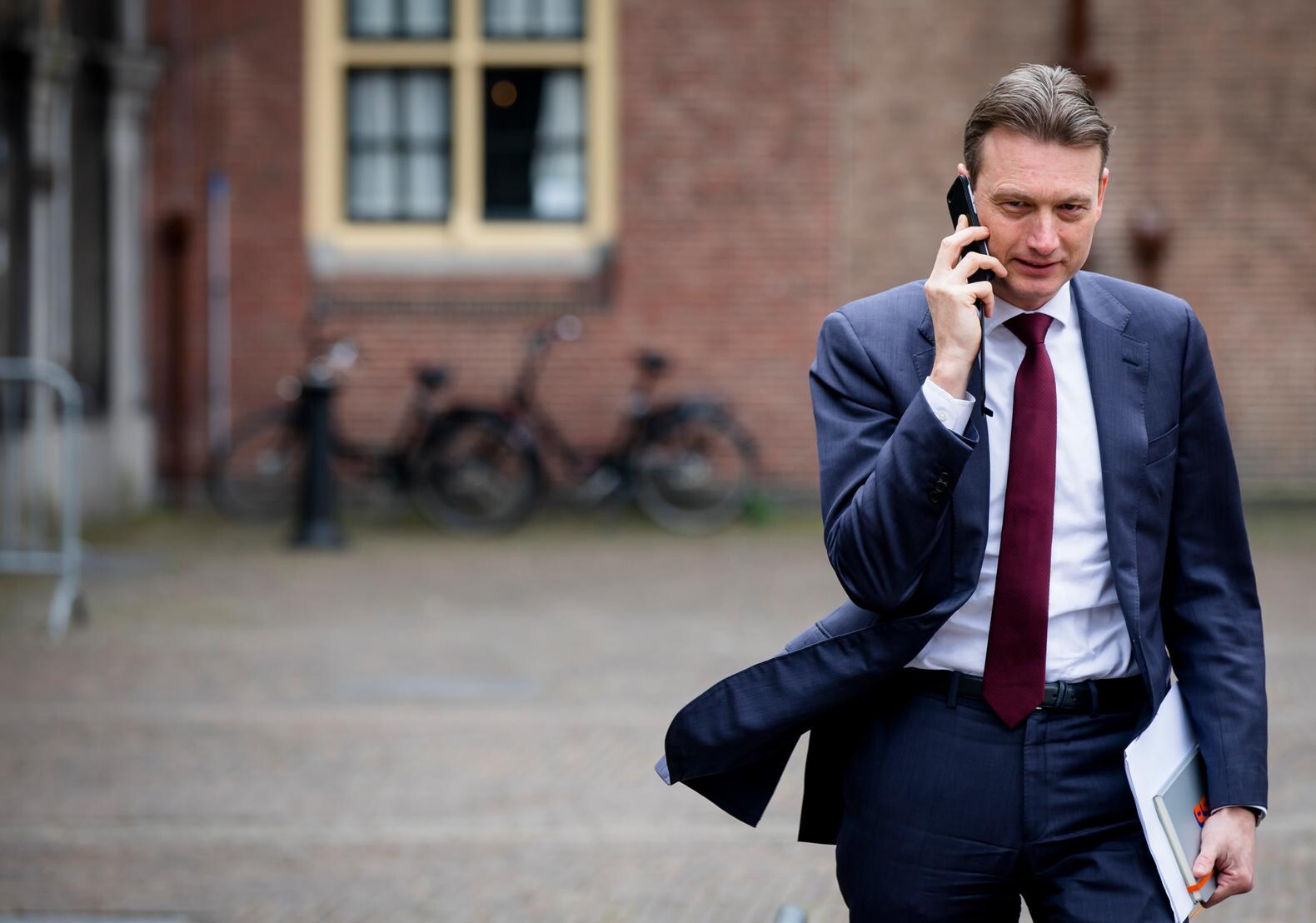
The exercise officially commenced on 10 June and will conclude at midnight tonight. While Stegeman confirmed the existence of Meserwacht 26 shortly after operations had begun the full scope of the exercise remained undisclosed throughout much of its duration.
According to Fonteyn's figures released this morning, naval forces participating in Meserwacht included one carrier, five destroyers, eight frigates, two amphibious assault ships, four nuclear powered submarines or cruise missile submarines, a replenishment vessel, store ships and a repair ship. The air component consisted of twenty four air superiority fighters, eighteen strike aircraft, two airborne early warning and control aircraft (one of whom we observed taking off on the morning of the 10th), three aerial refuelling tankers and four maritime patrol aircraft. Rotary wing participation included anti-submarine warfare helicopters, transport helicopters, utility helicopters and attack helicopters operating from both land bases and naval vessels. Ground forces involved in the exercise included the 1st Rapid Response Division, the 3rd Coastal Defence Brigade, the 7th Air Defence Brigade, elements of the Marine Corps and elements of the National Guard. Fonteyn confirmed that more than 32,000 ground personnel participated directly in the exercise, with total participation believed to be considerably higher once naval and air force personnel are included.

Perhaps more striking than the scale of the exercise itself was the manner in which it was conducted. Unlike many large exercises, Meserwacht 26 was not publicly announced beforehand. No advance public statements were issued by the Ministry of Defence, nor the government. Instead, notifications were distributed through restricted channels to organisations whose operations could be affected by military activity.

Several recipients contacted by ABV News described the notice as routine, with many assuming the exercise would include local naval or aviation activity rather than a seawide operation involving substantial elements of all five armed services.

When asked whether allied governments had received advance warning, Ministry officials declined to comment on specific diplomatic communications but reiterated Meserwacht 26 had been planned well in advance and was not linked to any current political or international developments.
Military analysts noted that the exercise represented one of the most comprehensive demonstrations of joint service readiness undertaken by Aubervijr in decades, combining naval, air, amphibious, logistical, air defence and rapid deployment operations within a single exercise framework, supported by both Cyber and Space Commands.

The exercise officially concludes at 23:59 tonight. The Ministry of Defence reported a small number of personnel sustained minor injuries consistent with such a large scale military training exercise, with all affected personnel receiving appropriate medical treatment with their families kept regularly updated. The exercise has concluded without any fatalities.
Harlingen & Enschede
By Jurrien Elbersen, Armed Forces correspondent and Anton Brands, senior political correspondent - 18 June 2026
The Ministry of Defence has today released the first comprehensive figures relating to Meserwacht 26, revealing the exercise to firmly be one of the largest training operations conducted by Aubervijr in decades.
Previously described by Minister of State for Defence, Coen Stegeman as a routine annual readiness exercise, newly published figures show that the exercise involved tens of thousands of personnel from across the Aubervijan Armed Forces, hundreds of aircraft sorties, extensive naval deployments and coordinated activity across all nineteen states and Faursia.
As the exercise concludes tonight, newly released figures, according to Minister of Defence Thomas Fonteyn, have revealed the exercise to have been substantially larger than previously understood, involving a carrier strike group, amphibious forces, nuclear powered submarines, more than eighty aircraft and helicopters and tens of thousands of military personnel.
Thomas Fonteyn confirmed the exercise has been a "resounding success".
The exercise officially commenced on 10 June and will conclude at midnight tonight. While Stegeman confirmed the existence of Meserwacht 26 shortly after operations had begun the full scope of the exercise remained undisclosed throughout much of its duration.
According to Fonteyn's figures released this morning, naval forces participating in Meserwacht included one carrier, five destroyers, eight frigates, two amphibious assault ships, four nuclear powered submarines or cruise missile submarines, a replenishment vessel, store ships and a repair ship. The air component consisted of twenty four air superiority fighters, eighteen strike aircraft, two airborne early warning and control aircraft (one of whom we observed taking off on the morning of the 10th), three aerial refuelling tankers and four maritime patrol aircraft. Rotary wing participation included anti-submarine warfare helicopters, transport helicopters, utility helicopters and attack helicopters operating from both land bases and naval vessels. Ground forces involved in the exercise included the 1st Rapid Response Division, the 3rd Coastal Defence Brigade, the 7th Air Defence Brigade, elements of the Marine Corps and elements of the National Guard. Fonteyn confirmed that more than 32,000 ground personnel participated directly in the exercise, with total participation believed to be considerably higher once naval and air force personnel are included.
ABV News was granted access to observe elements of the amphibious exercise earlier this week.
Perhaps more striking than the scale of the exercise itself was the manner in which it was conducted. Unlike many large exercises, Meserwacht 26 was not publicly announced beforehand. No advance public statements were issued by the Ministry of Defence, nor the government. Instead, notifications were distributed through restricted channels to organisations whose operations could be affected by military activity.
Serious faces amongst these Marines, who seemed to be enjoying themselves.
Shipping companies, harbour authorities, fisheries organisations, civil aviation authorities, commercial airlines, ferry operators, coastguard services and search and rescue organisations received notices on the evening of 9 June informing them that military activity would occur within designated areas between the 10 and 18 of June. The notification provided no indication of scale and contained only limited information beyond operational safety requirements.
Several recipients contacted by ABV News described the notice as routine, with many assuming the exercise would include local naval or aviation activity rather than a seawide operation involving substantial elements of all five armed services.
A photographer of ABV News was invited onto a RHIB during the exercise, where he snapped this shot of Aubervijan Marines.
Fonteyn defended the approach during his press conference this morning; "Meserwacht is a readiness exercise. The purpose of a readiness exercise is to evaluate readiness. Organisations requiring notification received notification. Public safety was never at risk and all necessary precautions were taken."
When asked whether allied governments had received advance warning, Ministry officials declined to comment on specific diplomatic communications but reiterated Meserwacht 26 had been planned well in advance and was not linked to any current political or international developments.
Military analysts noted that the exercise represented one of the most comprehensive demonstrations of joint service readiness undertaken by Aubervijr in decades, combining naval, air, amphibious, logistical, air defence and rapid deployment operations within a single exercise framework, supported by both Cyber and Space Commands.
Soldiers belonging to the 1st Rapid Response Division during a ground exercise.
As vessels begin returning to port and aircraft stand down across the Meserzee region, the release of today's figures has transformed public understanding of what many initially believed to be a relatively routine military exercise. Instead, Meserwacht 26 now appears to have involved a substantial portion of Aubervijr's deployable military capability operating simultaneously over a period of eight to nine days.
The exercise officially concludes at 23:59 tonight. The Ministry of Defence reported a small number of personnel sustained minor injuries consistent with such a large scale military training exercise, with all affected personnel receiving appropriate medical treatment with their families kept regularly updated. The exercise has concluded without any fatalities.
Share: