Sports News

EJF5Q0J.png

L'Indépendant > Mercanti > Sports

Prydanian star player to transfer to Saintonge

by Jules-Régnier Castillan de Réalcamp in Coire
17 August 2020 - 1433h

COIRE (Haine) – one of the star players of the Prydanian national football team, Tjörvi Hagtvedt, is transferring to the Santonian Première Ligue team Association de la Jeunesse de Saint-Tobie de Coire.

Star Player
Hagtvedt, 18, could be remembered as the player that made the crucial goal that downed world champions Goyanes in the group stage in Odinspyl 2020. Hagtvedt’s goal allowed Prydania to advance from the group stage. It was also another Hagtvedt goal that opened the Prydanian lead against Demescia in the semifinals.

Click here to read more! No subscriptions needed.
 
mHAls1l.png

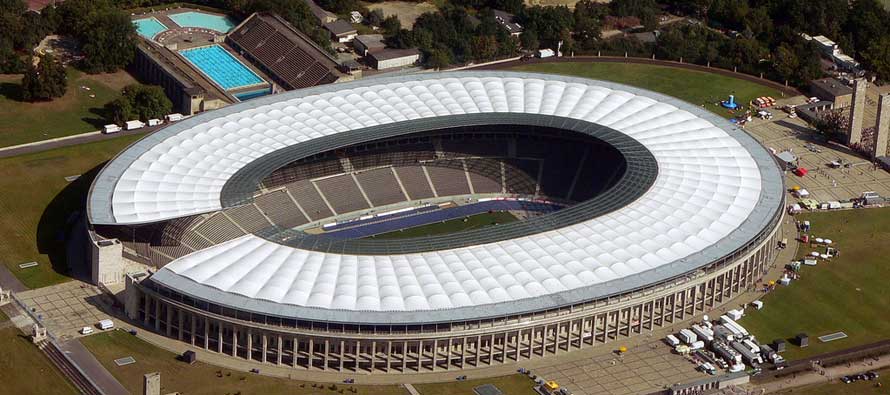
CITY SMASH PRYDANIAN RECORD, SIGN BACH
olympic-stadium-berlin.jpg

HIGHTON CITY, NH — Prydanian national team star Peter Bach has joined Highton City FC, the club announced today. The transfer is estimated to be in the range of ฿45 million (59 million IBU) and smashes the transfer record for a Prydanian player. City broke the bank to sign the Haland Vikings center forward after a disappointing season saw them finish third place in the HPL despite the Prince’s Cup triumph in June. Highton City believes that the addition of Bach, a player they may attempt to use as an attacking midfielder, will provide the missing piece they need to win the league title back from Phoenix Coast Warriors. Bach is being paid an estimated ฿280,000 a week, making him the second-highest earner at the club.

Highton City FC manager Christian Bahr briefly spoke to the press at a pre-season training session today. “Peter is a phenomenal player, I guarantee he will be worth every penny. We’re going to win back the Meisterpreis this season, I am very confident.” Highton City’s captain, six-time Goldener-Ball winner Alexís, also shared his excitement with the signing. “Peter is someone I’ve faced many times with the national team and is one of the toughest opponents I’ve played against in my career. I am incredibly excited to get to play alongside him now.”

Highton City FC will open their 2020/21 campaign against Energie Vaasanport next Saturday on September 5th at Kokos Park.
 
RAP Sport

Predice hands a narrow friendly victory to Ulstome


Krincaster, Ulstome — The Golden Eagles suffered a narrow defeat against the Ulstome National football team away in Krincaster, in a warmup game for the World Cup, conceding three goals and scoring two.
The game started well for the Golden Eagles, who hit the ground running with a second minute goal from Mancini. Indeed, the Golden Eagles dominated the first half, putting in a second goal from Rossi in the eleventh minute. Everything changed in the second half, however, as a regrouped Ulstome side very quickly took control of the game, as the Golden Eagles ducked into a trench, soaking up the pressure. This was clearly unsustainable, and the Ulstomians smashed in a 61st minute goal, followed rapidly by a 70th minute goal and then a 73rd minute goal. The Golden Eagles fell apart, and were unable to equalise.
Despite the loss, Predice’s national team has showed, that in spite of the war, it can still play, and play well.
 
Cs9uOtb.png

Sports/Football
International Football
Arthasiddhanta fall to a comeback victory against Predice

Clearly a difficult result to stomach, but this match must be viewed as a place from which we can grow. It wasn't all heartbreak and agony last night.
March 29, 2022 11:16 AM

WJmoozB.jpg

Siddhantiyan national team manager Jaigopal Basu reacting to Predice's comeback from 2-0 down to 3-2 winners.

By Arya Kapadia


After a truly epic match, the “Siddhantiyan project” has faltered in Nadikamagh. Despite the dramatic scoreline, the game was a rather even one, with alternating periods of dominance from the Siddhantiyans and Prediceans. The statistics reflect a rather even game, with 52 percent of possession for us against 48 percent, and 21 shots for us against 15 shots. Those who viewed the game can attest to both teams having quality chances in both halves of the match, but finishing and defensive mistakes in the critical moments became the deciding factor in Arthasiddhanta’s collapse.

The first half began with a relatively cagey and tactical approach to the game from both managers, with a high-pressing Siddhantiyan team keeping Predice from passing effectively. Despite the high amount of turnovers, the ability of Sabhi Kaala to pass the ball effectively themselves was also restricted by a good Predicean low block out of possession. This would inevitably lead to Predice exploiting the Siddhantiyan high line, with Portellini and Torrentino repeatedly delivering long balls across the field, with Bastoni in particular requiring consistent watch by Jha, whose defensive performances were crucial till his injury and substitution in the 69th minute.

Despite this restrictive approach from both plans, Arthasiddhanta broke through as a result of a great collective effort. After an offside was called on Carlo Badaracco, Rohan Chakrabarti delivered a quick pass to Prabhudas, who initiated a string of passes that weaved and meandered its way through the Predicean low block. The killer blow came from Arvind Suman, who despite being surrounded by 3 Prediceans, delivered a through ball that cleaved its way through and was latched onto by striker Gonsalo Raja, finishing off a string of 26 passes with a hammering shot into the goal after 18 minutes played. Following the goal, Arthasiddhanta became slightly more cautious, with Prabhudas and Patnaik focusing more on tackling and defending against counters than trying to aggressively pin back the Predicean high line. Despite the Predicean desperation to equalize that led to a few decent chances, particularly one by attacking midfielder Ancelotti that was saved by Chakrabarti. Arthasiddhanta continued to maintain a sense of calm despite more brazen attempts of Predice to attack, which paid dividends after a long ball from Vijay Rathore on the wing led to a clever one-two by Digvijay Sharma and Aharon Das, resulting in a Das goal with 31 minutes of football played. At halftime, the mood of the prashansaks in the stands was one of elation, drowning out the quiet Predicean away end without much effort.

EeQ2bmG.jpg

Gonsalo Raja celebrates Arthasiddhanta’s first goal of the match


The second half continued in a largely similar manner to the first, both teams executing their tactical plans to great effect. The game turned on its head after Jha was substituted off following a collapse on the pitch, thought to be caused by a strained calf muscle. Jha, the captain and defensive leader of the team, was sorely missed as Bastoni ran riot on Arthasiddhanta’s right flank, leading to Predice’s first goal of the night after Bastoni headed in a cross from Balotelli on the flank. The contest became more epic just 84 seconds later, with Balotelli providing another cross, this time to the right winger Dragonetti. After being surrounded by Siddhantiyan defense, he played the pass to nearby Ancelotti, which Prabhudas failed to cut out. Ancelotti, being marked by Chandrashekhar, started running with the ball through the Siddhantiyan defensive line, black jerseys all around him, before eventually pounding in a shot of the highest quality into the top of the goal. In only 2 minutes, Predice had managed to equalize the score.

From here, Sabhi Kaala looked more unsure of themselves. While they were running at the opposition with the energy only desperation can bring, the play was getting sloppier. Passes were routinely getting cut out by the Predicean defense, players looked afraid to have the ball at their feet at times. Risks were often reckless, with the number of fouls committed by Arthasiddhanta increasing in this time. A particularly nasty challenge by Chandrashekhar on substitute Baricello earned a yellow card, which some argue should have been a straight red. What chances the Siddhantiyans did create were skied carelessly or were tame shots easily saved by Portellini. Predice’s final goal would be through one of these stupid fouls, with a shirt pull in the box by substitute Johan Bheel bringing down Badaracco. A penalty was called, which Baricello converted with only 2 minutes of normal time left to play. Mass agony engulfed the stadium, with fans leaving early as Predice took full advantage of Arthasiddhanta’s collapse. The away end was certainly not quiet as the full-time whistle blew and Predice were the winners.

7uLd5ub.jpg

Alessandro Baricello scored the decisive penalty to give Predice a 3-2 win

Despite the presence of a good tactical plan, mentality remains the difference between Arthasiddhanta and the elite of global football. As Basu aptly stated in his post-match interview, “We need to learn how to keep our heads cool and maintain our focus on the game when things are not going as planned. I can develop as many tactics and plans as I want, but football is not a game of chess where the pieces will move where you tell them. You need to adapt, circumstances are always changing. Ultimately, this is a young squad, I’m confident that with experience and with the right leadership, they’ll start to get it, but for tonight it is disappointing.”

The manager’s words were received well on social media, with a Twitcher poll finding that 73 percent of fans didn’t blame Jaigopal Basu for the collapse, and 57 percent expressed faith in his ability to lead the team forward. “He’s a title-winning manager, some reactionary idiots who can’t remember beyond 90 minutes will be the ones calling for his head. That’s crap and they know it”, the top reply said.

Ultimately, after a spectacular contest of football led to a spectacular defeat, we can only learn from our mistakes and attempt to improve. This team has been talked about as a “golden generation” of Siddhantiyan football, but if this generation is to succeed, it’s wise if judgments and scathing criticisms aren’t levied on them at every turn.
 
Last edited:
SBC Sport

Scalvian Ice Hockey Federation announces reintroduction of promotion and relegation

In a shock move, the President of the Scalvian Ice Hockey Federation Tenis Melngailis announced the reintroduction of promotion and relegation to the top flight of Scalvian Ice Hockey, the Scalvian Championship at a press conference this morning.

Background

The Scalvian Ice Hockey Federation announced the elimination of promotion and relegation to the Scalvian Championship in 2000, at the conclusion of the 1999/2000 season. The change was to be effective from the 2000/2001 season. The change was immediately met with outcry and scandal, but the governing body of ice hockey in Scalvia did not budge, and the 18-team Scalvian Championship would remain unchanged for the next 22 years.

Fall from grace

Though the immediate financial impact was positive for the Scalvian Championship, attendance numbers began to slump around the 2007/08 season, and have declined ever since, reaching an all time low for Scalvian hockey in the just concluded 2021/22 season, where the total attendance of all games combined was just 16,413. Hockey's fall coincided with the rise of football and Gojan football. In 2004, the joint project of the Scalvian Football Association and the Scalvian Gojan Football Federation brought Scalvia a new, flashy national stadium, the Tipner Arena.
It has routinely sold out for the Gojan Football Playoff Finals and the Scalvian Cup final, as the country's many ice hockey arenas were often not even quarter filled.
The League's finances suffered, as did the quality of players, and consequently, the performances of the National Team. With interest in hockey at a low, many parents decided to send their children to play one of the varieties of football instead, heralding a generation of players of an unheardof quality for the Scalvian National Football team. Ice hockey, Scalvia's traditional pastime meanwhile has languished. TV ratings for the Scalvian Championship are often extremely low, and TV deals for the League have, as consequence become smaller since the 2007/08 season.
The effect on Scalvian Hockey has been terrible. Once a top contender in world hockey, the Scalvian National Ice Hockey team has fallen out of the circle of big Hockey powerhouses.

League itself under threat

With many prominent Scalvian hockey clubs, especially those in the second tier, such as three time Scalvian Champions HC Abruka Tiigrid, facing bankruptcy, and others unable to pay wages befitting of stars, the reputation of the Scalvian Championship has degraded severely. "We are at a point where the League's very existence is under threat," Melngailis said at the press conference.
With many prominent teams not far from folding, this can be counted as very much true.

Shock announcement

With the situation in Scalvian hockey dire, there came a shock announcement. Promotion and relegation to the Scalvian Championship would return after 22 years from the 2022/23 season. Coincidentally, the League's three year TV deal is up at the conclusion of the season. There is a clear hope, that with possible interest re-established, the next TV deal could be a much needed injection of cash. That remains to be seen, however, and Scalvian hockey is definitely not out of the hole. Much work towards that has to be done, but the Ice Hockey Federation has made clear its intent to fix its mistakes.

Fans rejoice

The elimination of promotion and relegation in 2000 had been highly unpopular with fans, and the League's stale state ever since then is blamed on this decision. It was seen by many fans as the rich owners of hockey clubs killing the fairness of the sport. The decision has been hailed as potentially saving Scalvian hockey, with some fans celebrating the decision on the streets.
Though the future remains uncertain, Scalvian hockey fans have renewed hope, that Scalvia may one day return to its rightful place as a hockey powerhouse.
 
Last edited:
s9bw597.png

TNN - The Trinnish News Network

SEDD Announces Formation Of New Racing Team

Dinewydd, 7th July 2022.
Today, SEDD, the premier automaker in Trinster, has announce its intention of the creation of a new Open Wheel racing team based in Dinewydd to compete in ICE based racing series.
The newly appointed Racing Executive of SEDD, Gwynn Lewis, had the following to say:
"The creation of SEDD Racing marks the first time in a decade that Trinster has had a Trinnish owned, Trinnish operated, and Trinnish based team, we hope to bring further details regarding the team and what series we will be contesting soon. We have great plans for SEDD Racing, and intend to put Trinster back on the map."

Trinnish company AwtoInjan (AI) previously competed between 2000-2012, shutting down its racing department due to increasing costs of Open Wheeled car development and a string of poor seasons and race results.
 
lodestarnewsbanner.png


Sil Dorsett Narrowly Defeats Waltalriche 31–28 to Take WLGF Bronze
By: Christelle Leveilleur

The Sil Dorsettian National Gojan Football Team defeated Waltalriche 31-28 in the WLGF Bronze Medal Game, coming back from a near upset with a rare defensive play.

Sil Dorsett drew first blood in the first quarter, taking a 7–0 lead on a touchdown run by runningback Étienne Moreau. It wouldn't be until the second quarter when Waltalriche would answer with a touchdown pass caught by Gunnar Posse, which would leave the game tied 7–7 at halftime.

Blows were traded back and forth in the third quarter, with Waltalriche getting an early score with an Adam Hammerl reception for a touchdown. Sil Dorsett responded shortly after, with wide receiver Julien Lefèvre making a 49 yard touchdown reception, tying up the score at 14–14.

Waltalriche would regain the lead on a 31-yard touchdown pass caught by Roland Glas, making it 21–14, while Sil Dorsett could only answer with a field goal by Pierre Dubois, cutting the margin to four points, 21–17.

Leonhard Stromberg would later extend the Waltalriche lead to 28–17. Sil Dorsett closed the quarter with quarterback Mathieu Caron making an end-zone rush for a touchdown, making the score 28–24 heading into the fourth quarter.

With team defenses holding strong in the fourth quarter, it wasn't until just five minutes to go when Waltalriche would have the opportunity for a 37-yard field goal attempt. However, the kick was blocked by Antoine Girard, who recovered his own block and ran 76-yards to put the Sil Dorsettians ahead, 31-28. Waltalriche was unable to score on its final possession, and Sil Dorsett held on to claim the bronze medal.

With this result, the Sil Dorsettian National Gojan Football Team has now scored a second straight podium finish following their silver medal performance from 2024, also making them the only active team with two consecutive podium finishes after Imperium Suavidici failed to make the playoffs and with Yalkan withdrawing from the 2025 season[1].


[1]OOC: Yalkan would be replaced by Scalvia under the same player.

 
SOCCERNET

A false pyramid? The frightening inequality between the Scalvian Super League and the National Soccer League Division One

0_pe_00800144.jpg

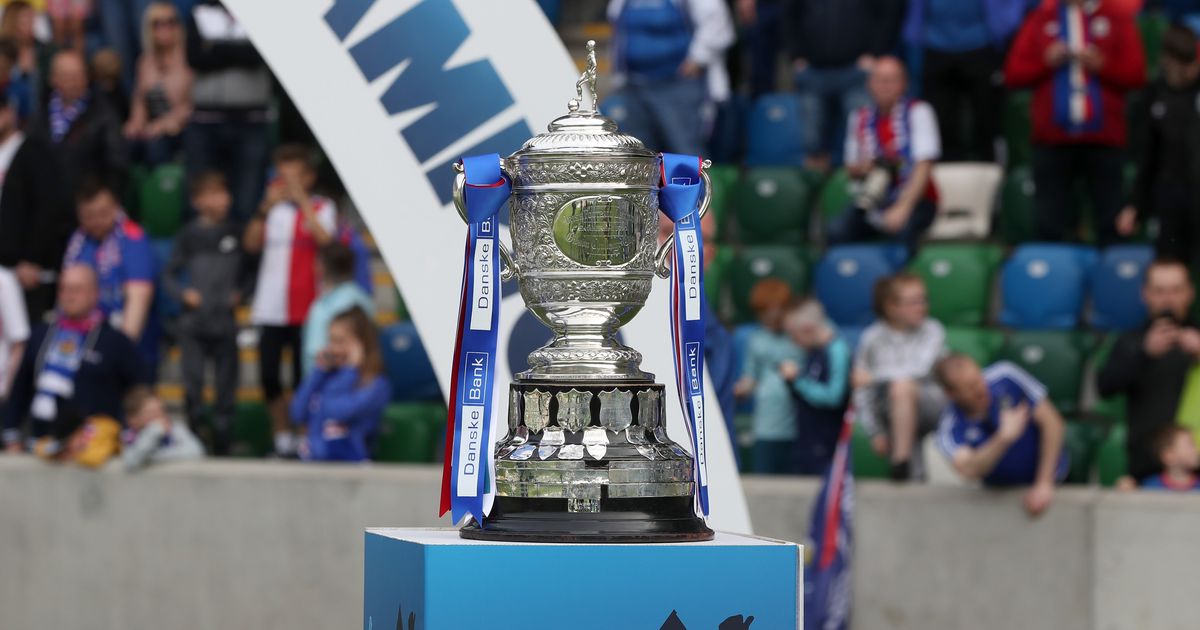
NSL Division One trophy

As the 2026/27 season in the SummitBet National Soccer League gears up to kick off this Saturday, we have decided to take a look at this Scalvian Soccer institution.

David and Goliath compared
The SummitBet National Soccer League Division One is often heralded as being the most unpredictable and entertaining league in Scalvian soccer, and one of the highest standards of second tier soccer to be found anywhere in the world. That is almost certainly true, and it should be considering that the finances of very few second tiers come even close to it, but that tells only half the story.
For all of the thrills, spills, and the promised land of Super League promotion and the untold riches that await three lucky teams, NSL Division One is in fact a bizarre house of cards which could collapse at any minute. The league as a whole, across all 24 clubs, is technically insolvent, meaning that the total debts of the division's clubs are greater than their total assets.
Over the last decade, up to the last set of complete published figures in the 2023/24 season, NSL Division One clubs lost a combined total of nearly a billion dollars. Those losses are rising season upon season. In the 2023/24 season, NSL Division One clubs lost an average of 135,000 dollars a week per club. Though the finances of the Super League are ludicrous and even unimaginable to most, they are actually relatively proportionate to the enormous amount of money that the league and its clubs generate through broadcast, commercial, and matchday revenue. The same is not true of NSL Division One, not even remotely so.

NSL Division One lives in the shadow of something much larger than itself — the Scalvian Super League. One of the biggest and richest leagues in world soccer, with a financial dominance that becomes greater season upon season, Super League clubs now rake in a combined total of 2.4 billion dollars a season. Scalvian soccer is unique in some ways, in that its second tier and top flight are connected via promotion and relegation, but administratively they are two separate companies and governing bodies. The Scalvian Super League was founded for this very reason in 1994; splitting from the National Soccer League, orchestrated by the league's then big four, in cahoots with wealthy media owners, so that they could capitalise on the increased televising of soccer matches, negotiate their own broadcast deals, and keep all of the revenue for themselves. The Super League would credit this breakaway with the enormous economic success of Scalvian soccer's top flight, but it has also made Scalvian soccer jaw-droppingly unequal. In the 23/24 season for example, Newbridge Tigers SC who finished bottom of the Super League, winning a mere eighteen points all season, received 43.59 million dollars in central funding, whereas White River SC, who won the NSL Division One title that season on 97 points, received a mere 4.4 million dollars in central funding. Central funding being money distributed directly from the central fund of the NSL or SSL, which is generated through centrally negotiated rights deals, and excludes individual clubs' revenue. Just one place divided Newbridge and White River in the Scalvian soccer league pyramid, as they traded places at the end of the season, yet 40 million dollars separated them in terms of central funding. In other words, Newbridge received nearly ten times as much. This gap and the consequences of it have long been a subject of great debate, and understandably, grievance on the part of the NSL and its clubs.

Up until this season, NSL clubs received 75 million dollars in so-called "solidarity payments" per season, coming close to the funding they received from the NSL (110 million dollars), generated through the NSL's own media rights, sponsorships, and various levies. On the face of it, that might sound like a great deal. The Super League, out of the goodness of its heart, is subsidising the NSL to the tune of close to 70% of its total revenue, considerably increasing the amount of money the 96 clubs in the NSL receive. This is the Super League's framing, selling their redistribution as effectively a philanthropic endeavor. In actual fact, the Super League is of course heavily dependent on the NSL. A strong Scalvian soccer pyramid is pivotal to the Super League retaining its status as one of the world' strongest soccer leagues. It is where some of the Super League's best players begin their careers as graduates of NSL academies, or are developed on loan from Super League clubs. The Super League's supposed unique selling point of strength in depth and intense competition throughout the league is dependent on three talented teams, who are able to compete, winning promotion each season. It also isn't optically optimal to have a filthy rich top flight with a crumbling heap of impoverished minnows beneath it. The NSL therefore has leverage and justification in its claims of unfairness.

David against Goliath
Since becoming Commissioner of the NSL, Roger Silver, who was the first Commissioner of the Scalvian Super League, has lobbied for the Super League and NSL rights deals to be combined, and for the NSL to receive 25% of the revenue. The Super League claimed that was far too generous, and complained that it would threaten its competitive advantage, so they made a counteroffer to share 14.75% of their net media rights with the NSL.
The standoff between the NSL and the SSL has been ongoing since 1994, on this and a few other issues. The SSL and NSL combining their media rights deals has never seemed so realistic, however, as both their deals are up for renewal from the 27/28 season. Both the NSL and SSL have called talks constructive, and there appears to be genuine hope to close this chapter of the standoff.

Another contentious issue has been the SSL's "sustainability payments" often deridingly known as "parachute payments" to clubs recently relegated from the Scalvian Super League. Parachute payments are widely reviled by NSL clubs, particularly NSL Division One clubs due to the gross financial advantage they afford recently relegated clubs over everyone else, except for those clubs which are in receipt of parachute payments, for obvious reasons. The NSL has lobbied the SSL to scrap its unpopular parachute payment scheme, but that is proving difficult due to such a move requiring 14 of 20 SSL clubs to agree to such a move, with it being in the interests of lower half SSL teams that parachute payments be retained.
Parachute payments give recently relegated clubs additional revenue for three seasons, equating to 21 million dollars in season one, 17.2 million dollars in season two, and 7.7 million dollars in season three only if the club spent more than one season in the Super League prior to relegation. This is an enormous financial advantage, and this redistribution is worth, depending on the season, more than the total solidarity payments made to the NSL.
For a league that prides itself on its unpredictability, parachute payments have made the NSL Division One promotion race remarkably predictable. Over 70% of clubs that won promotion from the NSL in the past five seasons have been in receipt of parachute payments, and those that haven't have had to take enormous financial gambles to compete, losing tremendous amounts of money, and risking breaching the NSL's Profit and Sustainability Rules. A compromise has been found, with the SSL agreeing to reduce sustainability payments to 45% of the league's broadcast rights deal equal share in year one, 35% in year two, and an unchanged 20% in year three. Compared to the previous 55-45-20, this is a considerable decrease, but under the new deal, recently relegated clubs will also be eligible for solidarity payments, only somewhat reducing the vast financial advantage recently relegated Super League Clubs hold. The NSL didn't have much option but to agree, as it still represented a considerable increase in revenue for NSL and especially Division One clubs. Solidarity payments are split between Divisions One, Two, and Three on a 70-15-14.56 split, but Division Three has 48 instead of 24 clubs, justifying its nearly equal funding to Division Two with just 24 clubs. With an expected large increase of TV revenues from the 27/28 season, solidarity payments have been promised to be increased to over 150 million dollars from 27/28 onwards. A tremendous increase in funding for the NSL.

NSL Division One has operated on fairly old Profit and Sustainability Rules, which stated that no club could lose more than 36 million dollars over a rolling three year period. Such rules have long since been replaced in NSL Divisions Two and Three, and the Scalvian Super League by Squad Cost Control Rules, with clubs in NSL Divisions Two and Three allowed to spend no more than 75% of revenue on player salaries, transfer fees, agent fees, and other footballing costs, but with no limit in regards to academy and infrastructure spending. The Scalvian Super League, considering its financial foundations more secure, caps spending on the playing squad at 85% of total revenue. The NSL is introducing Squad Cost Rules into Division One starting from this season at the NSL's 75% ratio, but the Scalvian Super League has argued that recently relegated clubs, with their revenues higher, should be allowed to spend the SSL limit of 85% of revenue. Negotiations are ongoing, but at least for this season, every NSL club is capped at 75%.

Conclusion
The SummitBet National Soccer League is a Scalvian soccer institution. The Scalvian Super League is also a Scalvian soccer institution. But the financial inequity between the two is staggering, and jaw dropping, and could seriously threaten the very foundations of the Super League's financial dominance. The NSL has seen multiple clubs overspend in the attempt to reach the promised land of Super League promotion and fall short, ending up close to liquidation. Such a model is not sustainable for the Scalvian soccer league system and the financial sustainability of the National Soccer League's 96 clubs needs to be urgently addressed. There are encouraging steps towards this from both sides, as both the NSL and SSL have come to acknowledge their importance to each other. It remains to be seen what will happen next in one of the most entertaining and still pure leagues in the world, as the dreaded VAR has not yet found its way into the National Soccer League.
 
Last edited:
Back
Top