DIYARI GOVERNMENT ANNOUNCES PLANS FOR MOUDHA GENOCIDE MEMORIAL, DIASPORA LEADERS ABROAD CRITICIZE REGIME FOR DODGING RESPONSIBILITY
By Lavrentiy Gorkin | 18 February 2026
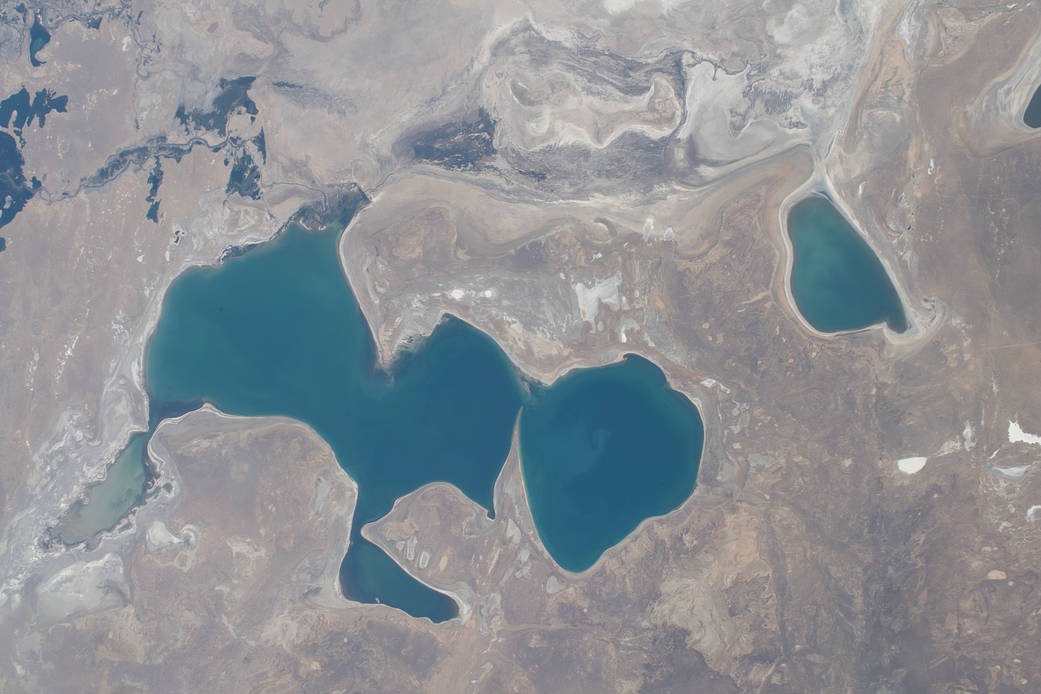
ASTAHRAN (IAP) — Diyar’s Minister of Construction, Seif Hussein Al-Uddin, announced on Saturday that a new public memorial has been greenlit by the Central Executive Committee of the Workers’ Party of Diyar (WPD). In an official press release, he stated that the new memorial to be built in Dharsaleh would be specifically dedicated to the victims of the 1964-67 Moudha genocide.
Among the planned monuments are memorials dedicated to victims of war crimes during the civil war. However, external critics of the Diyari government, particularly among the Moudha diaspora abroad, have accused the WPD of sweeping its own atrocities under the rug.
The Diyari Civil War
The civil war in Diyar stretched from 1960 to 1969. A multifaceted conflict, it saw not only fighting between the WPD and the pre-socialist Republic of Diyar but also religious fundamentalists, pro-democratic forces, and a variety of local militias and ethnic separatists. By the time the war ended in August 1969, some five-and-a-half million people had been killed and many more were internally displaced or forced to flee abroad as refugees. Cities were shelled into rubble, villages burned down, and entire communities left in disarray.
The war began in February, 1960. What were initially peaceful protests against then-dictator Mazen Said Al-Rahal turned bloody after government troops and security services were given directives to fire upon the demonstrators. Some soldiers refused the orders and aligned with the demonstrators, firing back before being forced out of the capital and into the countryside. The three major rebel factions were the Free Democratic Front (FDF) in the south, the fundamentalist
mujahideen militias in the north, and the Diyari People’s Army (DPA) in the west. These three factions fought guerilla campaigns against not only the Rahal regime, but also intermittently against each other. As the Republic of Diyar Armed Forces (RODAF) struggled to stamp out several simultaneous insurgencies in different corners of the country, the rebels built their strength for the day they could finally go on the offensive.
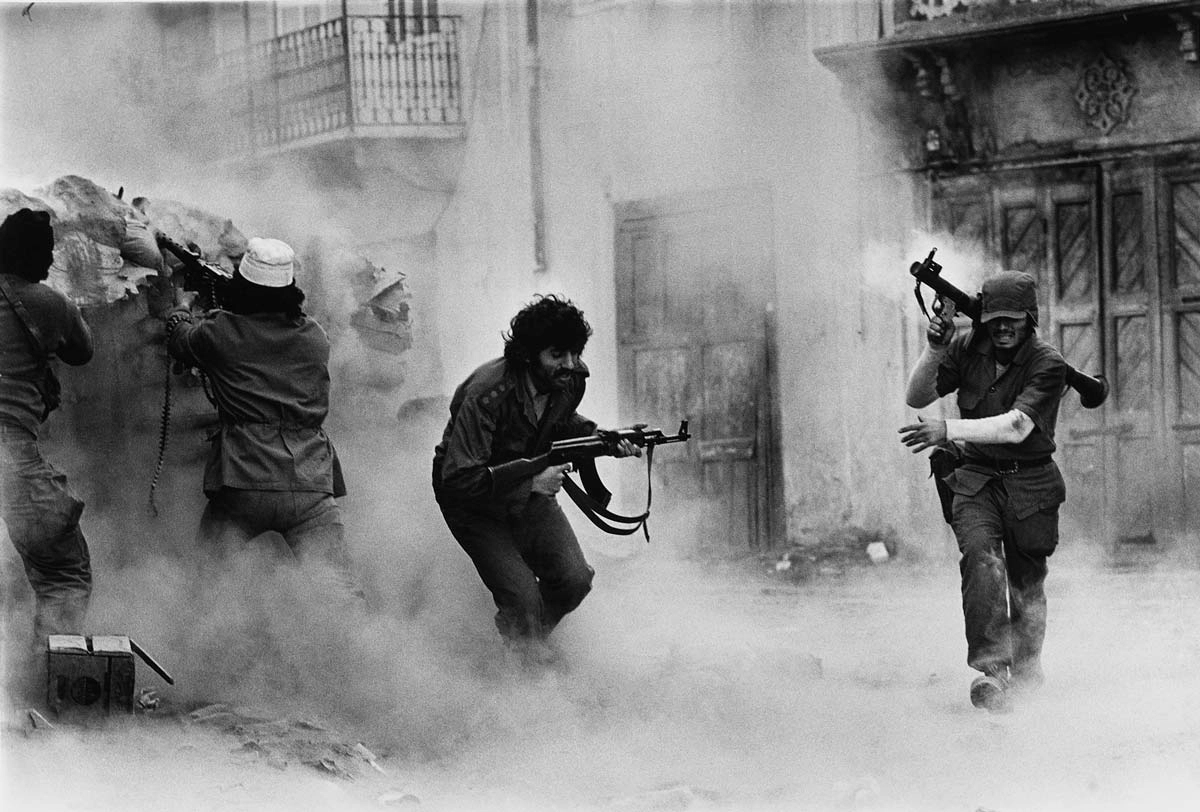
Insurgents engaged in urban fighting against RODAF soldiers (not pictured), September 1961
By 1962, the DPA was, with extensive Skandan support, ready to launch an offensive campaign against the loyalists. By October the following year, they had led a lightning campaign across the west. They had their first major victory in 1964 when they captured Haqlanah, Diyar’s second largest city, and began pushing to Jirawi. The
mujahideen had its own successes in the arid plains north of the Sadat mountains, whereas in the southeast, the FDF was still forced to operate asymmetrically.
Each of the major factions were responsible for war crimes during the Diyari Civil War. 1961 saw the Arapur bombings at the hands of the FDF and the 1962 massacres in Dhabar by the
mujahideen, and similar atrocities in Qumas in 1963 killed thousands. The DPA wasn’t innocent either–the 1965 burning of Khahat saw over 4,500 people killed and more than 2,000 women were sexually abused there alone. No one walked away from the war with clean hands, but undoubtedly the worst crime of the conflict was the 1964-67 Moudha genocide.
The Moudha genocide
For centuries the Moudha people had lived in the hilly countryside east of Jirawi. Historically they had mostly been treated as second-class citizens by the various emirs and sultans which had ruled Diyar, and this arrangement saw little improvement under the republican regime. They were subjected to religious discrimination for their syncretic beliefs, restrictions on where they could travel and live, subjected to often wholly arbitrary seizures of property, wealth, and businesses, forbidden from using their language in public spaces, and more. When the civil war erupted in 1960 the RODAF were quick to keep the Moudha on as tight a leash as possible, paranoid of their supposed support for the various rebel factions. Al-Rahal’s propaganda minister, Mustafa Kareem El-Saroud, made frequent radio broadcasts vilifying them as supposed collaborators, insurgents, and wannabe terrorists. Moudha communities, already poorly treated by the government, came under intensifying harassment from ethnic Diyaris as well; businesses vandalized, homes burned down, and an escalating number of lynchings.
The DPA’s capture of Jirawi in early 1964 marked a turning point in the fighting. With the Sadat mountains dividing the developed and highly populated south from the underdeveloped and more sparsely populated north, the city of Jirawi was the crucial chokepoint controlling the major road and rail networks running east to west. With control of the city, the socialists had the opportunity to begin their push toward the capital. The Rahal regime’s hopes of pushing the reds back and retaking Haqlanah were dashed, and RODAF forces were forced onto the defensive for the remainder of the war. Some in Moudha communities saw the socialists’ victory in Jirawi as a chance to finally free their homes from the RODAF.
Ad hoc militias armed themselves with stolen weapons and launched hit-and-run attacks against Rahalist troops and paramilitaries with mixed results.
The RODAF officer corps was notoriously rampant with competition, corruption, incompetence, and nepotism. After the fall of Jirawi, rival officers increasingly started pointing fingers over the regime’s failed defense of the city. Eventually the decision was made to blame the Moudha for the reds’ victory, citing a supposed “lack of cooperation” with RODAF requisition orders and conscription drives and the recent guerilla attacks as proof of their coordination with the DPA. Beginning in March of that year, the discrimination only intensified. In a national radio address, El-Saroud vilified the Moudha as “cockroaches” and “traitors,” accusing them of leaching off ethnic Diyaris while supporting terrorists. He called on loyal Diyaris to volunteer for paramilitary groups to assist government “security” efforts. Ethnic Moudha living in majority-Diyari towns were harassed and even attacked by these new regime-aligned militias, often with the assistance of police and soldiers.
By early April, the government had made the decision to mass-deport the Moudha north across the mountains to the arid plains of the Dharsaleh Governorate. There they would be forcibly held in a series of concentration camps where whatever survivors could be killed. The army deliberately provoked skirmishes with ethnic militia in the village of Dourrah, which was used to justify the deportations. The Moudha were marched northeast, subjected to starvation and mass killings by government troops and paramilitaries along the way. Whole families were barely provided with enough calories to feed a single adult, and water was withheld for days at a time; what food and water they were given was often rotten or deliberately contaminated. Disease ran rampant while the sick were denied medical attention, many of them were shot or left behind to succumb to their illnesses and the elements. Women were frequently subjected to sexual abuse by government troops, while many children were separated from their parents and given to ethnic Diyari families to be culturally assimilated, forced to forget their own culture and identity. While some were able to escape into the mountains, many more were killed attempting to do so. Even to this day, mass graves related to the Sadat death march are still found in the mountains, either by organized search parties or entirely by accident by tourists or locals.
Two million Moudha were marched under armed guard into the Sadat mountains in April. Only 600,000 of them reached Dharsaleh in October. There, the cruelty continued until May of the following year, when the advances of the
mujahideen forced a government retreat. 300,000 ethnic Moudha were alive following the loyalist withdrawal. Though the jihadists had forced RODAF troops out of the Dharsaleh Governorate, they did very little to care for them or alleviate their suffering. In several of the camps, the local
mujahideen commanders strictly prohibited the Moudha from leaving, citing racist stereotypes of the Moudha being naturally inclined to thievery and violence. They were often content to let them continue to starve in the camps.
Astahran fell to the Diyari People’s Army in November 1966. Al-Rahal and his family had already fled the country by the time the socialists had reached the outskirts of the capital. On November 26th, the Republic of Diyar was officially dissolved, and the new Socialist Republic of Diyar was formed to take its place.
But the war was not over yet. The Free Democratic Front still fought on in the south, while in the north, the
mujahideen had consolidated into the Emirate of Dhabar–a theocratic breakaway state. The new regime in Astahran sent the DPA to crush the other factions, and as rebels-turned-government troops marched across the mountains and toward enemy territory, they started uncovering evidence of the genocide. Hundreds of unmarked mass graves were discovered throughout the mountains, many hiding upwards of thousands of bodies. On March 14th, 1967, socialist troops found the first of twelve total camps, located forty-four kilometers south of Dharsaleh.
Whereas the advancing
mujahideen militias forced the former-loyalists to abandon the camps, so too did the DPA force the Emirate of Dhabar to retreat. The last of the camps was captured by the socialists in March of ‘67. By the time the war was officially over in 1969, and all rivals to the socialist government were defeated, it is estimated that as few as 150,000 of the original two million ethnic Moudha deported by the Rahalists had survived. As many as 80,000 Moudha fled Diyar over the course of the civil war.
Selective reckoning
Like the
mujahideen before, the DPA for some time refused to allow them to leave the camps. Eventually, aid began to come in, albeit slowly and nowhere near enough to really change the situation. In 1970, the WPD’s Central Executive Committee decided to move the Moudha out of the camps. However, instead of being allowed to return to their former homes, the majority of the survivors were instead moved across the country to specially designated areas. They were subjected to forced labor and reeducation campaigns, which are believed to have included cultural assimilation. Only 65,000 survivors were allowed to return to their original homes east of Jirawi; or at least what remained of their homes.
Like many authoritarian regimes across the world, past and present, the Workers’ Party of Diyar has gone to great lengths to sanitize its presentation and perception. The Diyari government has always railed against the former Rahal regime for its war crimes, its corruption, and its cooperation with foreign colonial interests in Iteria. The WPD has always denied that it had, in any way, mishandled or exacerbated the situation nor subjected the survivors to forced labor, relocations, or cultural genocide.
Nevertheless, testimonies of survivors who fled abroad tell a far different story than the Diyari government’s cleaner version of events. The memorial announced last Saturday by El-Uddin has drawn fervent criticism from the international Moudha Diaspora Committee, an organization based in Ramelensk aimed at representing and advocating for refugees and survivors of the genocide.
“In the years and decades following the war, nothing was said of the genocide,” Rambail Asorbelu explained during an interview with the International Allied Press. Asorbelu is the chairman of the Moudha Diaspora Committee, and the son of genocide survivors who fled to Khastenia after the war.
“The old Rahalists and the
mujahideen who were involved were punished, though often for unrelated crimes and simply belonging to opposed factions. Many of the socialist soldiers who abused or neglected the survivors were never investigated nor punished. Likewise with the postwar ‘reintegrations’ when friends and loved ones were torn apart and forced to abandon their homes and culture. The memorial they are building makes no mention of any of this. We do not endorse this memorial they intend to build because it is completely insufficient.”
When asked about whether the Diyari government can be pressured to address its own part in the Moudha genocide, Asorbelu stated that the fight for accountability still has a long way to go.