

Welcome to the Eras Lore Encyclopedia! Or ELE! So many of our newer members ask "is there a place with a lore rundown of Eras?" I'm hoping this can be this place. The idea here is that everyone will post a writeup for any of their RP countries in Eras. How much detail they go into will be up to the individual posters, but ideally, collectively, this will be useful as a one-stop shop of lore for Eras.

You are using an out of date browser. It may not display this or other websites correctly.
You should upgrade or use an alternative browser.
You should upgrade or use an alternative browser.
Eras Lore Encyclopedia
- Thread starter Prydania
- Start date
ELE Rules!
- You can post as many times as you like, but you can only make one entry per topic. That means you are free to go back to edit your entries should lore be added or changed. This is preferable to making a new post.
- You have free reign to craft entries for your nations however you see fit. Any post made by a country that is shared, however, must have the consent of the person who hasn't written the article.
- Posts centred on topics that aren't necessarily owned by any one player are allowed, however that person must conform any information in an article such as this with Conclave rulings. For issues that doen't have Conclave ruilings, the Conclave will serve as the editorial board.
Template
- You can post as many times as you like, but you can only make one entry per topic. That means you are free to go back to edit your entries should lore be added or changed. This is preferable to making a new post.
- You have free reign to craft entries for your nations however you see fit. Any post made by a country that is shared, however, must have the consent of the person who hasn't written the article.
- Posts centred on topics that aren't necessarily owned by any one player are allowed, however that person must conform any information in an article such as this with Conclave rulings. For issues that doen't have Conclave ruilings, the Conclave will serve as the editorial board.
Template
Code:
[U][B]Country Short Name[/B][/U]

[IMG height="110px"]Coat of Arms Image URL[/IMG] [IMG height="110px"]Flag Image URL[/IMG]

[B]Nation Name:[/B] Country Long Name
[B]Government type:[/B] Form of Government
[B]Capital:[/B] Capital City
[B]Head of State:[/B] King/Queen/Emperor/Empress/President/Whatever
[B]Head of Government:[/B] Prime Minister/Chancellor/Whatever
[B]Legislature:[/B] National Legislature
[B]Currency:[/B] Currency Name (currency symbol)

[IMG height="200px"]Map Image URL[/IMG]

[spoiler]Lore:[/spoiler]

[i]Header 1[/i]
Lore Lore Lore
[i]Header 2[/i]
Lore Lore Lore
[i]Header 3[/i]
Lore Lore Lore
Last edited:
Prydania
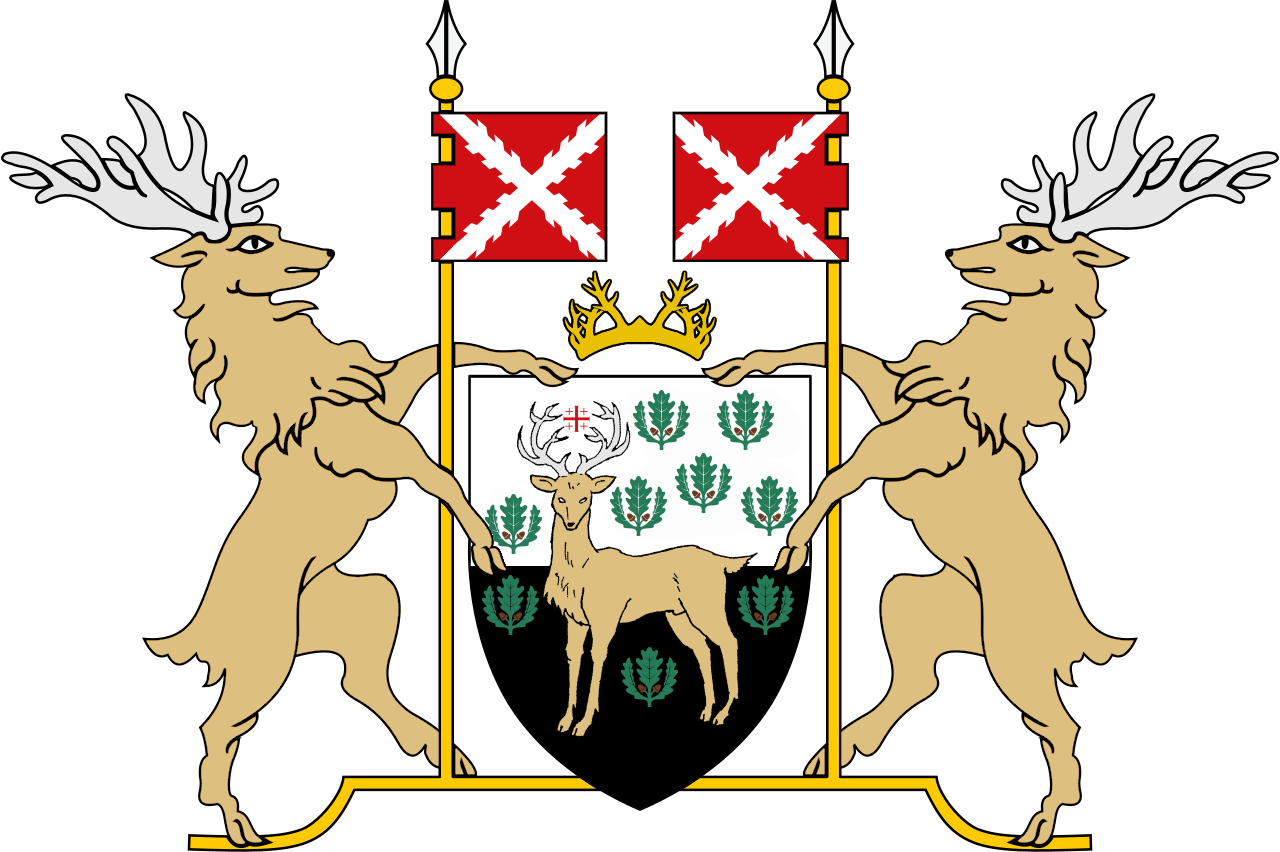
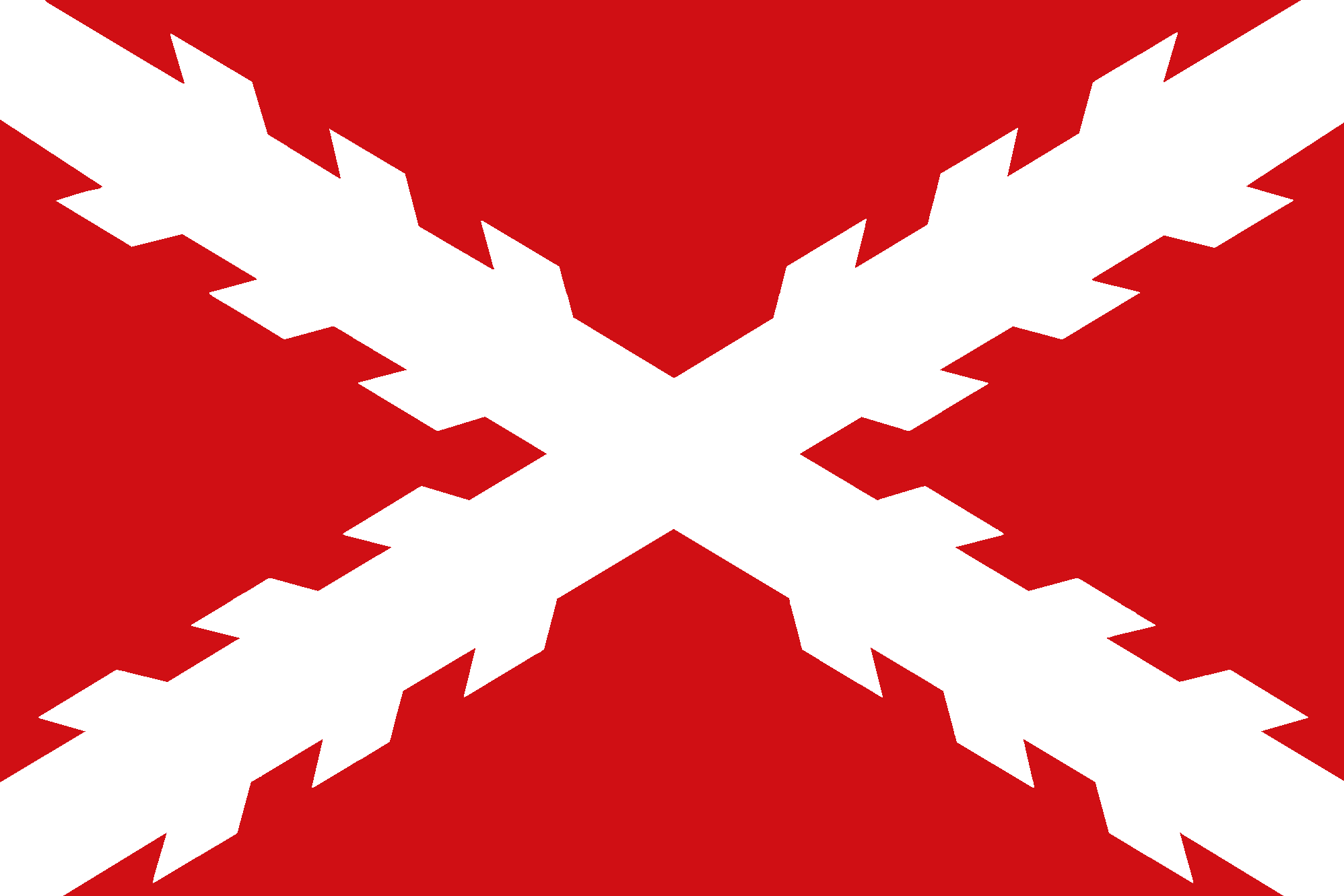
Nation Name: Kingdom of Prydania
Government type: Constitutional monarchy
Capital: Býkonsviði
Head of State: King Tobias III
Head of Government: Prime Minister Kjell Svane
Legislature: Alþingi
Currency: Kross (x)
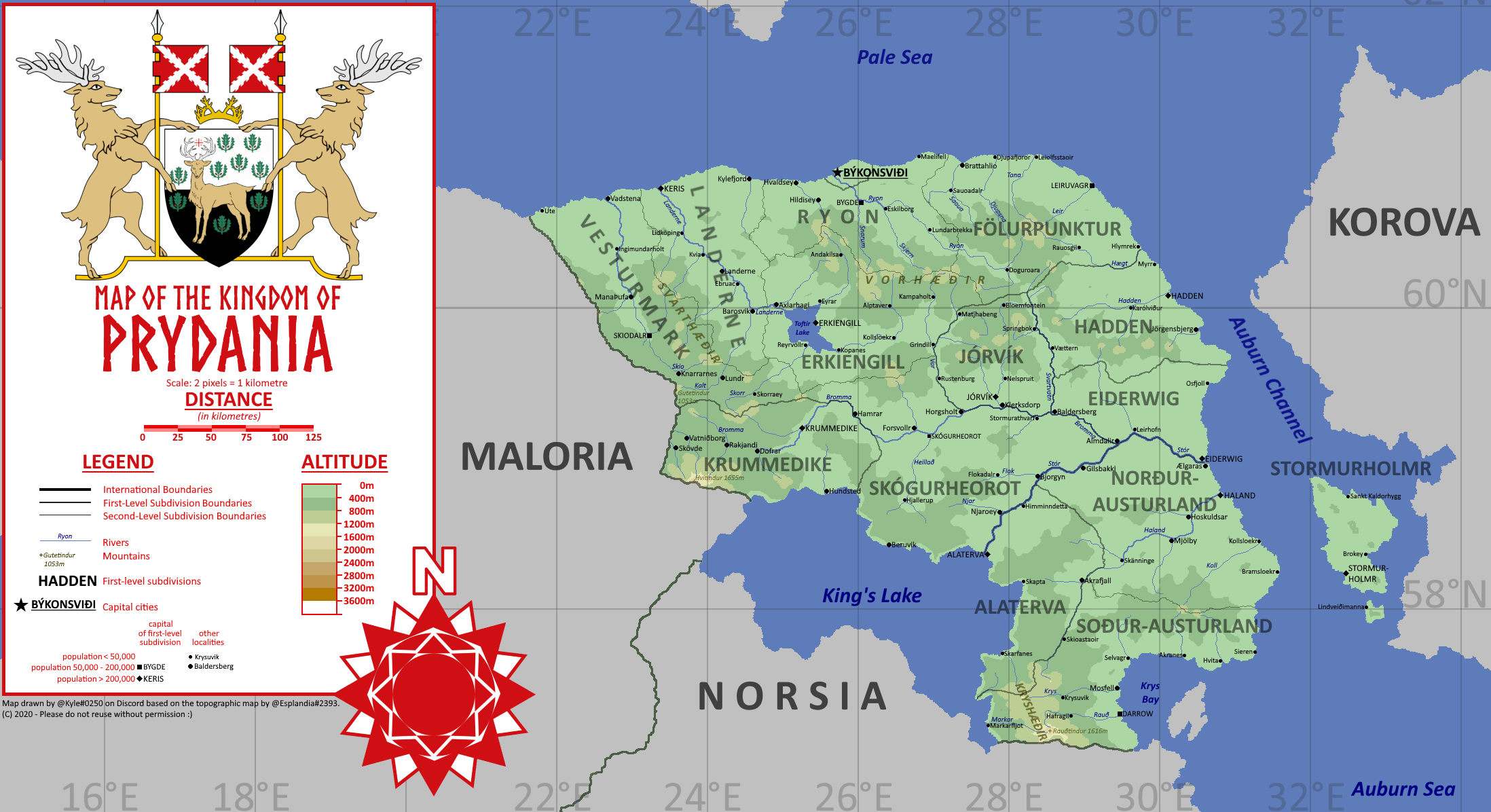
map made by @Kyle
Nation Name: Kingdom of Prydania
Government type: Constitutional monarchy
Capital: Býkonsviði
Head of State: King Tobias III
Head of Government: Prime Minister Kjell Svane
Legislature: Alþingi
Currency: Kross (x)
map made by @Kyle
Origins on Gothis and the Arrival of the Nords to Craviter
Prydania's roots stretch back to the ancient Adriannic Empire on Gothis, but its history-proper begins in 850. It was that year Hróarr Loðbrók, King of petty Kingdom of Heorot, led his people to abandon Gothis rather than bend the knee to Osvald the Conqueror. While Osvald would go on to unify the petty kingdoms of the former Empire into the Kingdom of Andrenne, Hróarr's exodus followed viking trade routes east to Craviter where they settled on the northern edge of the eastern continent.
They encountered the Bayardi, the region's natives, who named the land "Prieden," which the vikings called "Prydansk." Hróarr and his followers travelled to the eastern edge of Prieden, where they settled and formed a series of Jarldoms and Thanedoms. Hróarr himself laid claim to the largest island in the Auburn Channel, christening it Stormurholmr.
The viking settlements in eastern Prieden were loosely unified under Hróarr and his descendent, bordering the various Bayardi kingdoms and city-states to their west.
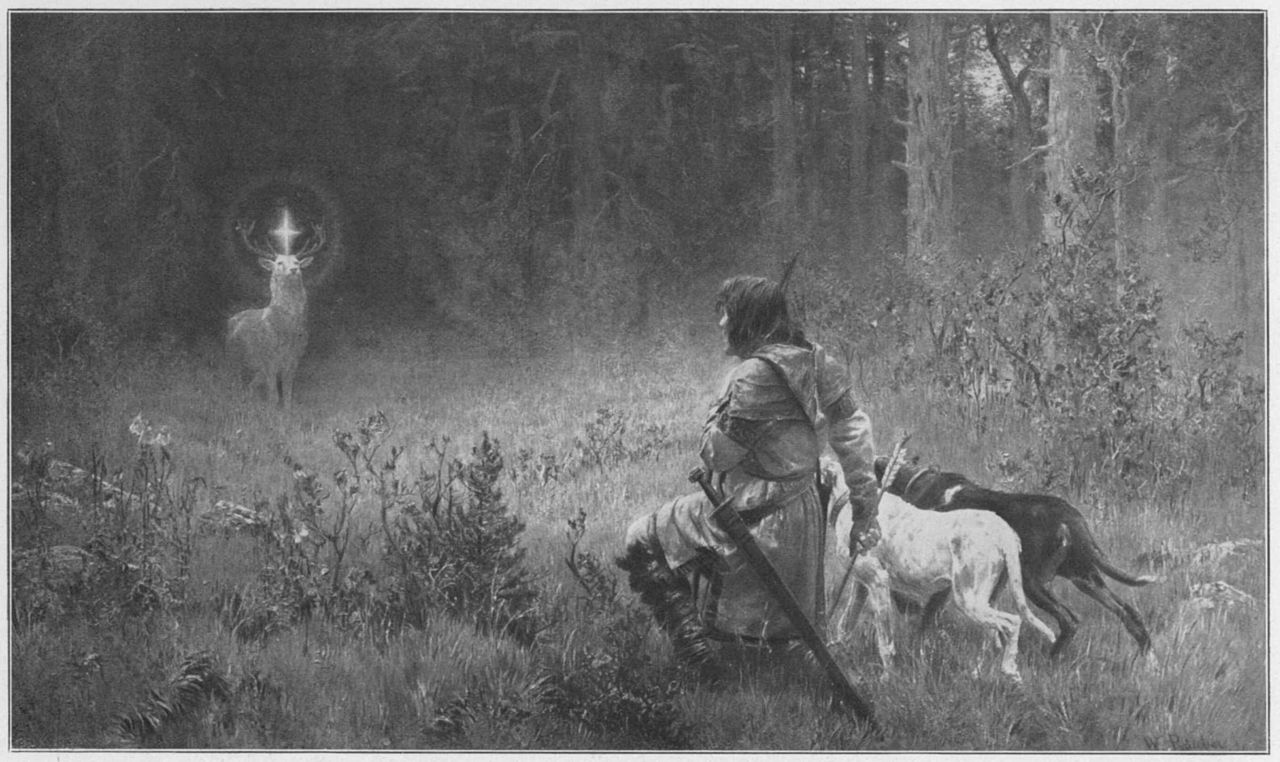
In the 900s, the Grand Thane of Stormurholmr Kaldor Loðbrók converted to Messianism. The Loðbróks had, since the days of ancient Adrianna on Gothis, held the Thaunic god Jägdar as their patron deity. So the stag, a representation of Jägdar, had been their sigil. It's said that Kaldor saw a stag while on a hunt, and that a cross of the Messianic god had appeared between its antlers, and a voice from heaven had compelled him to convert.
Around the same time the Marshall of Bakenveld, a major Bayardi city state, Absalon, had converted to Messianism as a result of Gojan monks from Gothis. Both Kaldor and Absalon's conversions resulted in large scale conversions amongst their respective local populaces.
Kaldor, however, did not break from his old habits as a viking lord. He sponsored a number of expeditions to the east, across the Great Eastern Sea to Auroria. The vikings who returned told stories of a great land of rivers, which became known in the western world as “Aria.”
And Clan Eiderwig, who had led expeditions on Kaldor’s orders, brought back the Ephyrian people. Long suffering under the Suavidici, the great Eastern Imperium, they had chosen to come to Craviter with the returning Thane of Eiderwig. They settled on an island to the east of the mainland. Today it is known as Ephyra, one of Prydania’s closest friends and allies.
Unification of Prydania Under the House of Loðbrók
Still, a newly forged shared religion didn't stave off conflict between the Nords and Bayardi. In 1014 Kaldor's descendent, the fourteen year old Grand Thane Vortgyn Loðbrók, laid claim to all of the viking settlements in the east of Prydansk as Lord Protector of Austurland. Some, such as the Clan of Eiderwig, bent the knee, while others resisted, having grown used to the autonomy afforded them by nearly two hundred years of loose affiliation.
Vortgyn, though young, had a keen and ambitious mind, and had the loyalty of both his father's military advisors and the fierce warriors of Clan Eiderwig. A brief series of campaigns brought rogue Thanes and Jarls to their knees, and soon all of eastern Prydansk, Austurland, was under his direct dominion. Vortgyn, however, would not be content with just these holdings. It was in the city of Haland that, in 1031, he declared himself King of All Prydansk, and demanded the Bayardi bend the knee.
The plan was ambitious, but the teenage Vortgyn and, specifically, his advisors, realized that all of Prydansk could be taken. The Bayrdi were fractured, and though their territory was vast, their numbers were not insurmountable. The Bayardi Clan of Yôrk proved willing to support Vortgyn to a point, for instance. Still, the coming war would not be easy. Made less easy by a rebellion from within the viking ranks, led by the mysterious Winter King, who briefly challenged Vortgyn for supremacy amongst the Nordik forces.
For fifteen years Vortgyn and his armies battled westward. The most powerful of the Bayardi kingdoms, Hadden, withstood onslaught after onslaught, but in the end at the Battle of Stormhafi, Vortgyn defeated the Bayardi King Bram of Hadden. With Hadden's army decimated on the field of battle, the Bayardi heartland was open to Vortgyn. His armies swept across Prydansk, until only the Bayardi city state of Bakenveld was left.
Bakenveld, though a rich and influential trade hub, had contributed little to Hadden's defences. In part to spare them to defend the city itself should Bram fall, as he did, but in part to also attempt to curry favour with Vortgyn. Summarizing that the viking king was eager to end the fighting himself after fifteen years, the city of Bakenveld made a deal- they would surrender to him and recognize him as King and Marshall of the city, if Vortgyn pledged that he and his heirs would preserve the city's ancient privileges within his realm. Vortgyn agreed, and Bakenveld lowered its defences to allow the victorious viking Grand Thane into the city.
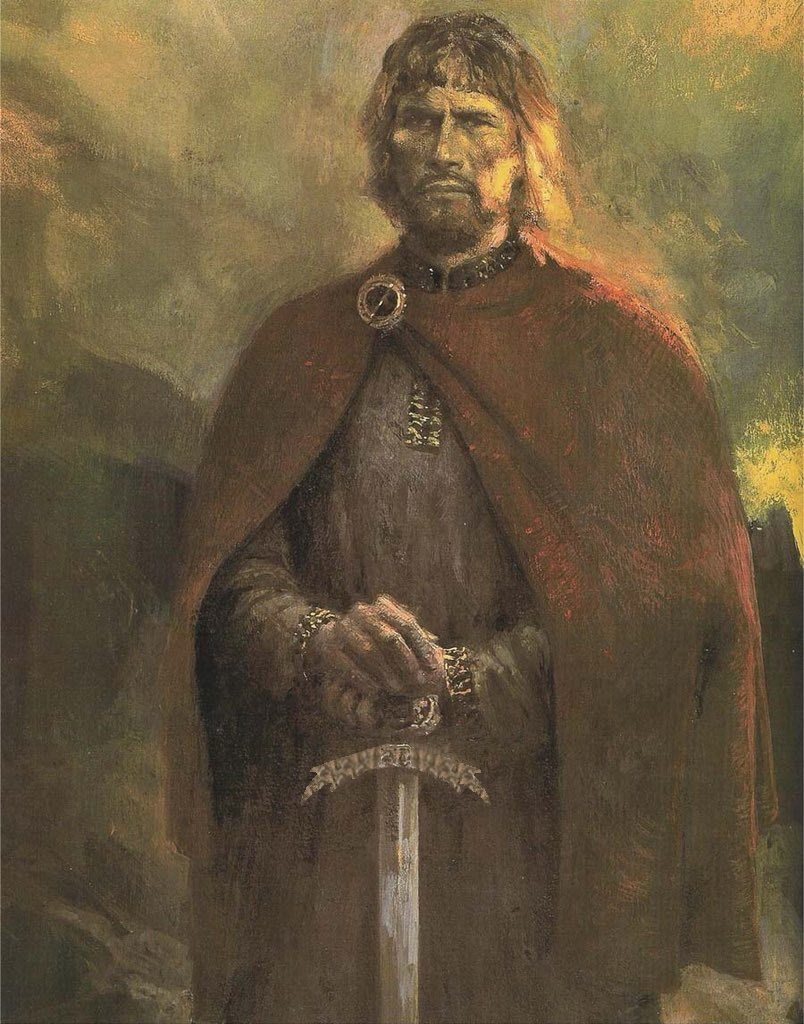
Vortgyn was crowned King of Prydania and the Eastern Nords, and the Bayardi on Christmas 1029. He moved his court from Stormurholmr to Bakenveld, which quickly took its Nordik name of "Býkonsviði." This was done, in part, to better directly administer the newly conquered lands he was now King of. Five years into his rule, Vortgyn personally led a war band back east, investigating reports of a werewolf. The King allegedly killed the beast, and the deed resulted in him being declared a saint after his death. He joined his ancestor Kaldor in sainthood, who was made a saint for his efforts to convert the eastern Nords to Messianism.
Medieval Period
Vortgyn's eldest son, Tobias, did not share his father's aptitude for battle. Instead he found his calling in the church. Though most of Prydania was Messianist by the time he came to the throne, there was a minority of old Thaunic believers in the east. Tobias spent his life using the throne as a pulpit to preach, and allegedly made plans to go to war with the Thaunic holdouts. This was averted, however, and the Great Compact was reached. Wherein the Thaunics were guaranteed religious liberty so long as they did not proselytize, and so long as they remained loyal to the crown. It was, ironically, during Tobias I's reign that the Thaunic titles of "Stormlord" and "Sword of Jägdar" were added to the King of Prydania's titles.
Tobias' efforts to preach the gospel of Messianism earned him sainthood after his death, like his father. Together with Vortgyn and Kaldor, they make up Prydania's "Saint Kings." His son, Vortgyn II, founded a knightly religious order in his honour, St. Tobias' Knights of the Storm. They served as the King's bodyguards and most elite soldiers.
In 1155 King Rikard I of Prydania, answering the Pope's call for crusade against the Syrixians, led an invasion of the Syrixian home islands. Notably, Prydania was not alone in answering this call. The Santonian King Maximilian III also personally led a force in Syrixia. Though Maximilian and Rikard didn't know each other, news had reached both of another Messianic King on the Syrixian home islands, and the two moved to link up their forces. It was during this meeting that the two Messianic armies met a Syrixian force. The resulting battle saw Maximilian III killed. His son, who was on Crusade as well, became King Childéric II, though his reign was short as he died in battle shortly after his father had. This had left the Santonian throne to Childéric II's infant son back in Saintonge, Baldéric I. Baldéric I's mother wrote the Santonian Crusaders, lamenting that with the army in Syrixia, her son was at risk of being manipulated by scheming nobles. King Rikard I of Prydania, having been moved by the sacrifices of Maximilian III and Childéric II, vowed to honour them by protecting their infant successor. He sent a detachment of his own Knights of the Storm to Saintonge, to show loyalty to the infant Baldéric I and protect him as they would their own king. This began the tradition of Saintonge's Royal Guard being made up of Prydanians, a tradition that lasted until the 1500s.
It was following the death of his ally Childéric II that Rikard I opted to bring the fight to the Syrixians. He launched a massive offensive from Crusader holdings in southern Syrixia, and the two month march through the dense jungles would go on to be memorialized as the epitome of Prydania duty and bravery. In the end, Rikard I laid siege to the Syrixian Emperor's capital of Pataliputra and even managed to burn part of it down, before being repulsed.
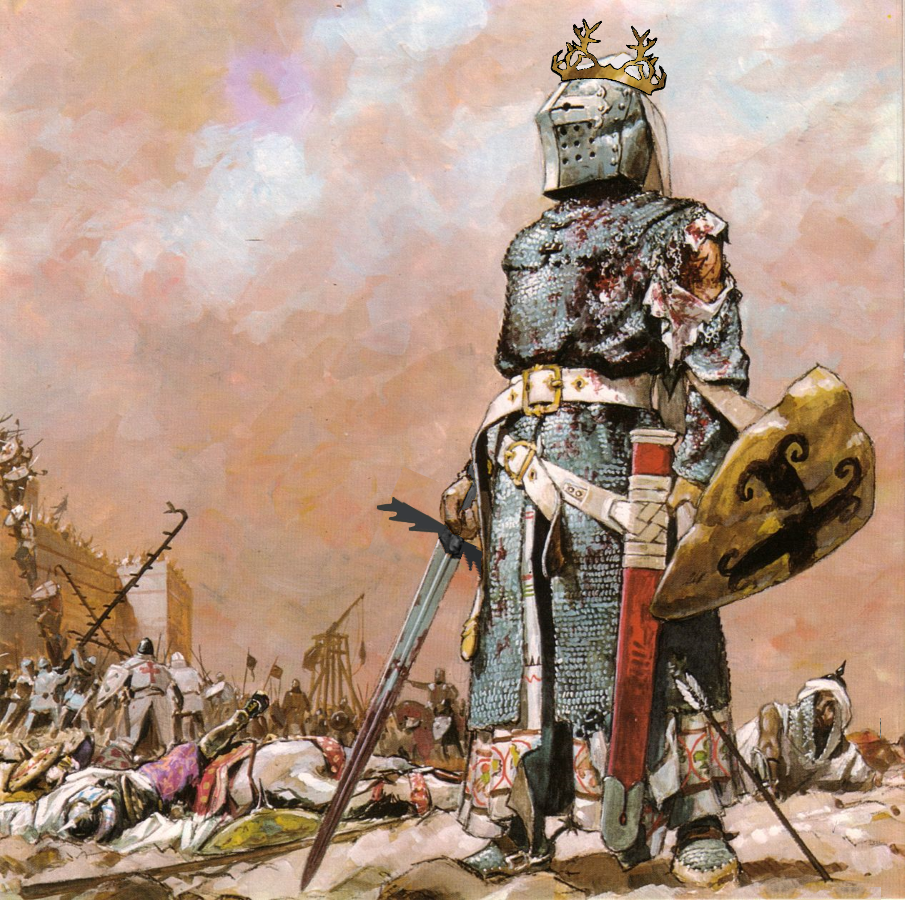
This proved to be the beginning of the end of the Crusades. Eventually Rikard I's forces were pushed back to their southern holdings, before a last stand by the Knights of the Storm allowed the Prydanian King and the rest of his forces the chance to withdraw from Syrixia.
Maksutov Reign and the Rise of the House of Scylfing-Loðbrók
In 1331 King Robert I revived Vortgyn I's spirit of conquest, deciding he would march south on Norsia, and conquer the confederated Kingdom to add to his domain. His initial invasion was successful, and King Robert I laid siege to the Norsian capital of Luscova. Trien forces from Norsia's west, however, forced a battle and Robert I was forced to withdraw when the warband led by his brother, Prince Harald, was defeated.
Robert I and his son, Anders II, would oversee declining fortunes of the House of Loðbrók. When Anders II was slain by Malorian forces, the Kingdom was left without an heir.
Two possibilities presented themselves. The House of Scylfing had become a cadet branch of the now-extinct royal house, and had the strongest claim to the throne. The Prydanian royal family, however, had also intermarried into the Maksutov royal family, across the Auburn Channel in Korova. Though King Vladimir III of Korova had a weaker claim, he was supported by a majority of Prydanian nobles, both due to the superior armies he could bring to the field and because many of them had grown concerned that the House of Scylfing had grown too powerful. So in 1353, King Vladimir III of Korova became King Vladimir I of Prydania. Though he ruled both nations separately, he used the title "King of the Auburn" to refer to his collective holdings.
Maksutov rule in Prydania began promisingly. The Korovan Kings often stayed home, leaving the governing of Prydania to the Prydanian nobility. Things began to fray, however, when King Askold of Prydania (Askold III of Korova) felt as if the House of Scylfing was growing too popular once more. He had Thane Hróarr Scylfing executed in a show of force, hoping to secure the Prydanian throne for his son Vladimir. Hróarr's oldest son, the seventeen year old Baldr, saw no safety for himself or his brother Harald in Prydania, and the two fled to Saintonge. Baldr enlisted in the Santonian Royal Guard under King Gabriel I, as the Santonian Royal Guard was still mostly a Prydanian outfit by this point.
Meanwhile King Askold passed in 1505, and the Prydanian and Korovan crowns passed to Vladimir II/IV. Vladimir's rule began cordially enough, and an envoy was sent to Saintonge which explained that the new King regretted his father's decision to execute Hróarr, and if Baldr would return and pledge his loyalty he would have an honoured position in the King's court.
Baldr, however, had begun to build a life for himself in Saintonge in the four years since he arrived. He had proved himself capable to the King he'd sworn to protect and he'd begun to court a Santonian Princess, Alexandra. He had also befriended Gabriel I's son and Alexandra's brother, amusingly named Baldéric. In fact Baldr had gone by the name Baldéric since settling in Saintonge. He was also unwilling to leave such a state of affairs to return to a Maksutov King who could turn on him at any moment, and who sat on a throne that was by all rights his family's.
The Prydanian noble families who supported the Maksutovs had begun to wane during Askold's long reign, as the King grew increasingly erratic. The execution of Hróarr and driving Baldr away both seemed to mark low points, but said nobility seemed relieved at Vladimir II/IV's seeming calm hand.
Vladimir II/IV grew distant though, spending more and more time in Korova. Such an arrangement might have benefited him and kept the Thanes, Jarls, and Hersirs loyal had he been content to simply not interfere. Instead, in 1510, he issued a Royal decree that separated Stormurholmr from Prydania and transferred it to Korova.
Stormurholmr has always been very important to Prydania. It was where Hróarr Loðbrók first landed in the mid 800s. It was where Kaldor saw the cross and the stag, beginning the Messianic conversion. And it was where Vortgyn I launched his campaign that created the modern Prydanian state. Stormurholmr's Grand Thane, the only Grand Thane in the Kingdom, was almost always the King's son. Stormuholmr was fundamentally Prydanian. Even in 1510.
Between Askold's growing erratic behaviour, Vladimir's aloofness, and now this, the Thanes, Jarls, and Hersirs revolted. Vladimir's court was driven from Prydania back to Korova, where the Korovan King would plot his next move.
As Vladimir's presence in Prydania was driven out, the nobles called the Alþingi. It was presided over by Ulfar Scylfing-Loðbrók, cousin of Baldr who had led his family's estate in Baldr's absence. The Alþingi stripped Vladimir of the Prydanian crown and a debate as to what to do next commenced. The animosities that had kept the Scylfing-Loðbróks from the crown had subsided, and initially calls were made to crown Ulfar King. Ulfar, however, refused. Baldr was the rightful head of House Scylfing-Loðbrók and if the House of Scylfing-Loðbrók was to be elevated to the Royal house, then it should be Baldr who was made King.
This occurred as Baldr, or Baldéric as the Santonians knew him, was beginning a family. He had wed Princess Alexandra just months before when a Prydanian messenger appeared in King Gabriel I's court. He carried a message not for the King of Saintonge, but for one of his Guardsmen, Baldéric Beaucheveaux-Lodbrok. Baldr stepped forward to hear the message- Vladimir was ousted, the Alþingi had proclaimed him King.
It's said that Gabriel I recognized Baldr as a fellow sovereign, the first to recognize him as a King. Afterwards the messenger presented Baldr with the sword Jægerblað, the Loðbrók heirloom and coronation sword of the Prydanian monarchs that had been secured by Prydanian forces as they drove Vladimir's court from the country.
Baldr asked for Gabriel I to release him from his pledge to always protect him, so he may return to his homeland and secure the crown from the Korovan invasion that was surely coming. Gabriel granted the request, but there was one last twist. Baldéric, Gabriel's son and the Crown Prince, wished to go and fight by his friend's side. Gabriel was reluctant to allow his son and heir to fight in a war in a foreign land he had no stake in, but was persuaded after Baldéric insisted he had to go to help protect his sister and ensure that her husband succeeded in his quest to win the Prydanian crown.
Refugees who found the Korovan yoke too much to bear had been arriving in Saintonge since the mid 1300s. Though never large in number, this group brought with them trade contacts from Craviter and carved out a niche for themselves in bustling medieval Saintes. This group welcomed the news that Baldr had been proclaimed King of Prydania, and many from that group volunteered to return to their homeland with him and aid him in his upcoming war with Vladimir.
This outpouring of support, and Baldr's loyalty during his stint in his Royal Guard, led to Gabriel I of Saintonge allowing his son to follow his friend to Prydania. Along with volunteers from the Prydanian community in Saintes, and some Santonian knights to boot. The only Prydanian conspicuous by his absence was Baldr's younger brother Harald, who opted to stay in Saintonge. His descendants in Saintonge still carry the Beaucheveaux name.
Baldr- he had re-adopted his Prydanian name after accepting the offer of the Prydanian throne- had more than just his wife, brother-in-law, and some Prydanian volunteers looking to return home to fight Korovan invaders. Gabriel I of Saintonge, both to aid his son-in-law and protect his children, considered a Santonian Queen of a foreign country to be a boon. He therefore lent transports, warships, and even a contingent of Santonian troops to aid the expedition.
Baldr and Baldéric had been friends for nine years, and were now brothers-in-law. The two spent the journey to Prydania plotting out a grand war. It was during these talks that Baldr decided to drop the dynastic name "Scylfing," to emphasize his family's connection to the old Loðbrók line and stress that the real Prydanian royal house had returned.
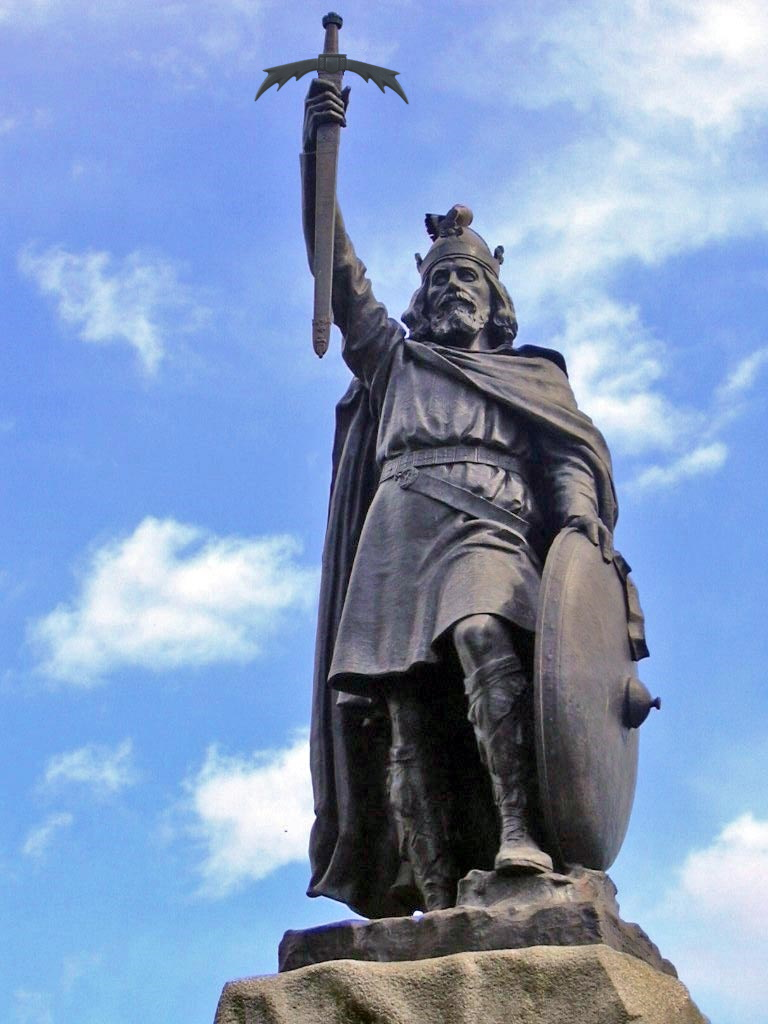
Baldr and his crew of Santonians and returning Prydanian volunteers arrived in Býkonsviði to a mix of jubilation and trepidation. He was welcomed as a hero, but news had reached the capital that Vladimir's forces had seized Stormurholmr and that Vladimir had adopted the title "Tyrant of Buryaostrov." Buryaostrov being the Korovan name of the island. Baldr was crowned King by the Archbishop of Erkiengil and raised a host to march east along with the Prydanian volunteers and Santonian soldiers, as the Santonian ships, and Prydanian ships loyal to Bladr, sailed along the coast.
Vladimir's host sailed from Stormuholmr and landed in Eiderwig. The Thane of Eiderwig, pledged to Baldr, was forced to retreat in the face of the Korovan army, bringing his forces along the Brommo River to meet with Baldr's. Vladimir's forces had pursued, and the first battle of what Baldr and Baldéric called "the great northern adventure" took place where the Brommo met the Svortvotn.
Vladimir's host charged aggressively, attempting to drive Baldr's into the riverbanks. Baldr's line, however, refused to break. Even as Baldéric was severely wounded by a Korovan arrow to his chest. Baldr, shocked at his friend's injury, rushed to his side. Baldéric insisted his friend finish the fight though, and at the end of the day the Korovans were driven back. The site of the battle gave way to a town in the years following, Baldersberg.
Vladimir's army attempted to retreat south, to fortify positions in northern Austurland. It was here that the Korovan Tyrant displayed how little he understood the land he wanted to rule. Prydanians loyal to Baldr used the forests of Austurland to harass and attack the Korovan army, forcing Vladimir back to the coast.
Meanwhile Baldéric lay recovering from his injuries. It's said when word of his injury reached Saintonge the people prayed for him to recover. It worked. He recovered and began to heal, and news of his friend's improving state was said to have lifted Baldr's spirits considerably. It must have, as he barred his friend from joining him in battle further.
Baldr's naval forces arrived to wreak havoc as Baldr and Vladimir once again faced each other, this time outside of Eiderwig. With his navy harassed and his lines weakened and tired from hit and run tactics from the forests, Vladimir left when he could, and tried to strengthen his hold over Stormurholmr.
The invasion of Stormurholmr was the largest naval engagement in the Auburn Channel until the First Nordic-Imperial War. Vladimir had secured himself in the old castle of Stormurkastala as ships loyal to Baldr fought their way to the docks of the city of Stormurholmr. Still, the Korovan King believed he could, at the very least, retain Stomurholmr if he could repulse Baldr's invasion. The advantage Vladimir had was turned on its head though, when the people of Stormurholmr turned on Vladimir. With Baldr's forces securing the docks of Stormurholmr and his troops stuck between them and a revolting city, Vladimir surrendered. He returned to Korova with his host after recognizing Baldr as King of Prydania, including Stormurhomr.
Baldéric of Saintonge made a full recovery and, after joining his friend and sister in celebration, returned to his home country. He would succeed his father and become King Baldéric III le Téméraire (“the Bold”) of Saintonge, an epithet he gained from his escapades in Prydania. That his friend became King Baldr III of Prydania is not lost on anyone. It remains a quirk or happy coincidence of history. In 1511 Baldr III's throne was secured.
Early Modern Period and Nordika Unity
The peace that Baldr III ushered in would be tested though. In 1566 his son Roger I passed. Roger I had been King when Laurenist Reformationists from Andrenne had come to Prydania to spread the word of their new church. As Andrennians and Prydanians had always been close kin, the Andrennian-born Laurenist movement appealed to many. Roger I's oldest son, Prince Harald, was one such convert. Courantist nobles, however, attempted to stop him from taking the throne upon Roger I's death. The short Nobles' War ended in victory for the Laurenists, and Harald took the throne as Harald I, marking the start of Prydania as a Laurenist country. Laurenist Messianism remains the largest religious denomination in Prydania to this day.
In 1650 the Nordic powers of Gothis of Andrenne and Goyanes entered into a personal union. Though retaining independent governments, the Grand King of Andrenne and the Emperor of Goyanes became embodied in one person, and the United Kingdoms of Andrenne and Goyanes was forged. This unified the colonial empires of both states into one globe-spanning empire. UKAG shortly turned their attention to Prydania, seeing it as the last holdout to a unified Nordik world. King Erik III of Prydania, not wanting to risk war and sure that Prydania could not hold out against combined UKAG forces, bent the knee to the King-Emperor of UKAG. As such Erik III retained his throne as King of Prydania and he and the Prydanian Alþingi retained sovereignty in local matters, while Prydania was brought into the UKAG sphere, with Andrennian administrators taking over the western half of the country, and Gojan administrators taking over the eastern half of the country.
It was as part of UKAG that Prydania took part in the First Nordik-Imperial War of 1748. This was a conflict between UKAG and its chief rival as a globe-spanning colonial Empire, the Syrixian Empire. Prydanian soldiers and sailors were sent across Meterra, the primary theatre of the war, and earned a reputation for bravery and loyalty amongst their Gojan, Andrennian, and Yalkanian peers. Syrixian forces prevailed, however, leading to the apex of Syrixian colonial power in 1751. Prydanians would once again serve UKAG in 1776, when Andrenne leaned heavily on Prydanian recruits to supplement their forces in the Scalvian War of Independence. Scalvian Independence was ultimately won.
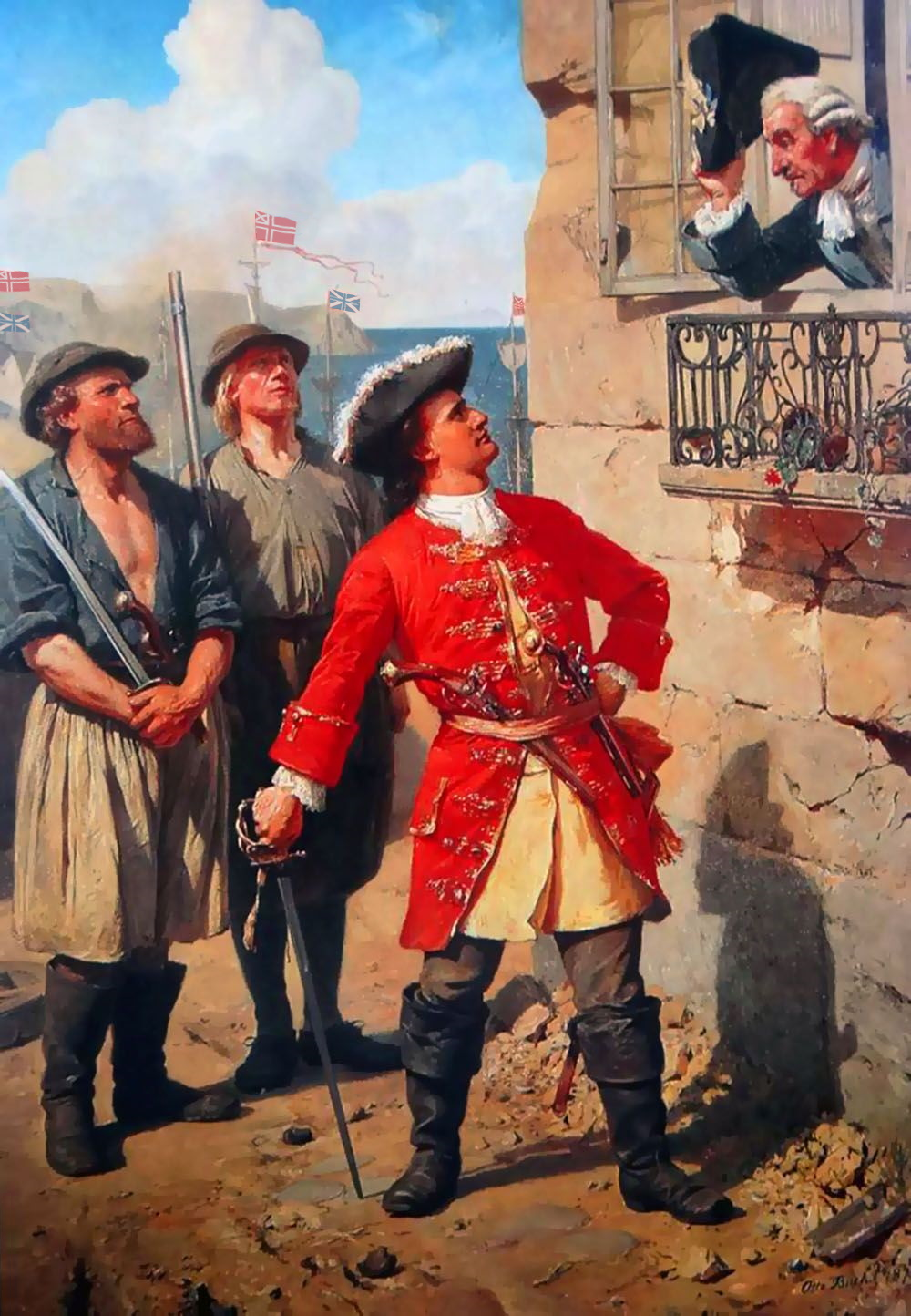
These two military defeats aside, Prydania prospered under UKAG. Being part of the colonial system meant that the country became a trade hub in a global trade system. And as the 19th century dawned, it seemed peace and stability would reign. Sadly, it would not last.
Wars of the Callisean Republic and the Revival of Sovereignty
Revolutionaries in Callise in central Craviter toppled the monarchy and established a republic in 1804. The revolutionary Callisean state shortly fell under the control of the military strongman Chavalier, who set his sights on the monarchies that surrounded the new republic. Declaring his intent to create a Grand Republic of Craviter, Chavalier began to wage war on his neighbours. Khastenia, Maloria, and Alemreich all fell. Essalanean clans, finding common cause in Chavalier's egalitarian message and promises of war spoils and land, joined his forces, as they continued their march north.
In Prydania, King Rikard III watched with unease. And when Norsia fell, the last bulwark protecting Prydania from Chavalier's forces was gone. With UKAG unable to provide reinforcements in time, Rikard III technically instigated an act of rebellion. The terms of Prydania's status as a UKAG protectorate meant that in times of war the Prydanian Army and Navy fell under UKAG control. With UKAG unable to arrive in time, however, Rikard III and his top military advisor, Field Marshall Ísak Beck, rallied an army of Prydanian volunteers and pressed what few UKAG garrisons were in the country into service.
Beck was notable, a Royal Prydanian Army Field Marshal who had no noble blood in him, having risen to the rank through his own merit. Beck had ridden ahead of the King, to serve as an advance force to meet the Calliseans as they crossed the border from Norsia to Prydania, in Austurland. The Calliseans felt victory was theirs for the taking. With Prydania conquered, most of mainland Craviter would be under control of Callise, or one of their puppet republics. And the transformation of the continent named "Crown Lands" into a massive republic would begin.
Yet Chavalier had allowed revolutionary fervor to cloud his judgement. Callise's success had been fuelled by the revolutionary enthusiasm of their soldiers freed from the shackles of royal and aristocratic oversight. This had allowed the Calliseans to think that this revolutionary spirit could make up for any logistical or tactical or even strategic shortcomings, and the victory over Norsia seemed to validate this. With a smaller, cobbled together Prydanian force opposing them, victory seemed certain. Especially, as Chavalier believed, the Prydanian soldiers would view the Calliseans and their revolutionary allies as liberators.
In the end, however, the people of Prydania saw them as foreign conquerors, and answered their King's call to arms. Additionally, the revolutionary enthusiasm Chavalier and his generals thought could carry the Calliseans to victory frayed as supply lines suffered. In their fervor, the Calliseans had expanded too far, too fast. The puppet regimes they placed in control of Alemreich, Khastinia, Norsia, and Maloria had only tenuous control of their lands, and the already stretched supply lines were easy prey to rebels looking to disrupt their conquerors' war efforts. Additionally, winter was setting in as Callise crossed the Prydanian border. Some of Chavalier's aids suggested that he wait out the winter before attacking Prydania, but Chavalier worried this would give UKAG time to reinforce the Prydanians. He invaded, hoping a quick series of victories could complete the conquest before the winter truly set in.
It was outside of Haland that Field Marshall Beck and his men met the invading Calliseans. The forests of Austurland proved another hindrance for the Calliseans, as Prydanian Jægar forces routinely harassed them as they marched on Haland. And it was to Haland's south that battle was had, and the Calliseans suffered their first defeat. The Prydanians, outnumbered, were able to hold the high ground of the Haland Valley, and the Callisean forces were forced to retreat. Not all was well, however. Field Marshal Beck was shot by a Callisean sharpshooter. The dying Field Marshall is said to have simply ordered his men to heed the path of the sun, and to push on.
News of the Prydanian victory reached the main Prydanian army under the command of King Rikard III. Jubilation turned to shock and sadness as Beck's death was passed to the King. Rikard III lamented the death of not just a brilliant commander, but a personal friend.
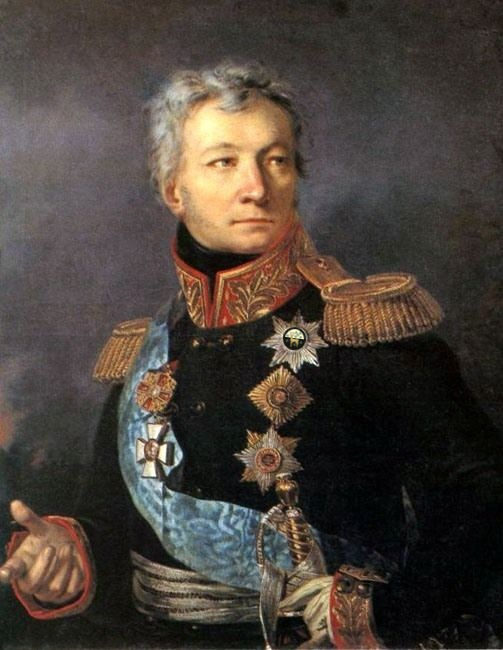
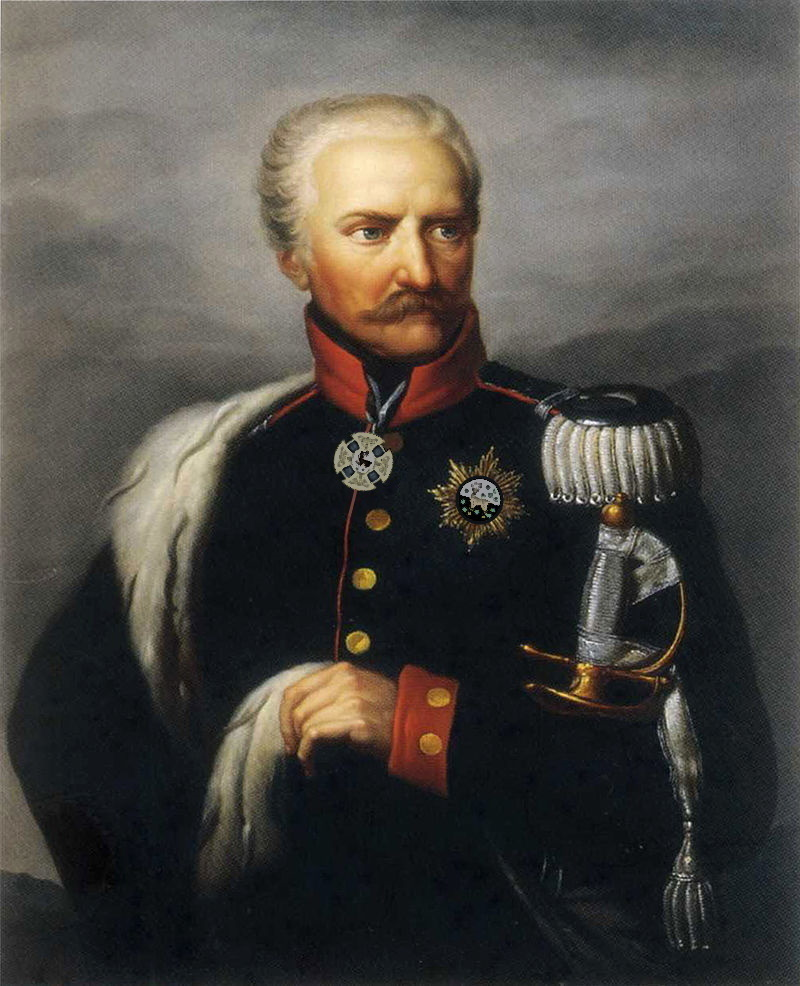
Still, victory over Chavalier had given the Prydanians the advantage. Rikard III pressed forward as Haland was secured, and the Calliseans regrouped around Mjölby. Chavalier hoped to solidify his position and call up more recruits from Maloria, Khastenia, and Norsia's puppet republics even has he had to contend with a Royal Prydanian Army pressing down on his position from the north, and Prydanian Jægar forces harrying his supply lines as winter set in. By the time the snow had covered the fields, Rikard III made the decision to press on Mjölby. The battle would end with another Callisean defeat, and a disastrous one at that. Hungry, cold, and harassed by enemies on all sides, the better stocked and prepared Prydanian force, though smaller, shattered the resolve of the Callisean soldiers, who would later recount the terrifying "viking warcries" their enemies unleashed before a volley of cannon and gunfire. Chavalier found himself having to retreat from Prydania entirely, through cold, hostile, winter forests as his army broke around him. His Essalanean allies, disgusted by the cowardice the Calliseans had displayed, instead chose to surrender to Prydanians they saw as honourable opponents, and the Essalanean clans broke off their agreement to aid Callise further.
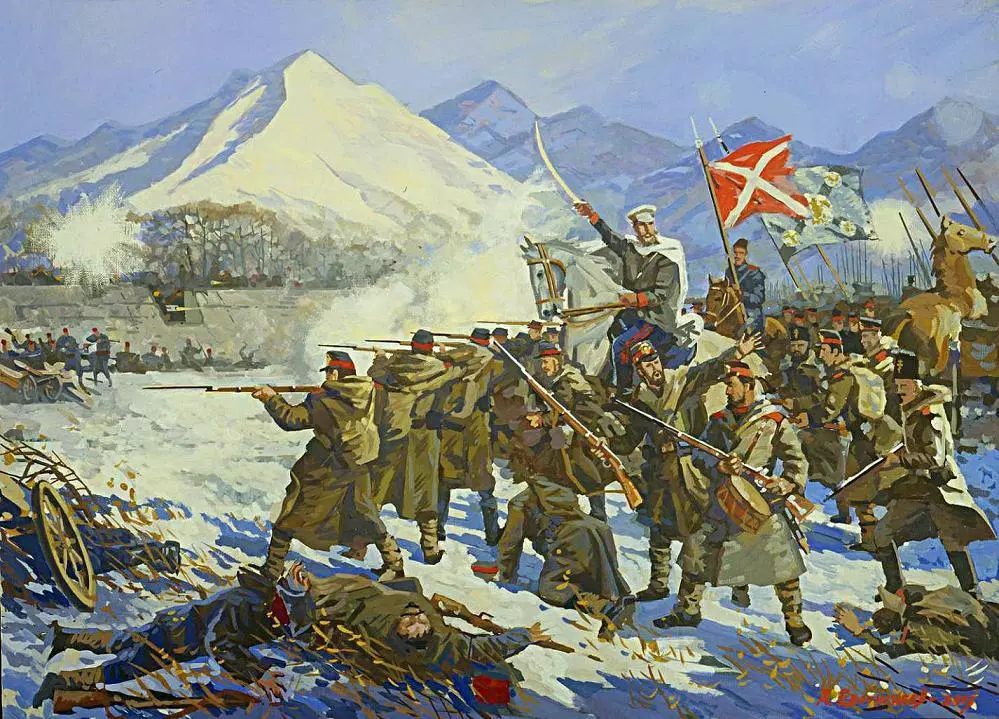
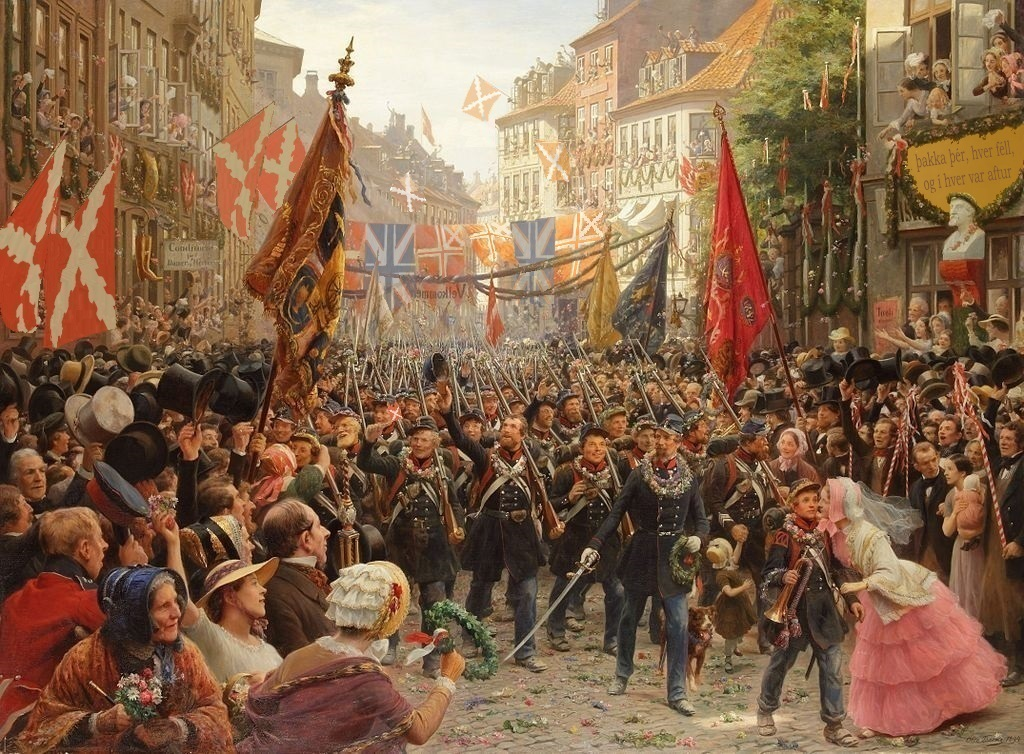
The victories at Haland and Mjölby, though costly, had proven that the unbeatable Callisean revolutionary army was very beatable. As Chavalier returned to Norsia, he had to contend with fresh rebellions across the conquered continent. Meanwhile the Prydanian victories had not only saved the country, but had allowed UKAG forces to arrive to reinforce the country through the winter. And when spring broke, Chavalier was in no position to try another offensive. Instead it was UKAG that struck, a massive UKAG army supplementing the Prydanian forces coming down. Two paths were charted. Andrennian and Gojan soldiers would go down Craviter's spine in the west, and liberate Maloria and Alemreich enroute to invading Callise itself. Meanwhile Rikard III led the Prydanians down east, liberating Norsia and Caminia, and delivering the killing blow to the First Khastenian Republic. By 1819, the war was over. UKAG forces had brought Callise to heel, who agreed to punitive peace terms. The royal houses of Craviter were also restored. And Býkonsviði welcomed home victorious Prydanian soldiers.
The Flight of Princess Luta and the Rise of Queen Alexandria
The Wars of the Callisean Republic had reawakened a nationalist spirit amongst Prydanians. King Rikard III was seen as a hero, and Field Marshall Ísak Beck a national martyr. UKAG would split shortly after the War ended, with twins inheriting the two halves of the Gothis powers. Rikard III took the opportunity to ride the wave of nationalistic sentiment, declaring a re-establishment of total Prydanian sovereignty. He claimed that his ancestor Erik III had pledged obedience to UKAG, but now that the Nordik Empire was no longer unified, there was no one for him as King of Prydania to pledge loyalty to. The Nordik powers of Andrenne and Gojanes, now once again fully independent nations, each consented and Prydania entered the 1820s riding high off a successful defence of itself in the face of foreign invasion, and once more a fully sovereign nation.
And this fully sovereign Kingdom would flex its military muscles. Syrixia, sensing weakness now that UKAG had dissolved, pushed to assert itself in colonial trade. Prydania, Yalkan, Goyanes, and Andrenne joined as the Nordik coalition to fight the Second Nordik-Imperial War, fought between 1820-1825, would end in a Nordik victory, and began Syrixia's decline as a colonial power.
It would also have lasting effects for both Prydania, and Saintonge. Near the end of the War, King Rikard III died and was succeeded by his son, who took the regal name Rikard IV. Rikard IV had fought the Calliseans and Khastenians alongside his father. And he had an unpleasant situation to deal with. His eldest daughter, and heir, Princess Luta, had fallen in love with a boy named Koðrán, a son of one of Rikard IV's Knights of the Storm. Rikard IV, however, was planning on marrying Luta off to either a noble from Prydania or a foreign prince. Luta would not end her relationship with Koðrán, however, and so Rikard IV had the boy, having just turned eighteen, and his father assigned to one of the foreign fronts of the Second Nordik-Imperial War. The boy died, and Luta was crestfallen.
Luta, however, would not be deterred. If anything, the death of her love pushed her to be more bold, and she began to sneak out and explore Býkonsviði in disguise. It was on one such outing that she met a Santonian fisherman named Brice de Montescourt. The two began a courtship, with Luta hiding her identity from him, and going by the name "Lotte Rikardsotter." The two began a romance that spanned years. Luta, finally ready to give up on her royal life when her father began to push for an arranged marriage, ran off to marry Brice in disguise, and left for Saintonge with him.
Luta having gone missing caused a massive scandal, and a nation-wide search for the Princess began. It was to no avail, however, and eventually Luta was presumed dead. Her younger sister, Alexandria, was formally invested as Rikard IV's heir after years of fruitless searching. Rikard IV died in 1838 believing his eldest daughter had died, and Alexandria became Prydania's first Queen regnant.
"Lotte," meanwhile, had settled into the happy life of a fisherman's wife in Saintonge. Still, something would happen that neither her or Brice could imagine. Saintonge's Pope-King Justin I was celibate and had no direct descendants. With the male line of the Santonian Royal family dead, a massive search was launched to find the next closest heir to the crown, with Justin I nearing the end of his life. The massive search had revealed that... Brice de Montescourt was heir to the Santonian crown. The humble fisherman and his wife would become the next King and Queen of Saintonge.
Not only had Luta found herself in a Royal role after fleeing to get away from just that... but the massive national exposure brought on by the discovery that Brice was next in line to the throne brought new scrutiny to "Lotte."
It couldn't be hidden, and "Lotte de Montescourt" had to admit that she was Luta Loðbrók, Crown Princess of Prydania. A massive investigation from both Saintonge and Prydania concluded that this was true... and it created many, many problems.
First among them was that Rikard IV of Prydania had died some years ago, and Alexandria had succeeded him as Prydania's monarch. Was this now invalid? Would Luta be made Queen of Prydania? This caused consternation on both sides.
While the Prydanian and Santonian royal families had been linked dating back to Baldr III of Prydania marrying Princess Alexandra (Alexandria's namesake), the idea of Saintonge's Queen being Queen Regnant of Prydania and drawing Saintonge, firmly established in its policy of neutrality since the Santonian Revolution, into Craviterian politics was not seen as desirable.
In Prydania Luta's actions had resulted in a number of reactions. Some found the story of a Princess who ran away to be with her true love romantic, dashing, and bold. Others saw it as a betrayl of duty and loyalty, attributes that had engrained themselves as Prydanian national values. Still, even those who saw Luta's actions positively, had no desire to turn the crown over to her.
Alexandria had been Queen since 1838 and developed a quick aptitude for ruling. As both a woman and a second born child, she knew that many would not see her as legitimate, even if Luta had been truly dead. She therefore developed a thick skin, a forceful approach, and an eye towards modernization. The Middle Ages were long dead by the time Alexandria ascended to the throne, but she was the monarch who truly had begun to modernize the institutions of the Prydanian state.
In 1848 Khastenia had overthrown their Tsar for a second time. The Second Khastenian Republic had barely held off an alliance of multiple Craviterian monarchies looking to topple it, and it was believed that should Prydania join in, the Second Republic would fall. Alexandria, however, pledged neutrality under the condition that Khastenia's republican revolutionaries confine their revolution to their borders. As Prydanians wondered if their children would be sent off to fight another foreign war, Alexandria's willingness to seek peace was celebrated across the nation. 1848 also saw the Alþingi pass universal freedom of religion and universal adult male suffrage into law, both of which Alexandria enthusiastically supported.
Alexandria was a sharp mind, an effective Queen, and a popular monarch. Few Prydanians were eager for Prydania to once again become subservient to another foreign power. And Alexandria, feeling betrayed at what her sister had done to their family, was not going to surrender her crown.
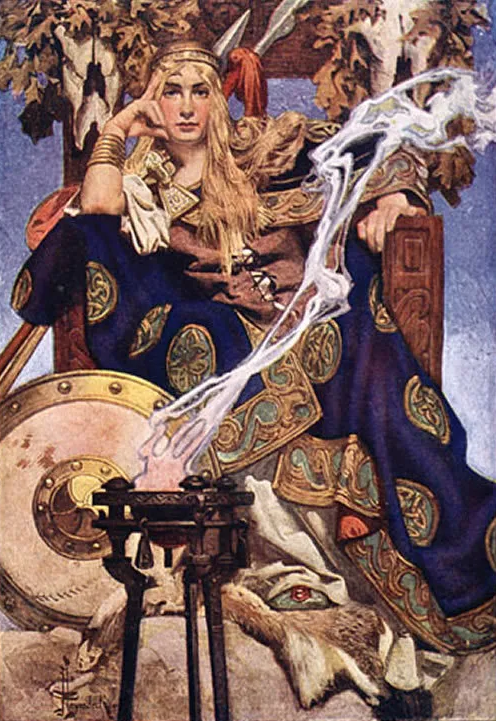
Luta, for her part, felt great shame for what she'd done. While she and Brice had built a beautiful life for themselves and their children, and would soon become monarchs of Saintonge, Luta had felt guilty for abandoning her family back in Prydania. When Santonian officials asked her what she wanted, what she would see as an ideal outcome, she confessed she'd happily trade in any number of crowns if it meant having her sister back.
Prydanian and Santonian statesmen were able to hammer out the Treaty of Fontainebleau in 1853. In it, Luta formally renounced any claim to the Prydanian crown, and in return Alexandria pledged that should her family line ever die out, Luta's heirs would inherit the Prydanian throne. The two sisters, one as Queen of Prydania, and one as Queen of Saintonge, met and reconciled in 1855 at Brice and Luta's coronation in Saintes.
Alexandria would reign into the 20th century, finally passing in 1902. During her reign, the nation modernized further. Science blossomed, and modern politics took root.
The Industrial Revolution and the Early Success of the Syndicalist Party
The industrial revolution had resulted in something entirely new to Prydania- the unskilled urban labourer. Previously, urban labourers had been specialized craftsmen. The advent of large scale industry and mining, however, had resulted in unskilled urban labourers becoming an increasingly common part of the national character. The first labour unions grew, and from them grew labour-oriented politics. Socialism and communism, imported from Callise, gained a following. The Shaddaist Labour Bund became the first political party with an overtly pro-labour platform to elect a member to the Alþingi, Björn Adler.
The Liberal Party, Prydania's first modern political party, had a wing sympathetic to the labour platform, and a number of "Liberal-Labour" candidates stood for election to the Alþingi. In the end, however, the more moderate side of the Liberal Party won out and attempts to marry pro-labour politics with the middle class professional platform of the Liberal Party didn't pan out.
This forced the trade unions of Prydania to conclude that if there was to be a political vehicle for the industrial working class, it would have to be built from them. And so in 1898 multiple pro-labour parties were, under the watchful eye of the nation's largest unions, merged into the Syndicalist Party of Prydania.
The Syndicalists had factional issues off the bat, however. Because of course they did.
The radicals wanted a platform that called for overt public ownership of all industry and private property, an abolishment of the aristocracy and monarchy, and the disestablishment of the Laurenist Messianic Church of Prydania. Moderates, however, preferred a program of democratic socialist reform that would be less off-putting to the majority of the electorate. Additionally, Prydania remained a mostly rural country. A platform that only zeroed in on the urban working class would never be able to command a national majority.
The moderates won this early battle, but it would be a war the Syndicalists would fight amongst themselves for most of their history.
And, as a result of the role of the unions in the Syndicalist Party's formation, there was massive overlap between Syndicalist Party and union membership across the country.
The Syndicalists established themselves as a viable third branch of the Prydanian political system, to both the Conservative-Agrarian Alliance and the Liberals. The moderate approach adopted began to pay off when Rune Læt became leader of the Syndicalist Party in 1919 and began to build what he called “the Coalition of the Just.”
He expanded the scope of the Syndicalist Party platform to address the economic needs and concerns of the urban middle class, the smaller farmers, and the rural labourers. Doing so allowed the Syndicalist Party to cut into demographics traditionally loyal to the Conservative-Agrarian Alliance or the Liberals. More radical Syndicalists scoffed at what they say as an abandonment of their left wing principals but in 1921 the Syndicalist Party, which had never once served as official opposition, was catapulted into government. Læt had managed to build a coalition that could make the Syndicalists a viable governing party.
The results caused a stir. The aristocracy and industrialists feared the country was on the verge of revolution, but when Læt arrived at Absalonhöll, the royal palace, to receive the invitation from King Rikard V to form government, he jovially remarked “Your Majesty, I come to govern, not rebel!”
It was a lighthearted remark that began a lifelong friendship between Læt and the King, and Læt’s government would, over the course of two terms, lay the foundations of the modern welfare state in Prydania. The success of the Syndicalists in the 1926 election was a resounding wake up call to the other parties that a shift had occurred and that they'd need to accept at least the basics of the new welfare state model or risk irrelevancy.
Ivar Froseth, a young and ambitious Conservative politician, was able to use the Conservative-Agrarian Alliance’s defeat in 1926 to dislodge the old guard of party leadership, and spent the next five years reshaping the Alliance’s ideology into something he deemed “progressive conservatism.”
At the same time, Læt was dealing with problems. He'd assumed two decisive majority governments would give his moderate faction and wide church strategy uncontested control of the Syndicalist Party. Yet the left wing revolted in 1927 when Læt pledged Prydanian grain in support of Andrenne’s war against Gottia. The left saw this as Læt supporting a foreign capitalist war, and the Syndicalist Alþingi caucus nearly split.
The government survived, but Læt now had to spend the remaining four years of this second term in government fending off a rejuvenated Conservative-Agrarian Alliance on the right, and radicals from his own party on the left.
Rune Læt deserved a better ending than what he got. A man who proved that social democracy and egalitarian reform was possible within parliamentary democracy if the right approach was tried and won two terms in government saw his term as Prime Minister ended when Froseth’s Conservative-Agrarian Alliance emerged victorious with a majority government of their own in 1931, in part due to the Liberals splitting when defectors formed the Moderate and Reform Parties. Læt resigned as Syndicalist Party leader shortly after, finding his position untenable. The radical wing would take control of the party, and would never fully let go.
Fascism and the Rise of the First Social Commonwealth
Fascism, however, was on the rise. The Valkrysts in Andrenne seized power in the late 1930s, and Rikard V died in 1937. He was succeeded by his son, Rikard VI. And this King was sympathetic to fascism.
Or at least saw it as a bulwark against what he saw as the dangers of socialism and the degeneracy of liberal democracy. Rikard VI saw it as providence that his ascension to the throne should coincide with an election. Vidkun Fuglesang and the fascist Social Commonwealth movement, inspired by the Andrennian Valkrysts, used election day as a day to march on Býkonsviði. Rikard VI exercised his authority to force the Army to stand down, and he cancelled elections to proclaim Fuglesang Prime Minister by popular mandate.
Læt, who had spent the last five years in retirement, joined with the outgoing Prime Minister and his one time rival Froseth and Liberal leader Bernt Hanstad in protesting the decision, but they were all placed under house arrest. Ingvald Lutsi, the Syndicalist Party leader, took the Syndicalists underground.
Fascism in Prydania dismantled the democratic system, funneled the economy to serve a military buildup, and began to persecute anyone deemed “undesirable.” The Social Commonwealth regime began to euthanize those with mental illness, jail political opponents and trade unionists, and forcibly stripped Shaddaists of their citizenship and most of their property, forcibly ejected form
most professions, and forced them into ghettoed settlements. This policy of ethnic discrimination was given a Bayardi term, Aparthied.
In the Fascist Wars, Prydania threw in with the fascist Dominion, sending troops and grain to both Andrenne as it attempted to wage war on Gothis against Gottia, Goyanes, Illia, and Gotmark, and to Maloria as it attempted to conquer Cogoria.
The Allies- the name given to the democracies that rallied against these fascist powers- would emerge victorious after a long, brutal conflict.
When Malorian lines in Cogoria collapsed, and it looked like Cogoria might sweep across both Maloria and Prydania, the Malorians detonated a nuclear bomb on their own soil to shock the Cogorians into stopping any further advance. It's the only time in world history that a nuclear bomb has been used in conflict.
End of the Fasicst Wars and the Reforms of Robert VII and Kristvin Austdal, Shepeards of the Golden Age
The collapsing war effort and the Malorian decision to detonate a nuclear weapon on itself allowed the anti-fascist opposition in Prydania to topple the Social Commonwealth government. Vidkun Fuglesang and his cabinet were arrested. The King was placed under house arrest. And a provisional government was established that made peace with the Allies. The war had ended in 1951, and a bitter Rikard VI, essentially stripped of any power, died in 1954 of lung cancer.
His estranged son, Prince Robert, returned from Sutherland where he had been studying. Rikard VI only told him “do your duty” before passing.
The new King Robert VII was, thanks to his time studying in Canwyr and Sutherland, a worldly liberal democrat at heart and used his ascension to the throne to remove every trace of the old Social Commonwealth regime and call for new democratic elections.
Kristvin Austdal, meanwhile, had emerged as leader of the Liberal Party and had secured the Foreign Affairs portfolio in the provisional government. He'd used the Provisional Government’s three years in power to negotiate a merger between the Liberals, Moderates, and Reform Party. The resulting party was named the Free Democrats, and in 1954 he led it to a comfortable victory.
Robert VII and Kristvin Austdal are credited as the two major architects of the post-War economic boom in Prydania. Prydania had been spared the ravages of invasion during the Fascist Wars, and the provisional government was able to negotiate Prydania back into the family of nations. Their new liberal King and, soon, liberal Prime Minister, alleviated any remaining concerns amongst the Allies that Prydania had put fascism behind it.
Prydania became one of the founding nations of the Food Security Organization, and the economy flourished as the 60s and 70s carried on. One point where Austdal and the King disagreed, however, was what to do with the Social Commonwealth fascists. They had returned two members to the Alþingi in 1954 and Austdal wanted the party banned and forcibly dismantled.
The King, however, was too much of a political idealist and believed fascism had been defeated in the public square. He refused to give his consent to anything he saw an attack on freedom of belief.
The Coming Rot- The Second Social Commonwealth
In 1978, the Syndicalists found themselves at a crossroads. They had engaged in underground resistance against the fascists during the War, and had reemerged to partake in the 1954 elections. Since then the Syndicalists had never managed to rise above third place. The economic populism and narrow urban worker focus of the radical wing that led the party simply didn't appeal to people by and large as the economy boomed.
Moderates in the party began to advocate for a return to Læt’s broad church approach. The resulting moderate/radical clash within the party led to the emergence of Thomas Nielsen. Nielsen, the son of miners from Rakjandi and a former union organizer, had joined the Syndicalist Party and been elected to the Alþingi four years earlier. Nielsen belonged to the party's left wing, but his experience as a union man had made him adaptable and a keen negotiator. He'd built friendships in the party amongst the moderate wing, and was therefore seen as a young, promising compromise candidate. The radicals would see him as a true Syndicalist and one of their own, and moderates would see him as someone who could be talked to and worked with.
There was a darker side to Thomas Nielsen though, Jannik Lieftur.
Like Nielsen, Lieftur came from Rakjandi, a small mining town in Prydania’s southwestern Brenntland. Unlike Nielsen, Lieftur lacked a personable nature, but he was Thomas’ best friend. Lieftur had grown up the son of a miner himself, though unlike Thomas’ father, Jannik’s had managed to get out, becoming a lawyer. He returned to Rakjandi to represent his old comrades, though, becoming the local chapter of the miner’s union’s legal council.
Lieftur had, therefore, grown up in proximity to miners but was nonetheless more priviliged than his friends would have been. He was known as the rich kid of the group, a teasing moniker he resented, at least to some degree.
Still, he'd benefited from his father’s relative wealth and influence even at a young age. School teachers worried the eight year old Jannik was displaying signs that could signal issues. Torturing small animals, bullying other children.
His father, however, threatened to use his influence in local government to have the school’s faculty “dealt with” if Jannik suffered any “unfair” disciplinary actions.
When Nielsen became a spokesman for his chapter of the union at only twenty-three, Jannik became his “fixer.” Anyone in the union who went against Thomas ended up being visited by Jannik and some thugs until they could be “persuaded” to see things Thomas’ way.
And while Thomas Nielsen, the young and energetic and personable union man won the Syndicalist Party’s nomination for Rakjandi’s Altingi seat- a sure lock to win the upcoming election in that constituency- it was whispered that Jannik had cracked a few metaphorical eggs to make that particular omelet happen.
Now, as Syndicalist Party leader, Nielsen faced the challenge of making the party more electorally relevant, and Lieftur was there at his side.
Tragedy struck in 1984, however. King Robert VII, his wife Queen Lotte, and their eldest son Crown Prince Baldr were assassinated. The King’s middle child, Prince Anders, barely escaped death himself.
The nation was in shock as the perpetrators, radical Syndicalists, were arrested. And Anders was crowned King Anders III. Nielsen insisted up and down that the party was in no way tied to the attacks, but he was drowned out.
Stefan Toft, a Royal Army veteran and son of a wealthy family from the Prydanian heartlands, had taken charge of the moribund Social Commonwealth Party in the early 1980s. And had worked to present a more acceptable face for the party. Charismatic, deemed “refreshing” by how he seemingly said what he meant and didn't pull his punches, he made headway. The economic boom of the 60s and 70s had slowed by the late 70s, and he'd presented the Social Commonwealth as an easy answer to complicated economic issues. The climb was slow, but the assassination of King Robert, Queen Lotte, and Prince Baldr suddenly made Toft appealing as a bulwark against both economic downturn and Syndicalist terrorism.
Anders III, meanwhile, was popular. He'd amassed large degrees of sympathy for surviving the assassination that had taken his brother, mother, and father. And he seemed to a quiet, dutiful king wrestling with burdens he never asked for.
It was a fully undeserved reputation. Anders III was a sociopath. One who'd been funnelling funds to the Social Commonwealth Party since his teens. And who rejected his father as a weak willed man, while idealizing his grandfather.
Anders, once on the throne, used his influence to hide the fact that the Syndicalist radicals who had assassinated his father, mother, and brother were mere patsies hired by Social Commonwealth agents. And once he'd strongarmed Toft into the PM’s office, the two had successfully couped the government with only three casualties. And no one knew.
Anders’ younger brother, Robert, did not know what his brother had done. He'd known Anders as an aloof older brother. Wickedly bright, politically and historically astute, but quiet and somewhat shy. He and his older brother Baldr would play all time, but Anders? He was always…distant… but Robert has no reason to suspect he was capable of anything untoward.
Still, Robert began to chafe under Anders’ political direction. He found his brother’s “toleration” for fascism unbearable.
The second Social Commonwealth regime was, in actuality, far more careful. Toft had rebuilt the party in part due to his distancing from extreme positions. And presenting them as “reasonable.”
He couldn't start fully persecuting Shaddaists or shooting Syndicalists in the streets. Toft understood he could buy time with presenting a pragmatic face as the more sinister aspects of Social Commonwealth policy could be eased into place.
As such the Social Commonwealth government engaged in extrajudicial intimidation to silence opposition.
Thomas Nielsen willing to stage massive demonstrations in the name of protesting the Social Commonwealth takeover early in its tenure. Though Anders III wanted Nielsen apprehended, Toft urged caution, that it would only turn the moderates who had tolerated the Social Commonwealth out of pragmatism against them. Instead, laws that mandated Alþingi elections every five years were repealed, allowing the Social Commonwealth majority of 1984 to stand indefinitely. Nielsen, along with the leaders of the Conservative-Agrarian Alliance and Free Democrats, were left neutered. With small Alþingi caucuses and no ability to stifle the government outside of minor procedural tactics.
Still, the Free Democrats managed a means of small rebellion. They elected Gætir Ravn as the leader of their Alþingi caucus, a Shaddaist Prydanian ÞM.
In 1990 two major events occurred for the Royal family. King Anders III and his wife Queen Vera had their only child, a daughter, Princess Astrid. And Prince Robert met and fell in love with Hanna Ladefoged, a commoner from the Austurland town of Krysuvik.
Robert and Hanna married in 1994. They travelled to Saintonge for their honeymoon, and it was just before they were planning on returning to Prydania that the Santonian King Timothée II requested a private audience with Prince Robert. It was during this meeting that Timothée II revealed the truth to Robert. Santonian intelligence had uncovered that Anders III had been behind the murder of their parents and older brother in a plot to seize control of the government. Robert inquired why Saintonge hadn’t gone public, but Timothée II insisted that Saintonge’s stance on neutrality meant they could not interfere in another nation’s internal affairs. Still, he promised Robert and his new family sanctuary in Saintonge if they ever needed it.
Hanna and Robert would have a son shortly thereafter, who they named Tobias. While Robert and Hanna had desired more children, the realization that Anders III was fully capable of killing family members for his own ends meant that they held off on having any future children.
Robert’s own distaste for his brother’s fascism had led him to follow in Princess Luta’s footsteps from over a hundred years prior. He snuck out of the palace to seek out political outlets. It was during one such incursion that he came across Thomas Nielsen and the Syndicalists.
Nielsen was amused at first by the Prince seeking him out, but grew to see him as something of a protege when he saw that the Prince was serious about widening his political horizons.
Jannik Lieftur, however, felt embittered towards the Prince, feeling as if he was too much of a moderating influence on Nielsen. Still, Thomas Nielsen saw the advantages of having a royal in his back pocket. Which is what he told Jannik, though on some level it appeared that he genuinely enjoyed the Prince’s friendship.
Tensions would begin, however, in 1996. William Aubyn, leader of the Conservative-Agrarian Alliance, and Gætir Ravn, leader of the Free Democrats, had joined with Nielsen with the goal of planning a coup of the Social Commonwealth government. The plan called for the Army to support them, in arresting Toft and the Social Commonwealth ÞMs, and placing Anders on house arrest. He would be forced to abdicate for his, at the time, six year old daughter. Who would have her uncle, Prince Robert ruling in her name as regent until she was eighteen. It was hoped that during these twelve years, Anders and Toft’s regime could be dismantled, and Astrid would be reshaped into a liberal democratic monarch like her grandfather. Or, worst case scenario, could be removed for Robert himself.
The plan, however, hinged on Robert. The Army would not agree to it without his involvement, fearing that the Royal family risked abolishment without Robert in a central role, and they were not willing to plunge the country into further political chaos that such an outcome would have. Nielsen’s decision to align himself with this plot angered Lieftur, who assumed that should it succeed and democracy be restored, the Syndicalists would once again fall to a third place option and lose whatever power they might amass in a provisional arrangement.
Nielsen, however, believed he had a duty as Robert’s friend to try and recruit him to the plan, but Robert refused. Robert’s son Tobias was only a year old, and he knew that Anders was capable of murdering family members. He feared that any decision to act on this plan would risk his wife and son’s life before he could whisk them away to Saintonge. Nielsen walked away disappointed, but still believing that the multi-party plan could work, if Robert were given enough time. Still, the Prince’s refusal allowed Jannik to sow doubt in Thomas’ mind, pushing the idea that the Syndicalists alone were capable of ending Anders III and Toft’s regime. With or without the support of the people.
The Storm of Ruin- the Prydanian Civil War
Still, Nielsen proved a bit too stubborn, and so Lieftur felt compelled to push his friend in what he deemed the “right” direction. Meanwhile he began to purge the Syndicalist Party of moderates, and anyone else who wasn’t sufficiently loyal to Nielsen’s leadership, to lay the groundwork for the coup he knew he’d lead.
The town of Kleifar in Krummedike was a “safe haven” town. The Syndicalist Party had a number of contacts throughout the town’s leadership and infrastructure that they used to hide people on the run from Anders and Toft’s regime. In 2001 Lieftur passed an anonymous tip to the Social Commonwealth regime authorities, knowing that they’d respond brutally. And they did. The Knights of the Storm- by now transformed into shock troops loyal only to Anders- and Social Commonwealth party thugs descended on the town and razed it to the ground. Most of the town was killed, those that weren’t were arrested, or made orphans.
The news devastated Nielsen, who was none the wiser that his best friend Jannik had arranged this disaster. Instead, he blamed Robert for not joining the plan to oust Anders five years prior, and committed himself to Jannik’s plan. A coup of the country.
It was the final day of August in 2002. The Alþingi was in session. Notably missing were the Syndicalist members. Gunmen appeared in the gallery around the legislature, gunning down the entire chamber, both the Social Commonwealth government, and most members of the opposition. In just a few moments the government had been decapitated. Additional People’s Militia members- armed thugs of the Syndicalist Party- stormed the Royal palace.
The firefighting in the Royal palace mirrored the fighting in the streets. The Royal Army attempted to intervene, but secret pro-Syndicalist Soldiers’ Committees had caused enough chaos within their ranks to neutralize them. Fighting in the streets resulted in Syndicalist People’s Militia seizing the capital as the Knights of the Storm were gunned down in the Royal palace.
As Prince Robert went to confront them, Hanna fled with Tobias, now only seven years old, into the ancient catacombs under the palace. It was there that she passed Tobias off to Axle Skov, a former ÖSU intelligence agent who had been working with an anti-Anders resistance group that now found itself dealing with a Syndicalist uprising. Telling her son that she loved him, and that his parents would always love him, she tearfully parted ways. Axle tranquilized the boy and snuck him out to safety, before Hanna surrendered herself to the People’s Militia who now controlled the Palace.
While Nielsen and Lieftur were upset at losing Prince Tobias, they took advantage of having the rest of the Royals. They were tortured for two days, and though the Syndicalist regime denied it, rumours persistted that Queen Vera and Princess Astrid were repeatedly sexually violated. Allegedly Anders’ mental state shattered, and he spent the entire time laughing hysterically as he was tortured.
Finally, though, King Anders, Queen Vera, Prince Robert, Princess Hanna, and Princess Astrid were publicly executed on live television as Thomas Nielsen proclaimed the Syndicalist Republic of Prydania.
Anti-Syndicalist forces were scattered. Field Marshall Stig Eiderwig took command of Royal Armed Forces units not yet loyal to the Syndicalists to rendezvous in the deep forests of Austurland, where Syndicalist forces would be at their weakest. Austurland, always the most traditionally minded region of the country, would be troublesome for the Syndicalists to control even at their height.
It was in Austurland that William Aubyn, leader of the Conservative-Agrarian Alliance, Axle Skov, Stig Eiderwig, and the young Prince Tobias met. And formed the Front of National Unity (FRE), formally stating their goal to oppose the Syndicalist Republic, restore the monarchy, and restore parliamentary democracy.
The Prydanian Civil War is often referred to as a single conflict that lasted the majority of the lifespan of the Syndicalist Republic. This, however, is somewhat misleading. The period from 2002-2008 saw the Syndicalists go essentially unchallenged, with FRE leadership in hiding and anti-Syndicalist action limited to hit-and-run tactics, supply raids, and sabotage, as well as smuggling out evidence to the wider world of the Syndicalist Republic’s crimes against its own citizenry.
Thomas Nielsen was fully on board with Jannik Lieftur’s plan now, that the Syndicalist Party was the only party that could speak for the people, whether the people wanted it or not. And if they didn’t, it was because they had erred, not the party.
Prydania remained a largely rural country with a large religious population, and a small industrial working base. Lieftur believed that it was the duty of the Syndicalist Party to smash the older, traditional elements of Prydanian society and remake the country in the image of Syndicalist ideology.
Farms were seized, and collectivized. With multiple farms merged into giant “homesteads,” which were run as essentially labour camps masquerading as communes. Around half the rural population was conscripted into “Industrial Re-Education” programs, which meant being used a slave labour in factories, mines, or ship yards to turn farmers into good Syndicalist workers. Those that were left in the collectivized farms were worked to the bone under Syndicalist Party administrators who had no experience in farming.
The fisheries, another key industry of the country, suffered a similar fate. And factories, corporations, private property and business from large conglomerates to small general stores, were seized by the state. Those that resisted could find themselves in labour camps, or “Re-Education” centres.
The rest of the world watched with uncertainty. Anders and Toft’s regime had grown truly disliked by the end, with only Waltalriche, Aria, and Suavidici holding as true allies. Many were cautiously optimistic that this new regime MIGHT be positive, and viewed the FRE as just a cadre of Anders loyalists… at first. The initial FRE-supplied reports of Syndicalist oppression were denounced by the Syndicalist government as untrue smears, but when stories of Lieftur’s Militia gunning down church goers in their own pews began to circulate, and evidence of the fact were brought to light, opinions on the Syndicalist regime began to sour. Like the Social Commonwealth regime before them, the Syndicalists found themselves with a small group of ideologically sympathetic nations to support them internationally. A huge blow came in 2008 when the People’s Republic of Skanda broke with them.
Saintonge had decided it would act to save as many Prydanians attempting to flee the Syndicalist regime as it could, using the fact that one of Lieftur’s anti-church purges had accidentally killed a Santonian diplomat as leverage. It was through Siantonge, and Santonian connections in Goyanes, that the vast majority of Prydanian refugees were saved. While the four million dead is often talked about regarding the death toll of the Syndicalist Republic via poor conditions, direct action, or just negligence, it could have been worse. Over two million were saved via Santonian and Gojan efforts.
Saintonge wasn’t willing to do much more than that, though. Even when their own Syndicalist wing of their National Party began to turn on the Syndicalist Republic, the country’s longstanding policy of neutrality remained, and they continued to recognize the Syndicalist Republic as legitimate as a means to protect refugees.
Goyanes had no such hindrance, and it and Andrenne began to lead the charge to isolate the Syndicalist Republic internationally and aid the FRE.
In 2010 the FRE managed to secure control of towns deep in the heart of Austurland, near the Norsian border. Syndicalist control in Austurland was primarily in the cities and large towns, and the country roads became dangerous territory. Over the next few years, the FRE built up its strength, and in 2012 conducted an operation in Darrow, South Austurland’s largest city, that decapitated Syndicalist leadership. The Syndicalists replied by hanging twenty random citizens of Darrow. The brutality further hardened the FRE and turned Austurlanders against the Syndicalists further, and on New Year’s Day 2013 a massive FRE offensive from the countryside overtook most Syndicalist positions in Austurland. Four weeks in, the FRE had secured Haland, the largest city in all of Austurland.
The Syndicalists had fallen prey to infighting. Lieftur, believing that the Syndicalist Republican Army was made up of opportunists who had supported the last regime and were untrustworthy, had gotten Nielsen to pull them out of Austurland. Instead, his People’s Militia would keep the peace. The Militia, primarily made up of union thugs, were more used to bossing around civilians then dealing with an insurgency, and their unwillingness to challenge the FRE in the Austurland countryside where the FRE was strongest in part led to the successful breakout in 2013. By the time Syndicalist Republican Army leadership had convinced Nielsen to let them back into Austurland, it was too late. The Syndicalist Republican Army lost at Haland, and the FRE was in full control of Austurland. The Civil War was now an open war. Goyanes and Andrenne formally recognized the FRE as the legitimate government of Prydania and joined the War, sending troops and supplies to aid the anti-Syndicalist military force. And with them came news sources from around the world, to see the after-effects of Syndicalist brutality first hand.
Beyond all of this, however, was another problem. One Nielsen refused to take seriously at first. Prince Tobias was, by the time the FRE seized Austurland, seventeen. He had gone from a scared child to someone who was front and centre of the FRE campaign.
In reality, Tobias’ life had been hard the past eleven years. He’d been ripped from his family, watched them be murdered on television, and survived on the run, from safehouse to safehouse, often miserable, often alone. William Aubyn had acted as a surrogate father to the boy, himself having lost his wife and daughter to the Syndicalists.
Tobias had gone from traumatized young child to a teenager who had lost his first love when she stepped on a landmine, another victim of the war that had dominated his life.
He’d resented the lot in life that fate had dealt him, even as he avoided Syndicalist assassins who looked to wipe out the Royal family once and for all. It was only around the age of sixteen that he began to try and understand his family’s history, and was at that age that he was gifted Jægerblað, the heirloom sword of the Prydanian Royal family.
For his part, Tobias insisted that it was seeing a small girl die in a Syndicalist attack on the town of Markarfljot on New Year’s Day 2013 that convinced him to fully embrace the role that fate had dealt him. He began to appear in recently liberated areas, distributing humanitarian aid, giving speeches that called on the country to resist the Syndicalist regime, and talking about the pain, fear, and uncertainty this war had forced onto him, and millions like him. Tobias became someone who stood as a symbol of the struggle against Syndicalism. A Royal who could represent Prydania’s rebirth, and someone who the common man, woman, and child of the country could relate to. This boy, who could be king, had suffered. Like they had.
Nielsen, however, continued to view Aubyn and Eiderwig as the main FRE threats. In fairness, this was not unfounded. Aubyn had become the political head of the FRE while Eiderwig was its commander in chief. Tobias, Nielsen thought, was just a boy, a puppet used for the purposes of propaganda. He still thought of him as the small child of his former protege, Prince Robert.
What he didn’t account for, was that Tobias had begun to inspire people. And his own trauma and survivor's guilt pushed him to earn that inspiration. Stories of Prince Tobias confronting Syndicalist agents emerged from the murky front lines of the war, fact and fiction mixing. And suddenly, children in the heart of Syndicalist territory were whispering that Tobias, like his ancestor Vortgyn in 1029, would ride out of the East to save the country.
These whispers began to mount, and soon the Syndicalists were suspecting every small town of being a hotbed of enemy spies. When FRE spies were captured in the towns around Hadden in October 2015, Prydania’s second largest city, the entire region was razed by the People’s Militia. Farmland burnt, homes ransacked, and Hadden itself turned inside out as the Militia attempted to shock the region into loyalty. The “Harrying of Hadden” as it became known became the final straw for many on the world stage, the final line that the Syndicalist Republic crossed.
FRE, Gojan, and Andrennian forces had pushed to Hadden by late 2015. A successful Gojan landing to support the offensive had put Nielsen in a defensive mood, feeling as if the Gothis powers would eventually be what won the FRE the War. So he ordered underground religious communities in Býkonsviði that his government had kept tabs on to be raided by the People’s Militia. As the FRE/Gojan/Andrennian alliance marched on Hadden, the world was shown another case of Syndicalist brutality when religious believers were hung from Býkonsviði’s lampposts during the Advent of 2015. What few apologists remained for the Syndicalist Republic abroad after the Harrying of Hadden either abandoned them or at the very least stopped advocating after this event.
The Battle of Hadden occurred in the snow during the final days of 2015. In the end an intelligence leak from the Syndicalist government had allowed the FRE to target Syndicalist armoured divisions across the city and region. By New Year’s Eve the city was in FRE hands, Jannik Lieftur was captured, and the Syndicalist Republican Army was in retreat, having the backbone of its armoured corps broken beyond repair.
By this point the Syndicalist Republic had tarnished its international reputation, the FRE had gained legitimacy amongst more and more foreign governments, and even the FRE’s currency had outpaced the Syndicalist Republic’s currency. Meanwhile, Syndicalist agricultural mismanagement had turned a breadbasket economy into one teetering on the edge of famine.
With the armoured corps broken, and the FRE supplemented by Andrennian and Gojan forces, pressure was mounted on Nielsen to surrender. Nielsen, however, knew that he and his cadre had no realistic chance at any sort of amnesty. They would defend the Syndicalist Republic or die trying. The junior branches of the People’s Militia, fifteen, sixteen, and seventeen year olds, were pushed into military service to bolster the Syndicalist ranks. While FRE victory seemed certain after Hadden, no one knew just when it would come, even as FRE advances in the East and South chipped away at Syndicalist lines.
By the spring of 2017, only the West and Heartlands remained in Syndicalist hands, but the rivers that framed this territory seemed reasonably well defended. It was believed that it would take some time to dislodge Syndicalist positions, based on how hard that process had been in Austurland and Midland. Vesturland, however, proved to be too much. Rot had reached untenable levels and an FRE offensive in mid-May exceeded even the FRE’s wildest expectations. Syndicalist forces were in total retreat, breaking after even the smallest FRE breakthrough. Towns went from firmly being in Syndicalist territory to suddenly being on the front lines within hours, and soon Býkonsviði was within the FRE’s sites.
As FRE soldiers entered the outskirts of Býkonsviði, Prince Tobias addressed the world. He formally laid claim to the throne of Prydania, and pledged that he would never follow in the footsteps of his uncle. He then asked for the trust of Prydanians everywhere, to help rebuild their country.
The fighting lasted for weeks once it reached Býkonsviði. The Syndicalists, also pinned down in Keris to the west, were fighting merely to survive. Slowly neighbourhood after neighbourhood fell. Slowly, but surely, the FRE pushed deeper into the capital. Once word reached Nielsen that Syndicalist forces had been defeated in Keris, and that no help was coming, he retreated into the Prime Minister’s office. Determined to die in the Syndicalist Republic, he played a folk song from Rakjandi, his home town, took a drink, and shot himself.
The chaos that followed was the final death spasm of the Syndicalist Republic. Hennrik Buhl, the Syndicalist Foreign Minister, temporarily assumed the role of Chairman of the Presidium, and ordered all Syndicalist forces to continue fighting. This was the final straw for Field Marshal Ejvind Borg, leader of the Syndicalist Republican Army. He and men loyal to him stormed the Presidium and forced them, at gun point, to elect Borg as Chairman. Now, with the legal standing of Head of State of the Syndicalist Republic, he insured an order. All Syndicalist forces were to pull back to the Alþingi to prepare to surrender, or to surrender to the nearest FRE force.
William Aubyn and Stig Eiderwig entered the Alþingi building to find Borg and his men. Who were all quickly disarmed. Borg formally surrendered, unconditionally, before he was arrested and taken away.
The Civil War was, after fifteen years, over. Prince Tobias was proclaimed King Tobias III, as William Aubyn addressed the nation, to usher in peace after a decade and a half of bloodshed, and thirty-three years of authoritarian dictatorship.
Prydania in the immediate aftermath of the Syndicalist defeat was a broken country. And while the years following would be dominated by recovery and rehabilitation, in the immediate aftermath the Prydanians celebrated. Fireworks, flags, songs, and chants dominated every city and town for days. And the refugee communities in Saintonge and Goyanes took to the streets to celebrate the end of the War that had devastated their homeland and torn their families and lives apart.
Prydania's roots stretch back to the ancient Adriannic Empire on Gothis, but its history-proper begins in 850. It was that year Hróarr Loðbrók, King of petty Kingdom of Heorot, led his people to abandon Gothis rather than bend the knee to Osvald the Conqueror. While Osvald would go on to unify the petty kingdoms of the former Empire into the Kingdom of Andrenne, Hróarr's exodus followed viking trade routes east to Craviter where they settled on the northern edge of the eastern continent.
They encountered the Bayardi, the region's natives, who named the land "Prieden," which the vikings called "Prydansk." Hróarr and his followers travelled to the eastern edge of Prieden, where they settled and formed a series of Jarldoms and Thanedoms. Hróarr himself laid claim to the largest island in the Auburn Channel, christening it Stormurholmr.
The viking settlements in eastern Prieden were loosely unified under Hróarr and his descendent, bordering the various Bayardi kingdoms and city-states to their west.
In the 900s, the Grand Thane of Stormurholmr Kaldor Loðbrók converted to Messianism. The Loðbróks had, since the days of ancient Adrianna on Gothis, held the Thaunic god Jägdar as their patron deity. So the stag, a representation of Jägdar, had been their sigil. It's said that Kaldor saw a stag while on a hunt, and that a cross of the Messianic god had appeared between its antlers, and a voice from heaven had compelled him to convert.
Around the same time the Marshall of Bakenveld, a major Bayardi city state, Absalon, had converted to Messianism as a result of Gojan monks from Gothis. Both Kaldor and Absalon's conversions resulted in large scale conversions amongst their respective local populaces.
Kaldor, however, did not break from his old habits as a viking lord. He sponsored a number of expeditions to the east, across the Great Eastern Sea to Auroria. The vikings who returned told stories of a great land of rivers, which became known in the western world as “Aria.”
And Clan Eiderwig, who had led expeditions on Kaldor’s orders, brought back the Ephyrian people. Long suffering under the Suavidici, the great Eastern Imperium, they had chosen to come to Craviter with the returning Thane of Eiderwig. They settled on an island to the east of the mainland. Today it is known as Ephyra, one of Prydania’s closest friends and allies.
Unification of Prydania Under the House of Loðbrók
Still, a newly forged shared religion didn't stave off conflict between the Nords and Bayardi. In 1014 Kaldor's descendent, the fourteen year old Grand Thane Vortgyn Loðbrók, laid claim to all of the viking settlements in the east of Prydansk as Lord Protector of Austurland. Some, such as the Clan of Eiderwig, bent the knee, while others resisted, having grown used to the autonomy afforded them by nearly two hundred years of loose affiliation.
Vortgyn, though young, had a keen and ambitious mind, and had the loyalty of both his father's military advisors and the fierce warriors of Clan Eiderwig. A brief series of campaigns brought rogue Thanes and Jarls to their knees, and soon all of eastern Prydansk, Austurland, was under his direct dominion. Vortgyn, however, would not be content with just these holdings. It was in the city of Haland that, in 1031, he declared himself King of All Prydansk, and demanded the Bayardi bend the knee.
The plan was ambitious, but the teenage Vortgyn and, specifically, his advisors, realized that all of Prydansk could be taken. The Bayrdi were fractured, and though their territory was vast, their numbers were not insurmountable. The Bayardi Clan of Yôrk proved willing to support Vortgyn to a point, for instance. Still, the coming war would not be easy. Made less easy by a rebellion from within the viking ranks, led by the mysterious Winter King, who briefly challenged Vortgyn for supremacy amongst the Nordik forces.
For fifteen years Vortgyn and his armies battled westward. The most powerful of the Bayardi kingdoms, Hadden, withstood onslaught after onslaught, but in the end at the Battle of Stormhafi, Vortgyn defeated the Bayardi King Bram of Hadden. With Hadden's army decimated on the field of battle, the Bayardi heartland was open to Vortgyn. His armies swept across Prydansk, until only the Bayardi city state of Bakenveld was left.
Bakenveld, though a rich and influential trade hub, had contributed little to Hadden's defences. In part to spare them to defend the city itself should Bram fall, as he did, but in part to also attempt to curry favour with Vortgyn. Summarizing that the viking king was eager to end the fighting himself after fifteen years, the city of Bakenveld made a deal- they would surrender to him and recognize him as King and Marshall of the city, if Vortgyn pledged that he and his heirs would preserve the city's ancient privileges within his realm. Vortgyn agreed, and Bakenveld lowered its defences to allow the victorious viking Grand Thane into the city.
Vortgyn was crowned King of Prydania and the Eastern Nords, and the Bayardi on Christmas 1029. He moved his court from Stormurholmr to Bakenveld, which quickly took its Nordik name of "Býkonsviði." This was done, in part, to better directly administer the newly conquered lands he was now King of. Five years into his rule, Vortgyn personally led a war band back east, investigating reports of a werewolf. The King allegedly killed the beast, and the deed resulted in him being declared a saint after his death. He joined his ancestor Kaldor in sainthood, who was made a saint for his efforts to convert the eastern Nords to Messianism.
Medieval Period
Vortgyn's eldest son, Tobias, did not share his father's aptitude for battle. Instead he found his calling in the church. Though most of Prydania was Messianist by the time he came to the throne, there was a minority of old Thaunic believers in the east. Tobias spent his life using the throne as a pulpit to preach, and allegedly made plans to go to war with the Thaunic holdouts. This was averted, however, and the Great Compact was reached. Wherein the Thaunics were guaranteed religious liberty so long as they did not proselytize, and so long as they remained loyal to the crown. It was, ironically, during Tobias I's reign that the Thaunic titles of "Stormlord" and "Sword of Jägdar" were added to the King of Prydania's titles.
Tobias' efforts to preach the gospel of Messianism earned him sainthood after his death, like his father. Together with Vortgyn and Kaldor, they make up Prydania's "Saint Kings." His son, Vortgyn II, founded a knightly religious order in his honour, St. Tobias' Knights of the Storm. They served as the King's bodyguards and most elite soldiers.
In 1155 King Rikard I of Prydania, answering the Pope's call for crusade against the Syrixians, led an invasion of the Syrixian home islands. Notably, Prydania was not alone in answering this call. The Santonian King Maximilian III also personally led a force in Syrixia. Though Maximilian and Rikard didn't know each other, news had reached both of another Messianic King on the Syrixian home islands, and the two moved to link up their forces. It was during this meeting that the two Messianic armies met a Syrixian force. The resulting battle saw Maximilian III killed. His son, who was on Crusade as well, became King Childéric II, though his reign was short as he died in battle shortly after his father had. This had left the Santonian throne to Childéric II's infant son back in Saintonge, Baldéric I. Baldéric I's mother wrote the Santonian Crusaders, lamenting that with the army in Syrixia, her son was at risk of being manipulated by scheming nobles. King Rikard I of Prydania, having been moved by the sacrifices of Maximilian III and Childéric II, vowed to honour them by protecting their infant successor. He sent a detachment of his own Knights of the Storm to Saintonge, to show loyalty to the infant Baldéric I and protect him as they would their own king. This began the tradition of Saintonge's Royal Guard being made up of Prydanians, a tradition that lasted until the 1500s.
It was following the death of his ally Childéric II that Rikard I opted to bring the fight to the Syrixians. He launched a massive offensive from Crusader holdings in southern Syrixia, and the two month march through the dense jungles would go on to be memorialized as the epitome of Prydania duty and bravery. In the end, Rikard I laid siege to the Syrixian Emperor's capital of Pataliputra and even managed to burn part of it down, before being repulsed.
This proved to be the beginning of the end of the Crusades. Eventually Rikard I's forces were pushed back to their southern holdings, before a last stand by the Knights of the Storm allowed the Prydanian King and the rest of his forces the chance to withdraw from Syrixia.
Maksutov Reign and the Rise of the House of Scylfing-Loðbrók
In 1331 King Robert I revived Vortgyn I's spirit of conquest, deciding he would march south on Norsia, and conquer the confederated Kingdom to add to his domain. His initial invasion was successful, and King Robert I laid siege to the Norsian capital of Luscova. Trien forces from Norsia's west, however, forced a battle and Robert I was forced to withdraw when the warband led by his brother, Prince Harald, was defeated.
Robert I and his son, Anders II, would oversee declining fortunes of the House of Loðbrók. When Anders II was slain by Malorian forces, the Kingdom was left without an heir.
Two possibilities presented themselves. The House of Scylfing had become a cadet branch of the now-extinct royal house, and had the strongest claim to the throne. The Prydanian royal family, however, had also intermarried into the Maksutov royal family, across the Auburn Channel in Korova. Though King Vladimir III of Korova had a weaker claim, he was supported by a majority of Prydanian nobles, both due to the superior armies he could bring to the field and because many of them had grown concerned that the House of Scylfing had grown too powerful. So in 1353, King Vladimir III of Korova became King Vladimir I of Prydania. Though he ruled both nations separately, he used the title "King of the Auburn" to refer to his collective holdings.
Maksutov rule in Prydania began promisingly. The Korovan Kings often stayed home, leaving the governing of Prydania to the Prydanian nobility. Things began to fray, however, when King Askold of Prydania (Askold III of Korova) felt as if the House of Scylfing was growing too popular once more. He had Thane Hróarr Scylfing executed in a show of force, hoping to secure the Prydanian throne for his son Vladimir. Hróarr's oldest son, the seventeen year old Baldr, saw no safety for himself or his brother Harald in Prydania, and the two fled to Saintonge. Baldr enlisted in the Santonian Royal Guard under King Gabriel I, as the Santonian Royal Guard was still mostly a Prydanian outfit by this point.
Meanwhile King Askold passed in 1505, and the Prydanian and Korovan crowns passed to Vladimir II/IV. Vladimir's rule began cordially enough, and an envoy was sent to Saintonge which explained that the new King regretted his father's decision to execute Hróarr, and if Baldr would return and pledge his loyalty he would have an honoured position in the King's court.
Baldr, however, had begun to build a life for himself in Saintonge in the four years since he arrived. He had proved himself capable to the King he'd sworn to protect and he'd begun to court a Santonian Princess, Alexandra. He had also befriended Gabriel I's son and Alexandra's brother, amusingly named Baldéric. In fact Baldr had gone by the name Baldéric since settling in Saintonge. He was also unwilling to leave such a state of affairs to return to a Maksutov King who could turn on him at any moment, and who sat on a throne that was by all rights his family's.
The Prydanian noble families who supported the Maksutovs had begun to wane during Askold's long reign, as the King grew increasingly erratic. The execution of Hróarr and driving Baldr away both seemed to mark low points, but said nobility seemed relieved at Vladimir II/IV's seeming calm hand.
Vladimir II/IV grew distant though, spending more and more time in Korova. Such an arrangement might have benefited him and kept the Thanes, Jarls, and Hersirs loyal had he been content to simply not interfere. Instead, in 1510, he issued a Royal decree that separated Stormurholmr from Prydania and transferred it to Korova.
Stormurholmr has always been very important to Prydania. It was where Hróarr Loðbrók first landed in the mid 800s. It was where Kaldor saw the cross and the stag, beginning the Messianic conversion. And it was where Vortgyn I launched his campaign that created the modern Prydanian state. Stormurholmr's Grand Thane, the only Grand Thane in the Kingdom, was almost always the King's son. Stormuholmr was fundamentally Prydanian. Even in 1510.
Between Askold's growing erratic behaviour, Vladimir's aloofness, and now this, the Thanes, Jarls, and Hersirs revolted. Vladimir's court was driven from Prydania back to Korova, where the Korovan King would plot his next move.
As Vladimir's presence in Prydania was driven out, the nobles called the Alþingi. It was presided over by Ulfar Scylfing-Loðbrók, cousin of Baldr who had led his family's estate in Baldr's absence. The Alþingi stripped Vladimir of the Prydanian crown and a debate as to what to do next commenced. The animosities that had kept the Scylfing-Loðbróks from the crown had subsided, and initially calls were made to crown Ulfar King. Ulfar, however, refused. Baldr was the rightful head of House Scylfing-Loðbrók and if the House of Scylfing-Loðbrók was to be elevated to the Royal house, then it should be Baldr who was made King.
This occurred as Baldr, or Baldéric as the Santonians knew him, was beginning a family. He had wed Princess Alexandra just months before when a Prydanian messenger appeared in King Gabriel I's court. He carried a message not for the King of Saintonge, but for one of his Guardsmen, Baldéric Beaucheveaux-Lodbrok. Baldr stepped forward to hear the message- Vladimir was ousted, the Alþingi had proclaimed him King.
It's said that Gabriel I recognized Baldr as a fellow sovereign, the first to recognize him as a King. Afterwards the messenger presented Baldr with the sword Jægerblað, the Loðbrók heirloom and coronation sword of the Prydanian monarchs that had been secured by Prydanian forces as they drove Vladimir's court from the country.
Baldr asked for Gabriel I to release him from his pledge to always protect him, so he may return to his homeland and secure the crown from the Korovan invasion that was surely coming. Gabriel granted the request, but there was one last twist. Baldéric, Gabriel's son and the Crown Prince, wished to go and fight by his friend's side. Gabriel was reluctant to allow his son and heir to fight in a war in a foreign land he had no stake in, but was persuaded after Baldéric insisted he had to go to help protect his sister and ensure that her husband succeeded in his quest to win the Prydanian crown.
Refugees who found the Korovan yoke too much to bear had been arriving in Saintonge since the mid 1300s. Though never large in number, this group brought with them trade contacts from Craviter and carved out a niche for themselves in bustling medieval Saintes. This group welcomed the news that Baldr had been proclaimed King of Prydania, and many from that group volunteered to return to their homeland with him and aid him in his upcoming war with Vladimir.
This outpouring of support, and Baldr's loyalty during his stint in his Royal Guard, led to Gabriel I of Saintonge allowing his son to follow his friend to Prydania. Along with volunteers from the Prydanian community in Saintes, and some Santonian knights to boot. The only Prydanian conspicuous by his absence was Baldr's younger brother Harald, who opted to stay in Saintonge. His descendants in Saintonge still carry the Beaucheveaux name.
Baldr- he had re-adopted his Prydanian name after accepting the offer of the Prydanian throne- had more than just his wife, brother-in-law, and some Prydanian volunteers looking to return home to fight Korovan invaders. Gabriel I of Saintonge, both to aid his son-in-law and protect his children, considered a Santonian Queen of a foreign country to be a boon. He therefore lent transports, warships, and even a contingent of Santonian troops to aid the expedition.
Baldr and Baldéric had been friends for nine years, and were now brothers-in-law. The two spent the journey to Prydania plotting out a grand war. It was during these talks that Baldr decided to drop the dynastic name "Scylfing," to emphasize his family's connection to the old Loðbrók line and stress that the real Prydanian royal house had returned.
Baldr and his crew of Santonians and returning Prydanian volunteers arrived in Býkonsviði to a mix of jubilation and trepidation. He was welcomed as a hero, but news had reached the capital that Vladimir's forces had seized Stormurholmr and that Vladimir had adopted the title "Tyrant of Buryaostrov." Buryaostrov being the Korovan name of the island. Baldr was crowned King by the Archbishop of Erkiengil and raised a host to march east along with the Prydanian volunteers and Santonian soldiers, as the Santonian ships, and Prydanian ships loyal to Bladr, sailed along the coast.
Vladimir's host sailed from Stormuholmr and landed in Eiderwig. The Thane of Eiderwig, pledged to Baldr, was forced to retreat in the face of the Korovan army, bringing his forces along the Brommo River to meet with Baldr's. Vladimir's forces had pursued, and the first battle of what Baldr and Baldéric called "the great northern adventure" took place where the Brommo met the Svortvotn.
Vladimir's host charged aggressively, attempting to drive Baldr's into the riverbanks. Baldr's line, however, refused to break. Even as Baldéric was severely wounded by a Korovan arrow to his chest. Baldr, shocked at his friend's injury, rushed to his side. Baldéric insisted his friend finish the fight though, and at the end of the day the Korovans were driven back. The site of the battle gave way to a town in the years following, Baldersberg.
Vladimir's army attempted to retreat south, to fortify positions in northern Austurland. It was here that the Korovan Tyrant displayed how little he understood the land he wanted to rule. Prydanians loyal to Baldr used the forests of Austurland to harass and attack the Korovan army, forcing Vladimir back to the coast.
Meanwhile Baldéric lay recovering from his injuries. It's said when word of his injury reached Saintonge the people prayed for him to recover. It worked. He recovered and began to heal, and news of his friend's improving state was said to have lifted Baldr's spirits considerably. It must have, as he barred his friend from joining him in battle further.
Baldr's naval forces arrived to wreak havoc as Baldr and Vladimir once again faced each other, this time outside of Eiderwig. With his navy harassed and his lines weakened and tired from hit and run tactics from the forests, Vladimir left when he could, and tried to strengthen his hold over Stormurholmr.
The invasion of Stormurholmr was the largest naval engagement in the Auburn Channel until the First Nordic-Imperial War. Vladimir had secured himself in the old castle of Stormurkastala as ships loyal to Baldr fought their way to the docks of the city of Stormurholmr. Still, the Korovan King believed he could, at the very least, retain Stomurholmr if he could repulse Baldr's invasion. The advantage Vladimir had was turned on its head though, when the people of Stormurholmr turned on Vladimir. With Baldr's forces securing the docks of Stormurholmr and his troops stuck between them and a revolting city, Vladimir surrendered. He returned to Korova with his host after recognizing Baldr as King of Prydania, including Stormurhomr.
Baldéric of Saintonge made a full recovery and, after joining his friend and sister in celebration, returned to his home country. He would succeed his father and become King Baldéric III le Téméraire (“the Bold”) of Saintonge, an epithet he gained from his escapades in Prydania. That his friend became King Baldr III of Prydania is not lost on anyone. It remains a quirk or happy coincidence of history. In 1511 Baldr III's throne was secured.
Early Modern Period and Nordika Unity
The peace that Baldr III ushered in would be tested though. In 1566 his son Roger I passed. Roger I had been King when Laurenist Reformationists from Andrenne had come to Prydania to spread the word of their new church. As Andrennians and Prydanians had always been close kin, the Andrennian-born Laurenist movement appealed to many. Roger I's oldest son, Prince Harald, was one such convert. Courantist nobles, however, attempted to stop him from taking the throne upon Roger I's death. The short Nobles' War ended in victory for the Laurenists, and Harald took the throne as Harald I, marking the start of Prydania as a Laurenist country. Laurenist Messianism remains the largest religious denomination in Prydania to this day.
In 1650 the Nordic powers of Gothis of Andrenne and Goyanes entered into a personal union. Though retaining independent governments, the Grand King of Andrenne and the Emperor of Goyanes became embodied in one person, and the United Kingdoms of Andrenne and Goyanes was forged. This unified the colonial empires of both states into one globe-spanning empire. UKAG shortly turned their attention to Prydania, seeing it as the last holdout to a unified Nordik world. King Erik III of Prydania, not wanting to risk war and sure that Prydania could not hold out against combined UKAG forces, bent the knee to the King-Emperor of UKAG. As such Erik III retained his throne as King of Prydania and he and the Prydanian Alþingi retained sovereignty in local matters, while Prydania was brought into the UKAG sphere, with Andrennian administrators taking over the western half of the country, and Gojan administrators taking over the eastern half of the country.
It was as part of UKAG that Prydania took part in the First Nordik-Imperial War of 1748. This was a conflict between UKAG and its chief rival as a globe-spanning colonial Empire, the Syrixian Empire. Prydanian soldiers and sailors were sent across Meterra, the primary theatre of the war, and earned a reputation for bravery and loyalty amongst their Gojan, Andrennian, and Yalkanian peers. Syrixian forces prevailed, however, leading to the apex of Syrixian colonial power in 1751. Prydanians would once again serve UKAG in 1776, when Andrenne leaned heavily on Prydanian recruits to supplement their forces in the Scalvian War of Independence. Scalvian Independence was ultimately won.
These two military defeats aside, Prydania prospered under UKAG. Being part of the colonial system meant that the country became a trade hub in a global trade system. And as the 19th century dawned, it seemed peace and stability would reign. Sadly, it would not last.
Wars of the Callisean Republic and the Revival of Sovereignty
Revolutionaries in Callise in central Craviter toppled the monarchy and established a republic in 1804. The revolutionary Callisean state shortly fell under the control of the military strongman Chavalier, who set his sights on the monarchies that surrounded the new republic. Declaring his intent to create a Grand Republic of Craviter, Chavalier began to wage war on his neighbours. Khastenia, Maloria, and Alemreich all fell. Essalanean clans, finding common cause in Chavalier's egalitarian message and promises of war spoils and land, joined his forces, as they continued their march north.
In Prydania, King Rikard III watched with unease. And when Norsia fell, the last bulwark protecting Prydania from Chavalier's forces was gone. With UKAG unable to provide reinforcements in time, Rikard III technically instigated an act of rebellion. The terms of Prydania's status as a UKAG protectorate meant that in times of war the Prydanian Army and Navy fell under UKAG control. With UKAG unable to arrive in time, however, Rikard III and his top military advisor, Field Marshall Ísak Beck, rallied an army of Prydanian volunteers and pressed what few UKAG garrisons were in the country into service.
Beck was notable, a Royal Prydanian Army Field Marshal who had no noble blood in him, having risen to the rank through his own merit. Beck had ridden ahead of the King, to serve as an advance force to meet the Calliseans as they crossed the border from Norsia to Prydania, in Austurland. The Calliseans felt victory was theirs for the taking. With Prydania conquered, most of mainland Craviter would be under control of Callise, or one of their puppet republics. And the transformation of the continent named "Crown Lands" into a massive republic would begin.
Yet Chavalier had allowed revolutionary fervor to cloud his judgement. Callise's success had been fuelled by the revolutionary enthusiasm of their soldiers freed from the shackles of royal and aristocratic oversight. This had allowed the Calliseans to think that this revolutionary spirit could make up for any logistical or tactical or even strategic shortcomings, and the victory over Norsia seemed to validate this. With a smaller, cobbled together Prydanian force opposing them, victory seemed certain. Especially, as Chavalier believed, the Prydanian soldiers would view the Calliseans and their revolutionary allies as liberators.
In the end, however, the people of Prydania saw them as foreign conquerors, and answered their King's call to arms. Additionally, the revolutionary enthusiasm Chavalier and his generals thought could carry the Calliseans to victory frayed as supply lines suffered. In their fervor, the Calliseans had expanded too far, too fast. The puppet regimes they placed in control of Alemreich, Khastinia, Norsia, and Maloria had only tenuous control of their lands, and the already stretched supply lines were easy prey to rebels looking to disrupt their conquerors' war efforts. Additionally, winter was setting in as Callise crossed the Prydanian border. Some of Chavalier's aids suggested that he wait out the winter before attacking Prydania, but Chavalier worried this would give UKAG time to reinforce the Prydanians. He invaded, hoping a quick series of victories could complete the conquest before the winter truly set in.
It was outside of Haland that Field Marshall Beck and his men met the invading Calliseans. The forests of Austurland proved another hindrance for the Calliseans, as Prydanian Jægar forces routinely harassed them as they marched on Haland. And it was to Haland's south that battle was had, and the Calliseans suffered their first defeat. The Prydanians, outnumbered, were able to hold the high ground of the Haland Valley, and the Callisean forces were forced to retreat. Not all was well, however. Field Marshal Beck was shot by a Callisean sharpshooter. The dying Field Marshall is said to have simply ordered his men to heed the path of the sun, and to push on.
News of the Prydanian victory reached the main Prydanian army under the command of King Rikard III. Jubilation turned to shock and sadness as Beck's death was passed to the King. Rikard III lamented the death of not just a brilliant commander, but a personal friend.
Still, victory over Chavalier had given the Prydanians the advantage. Rikard III pressed forward as Haland was secured, and the Calliseans regrouped around Mjölby. Chavalier hoped to solidify his position and call up more recruits from Maloria, Khastenia, and Norsia's puppet republics even has he had to contend with a Royal Prydanian Army pressing down on his position from the north, and Prydanian Jægar forces harrying his supply lines as winter set in. By the time the snow had covered the fields, Rikard III made the decision to press on Mjölby. The battle would end with another Callisean defeat, and a disastrous one at that. Hungry, cold, and harassed by enemies on all sides, the better stocked and prepared Prydanian force, though smaller, shattered the resolve of the Callisean soldiers, who would later recount the terrifying "viking warcries" their enemies unleashed before a volley of cannon and gunfire. Chavalier found himself having to retreat from Prydania entirely, through cold, hostile, winter forests as his army broke around him. His Essalanean allies, disgusted by the cowardice the Calliseans had displayed, instead chose to surrender to Prydanians they saw as honourable opponents, and the Essalanean clans broke off their agreement to aid Callise further.
The victories at Haland and Mjölby, though costly, had proven that the unbeatable Callisean revolutionary army was very beatable. As Chavalier returned to Norsia, he had to contend with fresh rebellions across the conquered continent. Meanwhile the Prydanian victories had not only saved the country, but had allowed UKAG forces to arrive to reinforce the country through the winter. And when spring broke, Chavalier was in no position to try another offensive. Instead it was UKAG that struck, a massive UKAG army supplementing the Prydanian forces coming down. Two paths were charted. Andrennian and Gojan soldiers would go down Craviter's spine in the west, and liberate Maloria and Alemreich enroute to invading Callise itself. Meanwhile Rikard III led the Prydanians down east, liberating Norsia and Caminia, and delivering the killing blow to the First Khastenian Republic. By 1819, the war was over. UKAG forces had brought Callise to heel, who agreed to punitive peace terms. The royal houses of Craviter were also restored. And Býkonsviði welcomed home victorious Prydanian soldiers.
The Flight of Princess Luta and the Rise of Queen Alexandria
The Wars of the Callisean Republic had reawakened a nationalist spirit amongst Prydanians. King Rikard III was seen as a hero, and Field Marshall Ísak Beck a national martyr. UKAG would split shortly after the War ended, with twins inheriting the two halves of the Gothis powers. Rikard III took the opportunity to ride the wave of nationalistic sentiment, declaring a re-establishment of total Prydanian sovereignty. He claimed that his ancestor Erik III had pledged obedience to UKAG, but now that the Nordik Empire was no longer unified, there was no one for him as King of Prydania to pledge loyalty to. The Nordik powers of Andrenne and Gojanes, now once again fully independent nations, each consented and Prydania entered the 1820s riding high off a successful defence of itself in the face of foreign invasion, and once more a fully sovereign nation.
And this fully sovereign Kingdom would flex its military muscles. Syrixia, sensing weakness now that UKAG had dissolved, pushed to assert itself in colonial trade. Prydania, Yalkan, Goyanes, and Andrenne joined as the Nordik coalition to fight the Second Nordik-Imperial War, fought between 1820-1825, would end in a Nordik victory, and began Syrixia's decline as a colonial power.
It would also have lasting effects for both Prydania, and Saintonge. Near the end of the War, King Rikard III died and was succeeded by his son, who took the regal name Rikard IV. Rikard IV had fought the Calliseans and Khastenians alongside his father. And he had an unpleasant situation to deal with. His eldest daughter, and heir, Princess Luta, had fallen in love with a boy named Koðrán, a son of one of Rikard IV's Knights of the Storm. Rikard IV, however, was planning on marrying Luta off to either a noble from Prydania or a foreign prince. Luta would not end her relationship with Koðrán, however, and so Rikard IV had the boy, having just turned eighteen, and his father assigned to one of the foreign fronts of the Second Nordik-Imperial War. The boy died, and Luta was crestfallen.
Luta, however, would not be deterred. If anything, the death of her love pushed her to be more bold, and she began to sneak out and explore Býkonsviði in disguise. It was on one such outing that she met a Santonian fisherman named Brice de Montescourt. The two began a courtship, with Luta hiding her identity from him, and going by the name "Lotte Rikardsotter." The two began a romance that spanned years. Luta, finally ready to give up on her royal life when her father began to push for an arranged marriage, ran off to marry Brice in disguise, and left for Saintonge with him.
Luta having gone missing caused a massive scandal, and a nation-wide search for the Princess began. It was to no avail, however, and eventually Luta was presumed dead. Her younger sister, Alexandria, was formally invested as Rikard IV's heir after years of fruitless searching. Rikard IV died in 1838 believing his eldest daughter had died, and Alexandria became Prydania's first Queen regnant.
"Lotte," meanwhile, had settled into the happy life of a fisherman's wife in Saintonge. Still, something would happen that neither her or Brice could imagine. Saintonge's Pope-King Justin I was celibate and had no direct descendants. With the male line of the Santonian Royal family dead, a massive search was launched to find the next closest heir to the crown, with Justin I nearing the end of his life. The massive search had revealed that... Brice de Montescourt was heir to the Santonian crown. The humble fisherman and his wife would become the next King and Queen of Saintonge.
Not only had Luta found herself in a Royal role after fleeing to get away from just that... but the massive national exposure brought on by the discovery that Brice was next in line to the throne brought new scrutiny to "Lotte."
It couldn't be hidden, and "Lotte de Montescourt" had to admit that she was Luta Loðbrók, Crown Princess of Prydania. A massive investigation from both Saintonge and Prydania concluded that this was true... and it created many, many problems.
First among them was that Rikard IV of Prydania had died some years ago, and Alexandria had succeeded him as Prydania's monarch. Was this now invalid? Would Luta be made Queen of Prydania? This caused consternation on both sides.
While the Prydanian and Santonian royal families had been linked dating back to Baldr III of Prydania marrying Princess Alexandra (Alexandria's namesake), the idea of Saintonge's Queen being Queen Regnant of Prydania and drawing Saintonge, firmly established in its policy of neutrality since the Santonian Revolution, into Craviterian politics was not seen as desirable.
In Prydania Luta's actions had resulted in a number of reactions. Some found the story of a Princess who ran away to be with her true love romantic, dashing, and bold. Others saw it as a betrayl of duty and loyalty, attributes that had engrained themselves as Prydanian national values. Still, even those who saw Luta's actions positively, had no desire to turn the crown over to her.
Alexandria had been Queen since 1838 and developed a quick aptitude for ruling. As both a woman and a second born child, she knew that many would not see her as legitimate, even if Luta had been truly dead. She therefore developed a thick skin, a forceful approach, and an eye towards modernization. The Middle Ages were long dead by the time Alexandria ascended to the throne, but she was the monarch who truly had begun to modernize the institutions of the Prydanian state.
In 1848 Khastenia had overthrown their Tsar for a second time. The Second Khastenian Republic had barely held off an alliance of multiple Craviterian monarchies looking to topple it, and it was believed that should Prydania join in, the Second Republic would fall. Alexandria, however, pledged neutrality under the condition that Khastenia's republican revolutionaries confine their revolution to their borders. As Prydanians wondered if their children would be sent off to fight another foreign war, Alexandria's willingness to seek peace was celebrated across the nation. 1848 also saw the Alþingi pass universal freedom of religion and universal adult male suffrage into law, both of which Alexandria enthusiastically supported.
Alexandria was a sharp mind, an effective Queen, and a popular monarch. Few Prydanians were eager for Prydania to once again become subservient to another foreign power. And Alexandria, feeling betrayed at what her sister had done to their family, was not going to surrender her crown.
Luta, for her part, felt great shame for what she'd done. While she and Brice had built a beautiful life for themselves and their children, and would soon become monarchs of Saintonge, Luta had felt guilty for abandoning her family back in Prydania. When Santonian officials asked her what she wanted, what she would see as an ideal outcome, she confessed she'd happily trade in any number of crowns if it meant having her sister back.
Prydanian and Santonian statesmen were able to hammer out the Treaty of Fontainebleau in 1853. In it, Luta formally renounced any claim to the Prydanian crown, and in return Alexandria pledged that should her family line ever die out, Luta's heirs would inherit the Prydanian throne. The two sisters, one as Queen of Prydania, and one as Queen of Saintonge, met and reconciled in 1855 at Brice and Luta's coronation in Saintes.
Alexandria would reign into the 20th century, finally passing in 1902. During her reign, the nation modernized further. Science blossomed, and modern politics took root.
The Industrial Revolution and the Early Success of the Syndicalist Party
The industrial revolution had resulted in something entirely new to Prydania- the unskilled urban labourer. Previously, urban labourers had been specialized craftsmen. The advent of large scale industry and mining, however, had resulted in unskilled urban labourers becoming an increasingly common part of the national character. The first labour unions grew, and from them grew labour-oriented politics. Socialism and communism, imported from Callise, gained a following. The Shaddaist Labour Bund became the first political party with an overtly pro-labour platform to elect a member to the Alþingi, Björn Adler.
The Liberal Party, Prydania's first modern political party, had a wing sympathetic to the labour platform, and a number of "Liberal-Labour" candidates stood for election to the Alþingi. In the end, however, the more moderate side of the Liberal Party won out and attempts to marry pro-labour politics with the middle class professional platform of the Liberal Party didn't pan out.
This forced the trade unions of Prydania to conclude that if there was to be a political vehicle for the industrial working class, it would have to be built from them. And so in 1898 multiple pro-labour parties were, under the watchful eye of the nation's largest unions, merged into the Syndicalist Party of Prydania.
The Syndicalists had factional issues off the bat, however. Because of course they did.
The radicals wanted a platform that called for overt public ownership of all industry and private property, an abolishment of the aristocracy and monarchy, and the disestablishment of the Laurenist Messianic Church of Prydania. Moderates, however, preferred a program of democratic socialist reform that would be less off-putting to the majority of the electorate. Additionally, Prydania remained a mostly rural country. A platform that only zeroed in on the urban working class would never be able to command a national majority.
The moderates won this early battle, but it would be a war the Syndicalists would fight amongst themselves for most of their history.
And, as a result of the role of the unions in the Syndicalist Party's formation, there was massive overlap between Syndicalist Party and union membership across the country.
The Syndicalists established themselves as a viable third branch of the Prydanian political system, to both the Conservative-Agrarian Alliance and the Liberals. The moderate approach adopted began to pay off when Rune Læt became leader of the Syndicalist Party in 1919 and began to build what he called “the Coalition of the Just.”
He expanded the scope of the Syndicalist Party platform to address the economic needs and concerns of the urban middle class, the smaller farmers, and the rural labourers. Doing so allowed the Syndicalist Party to cut into demographics traditionally loyal to the Conservative-Agrarian Alliance or the Liberals. More radical Syndicalists scoffed at what they say as an abandonment of their left wing principals but in 1921 the Syndicalist Party, which had never once served as official opposition, was catapulted into government. Læt had managed to build a coalition that could make the Syndicalists a viable governing party.
The results caused a stir. The aristocracy and industrialists feared the country was on the verge of revolution, but when Læt arrived at Absalonhöll, the royal palace, to receive the invitation from King Rikard V to form government, he jovially remarked “Your Majesty, I come to govern, not rebel!”
It was a lighthearted remark that began a lifelong friendship between Læt and the King, and Læt’s government would, over the course of two terms, lay the foundations of the modern welfare state in Prydania. The success of the Syndicalists in the 1926 election was a resounding wake up call to the other parties that a shift had occurred and that they'd need to accept at least the basics of the new welfare state model or risk irrelevancy.
Ivar Froseth, a young and ambitious Conservative politician, was able to use the Conservative-Agrarian Alliance’s defeat in 1926 to dislodge the old guard of party leadership, and spent the next five years reshaping the Alliance’s ideology into something he deemed “progressive conservatism.”
At the same time, Læt was dealing with problems. He'd assumed two decisive majority governments would give his moderate faction and wide church strategy uncontested control of the Syndicalist Party. Yet the left wing revolted in 1927 when Læt pledged Prydanian grain in support of Andrenne’s war against Gottia. The left saw this as Læt supporting a foreign capitalist war, and the Syndicalist Alþingi caucus nearly split.
The government survived, but Læt now had to spend the remaining four years of this second term in government fending off a rejuvenated Conservative-Agrarian Alliance on the right, and radicals from his own party on the left.
Rune Læt deserved a better ending than what he got. A man who proved that social democracy and egalitarian reform was possible within parliamentary democracy if the right approach was tried and won two terms in government saw his term as Prime Minister ended when Froseth’s Conservative-Agrarian Alliance emerged victorious with a majority government of their own in 1931, in part due to the Liberals splitting when defectors formed the Moderate and Reform Parties. Læt resigned as Syndicalist Party leader shortly after, finding his position untenable. The radical wing would take control of the party, and would never fully let go.
Fascism and the Rise of the First Social Commonwealth
Fascism, however, was on the rise. The Valkrysts in Andrenne seized power in the late 1930s, and Rikard V died in 1937. He was succeeded by his son, Rikard VI. And this King was sympathetic to fascism.
Or at least saw it as a bulwark against what he saw as the dangers of socialism and the degeneracy of liberal democracy. Rikard VI saw it as providence that his ascension to the throne should coincide with an election. Vidkun Fuglesang and the fascist Social Commonwealth movement, inspired by the Andrennian Valkrysts, used election day as a day to march on Býkonsviði. Rikard VI exercised his authority to force the Army to stand down, and he cancelled elections to proclaim Fuglesang Prime Minister by popular mandate.
Læt, who had spent the last five years in retirement, joined with the outgoing Prime Minister and his one time rival Froseth and Liberal leader Bernt Hanstad in protesting the decision, but they were all placed under house arrest. Ingvald Lutsi, the Syndicalist Party leader, took the Syndicalists underground.
Fascism in Prydania dismantled the democratic system, funneled the economy to serve a military buildup, and began to persecute anyone deemed “undesirable.” The Social Commonwealth regime began to euthanize those with mental illness, jail political opponents and trade unionists, and forcibly stripped Shaddaists of their citizenship and most of their property, forcibly ejected form
most professions, and forced them into ghettoed settlements. This policy of ethnic discrimination was given a Bayardi term, Aparthied.
In the Fascist Wars, Prydania threw in with the fascist Dominion, sending troops and grain to both Andrenne as it attempted to wage war on Gothis against Gottia, Goyanes, Illia, and Gotmark, and to Maloria as it attempted to conquer Cogoria.
The Allies- the name given to the democracies that rallied against these fascist powers- would emerge victorious after a long, brutal conflict.
When Malorian lines in Cogoria collapsed, and it looked like Cogoria might sweep across both Maloria and Prydania, the Malorians detonated a nuclear bomb on their own soil to shock the Cogorians into stopping any further advance. It's the only time in world history that a nuclear bomb has been used in conflict.
End of the Fasicst Wars and the Reforms of Robert VII and Kristvin Austdal, Shepeards of the Golden Age
The collapsing war effort and the Malorian decision to detonate a nuclear weapon on itself allowed the anti-fascist opposition in Prydania to topple the Social Commonwealth government. Vidkun Fuglesang and his cabinet were arrested. The King was placed under house arrest. And a provisional government was established that made peace with the Allies. The war had ended in 1951, and a bitter Rikard VI, essentially stripped of any power, died in 1954 of lung cancer.
His estranged son, Prince Robert, returned from Sutherland where he had been studying. Rikard VI only told him “do your duty” before passing.
The new King Robert VII was, thanks to his time studying in Canwyr and Sutherland, a worldly liberal democrat at heart and used his ascension to the throne to remove every trace of the old Social Commonwealth regime and call for new democratic elections.
Kristvin Austdal, meanwhile, had emerged as leader of the Liberal Party and had secured the Foreign Affairs portfolio in the provisional government. He'd used the Provisional Government’s three years in power to negotiate a merger between the Liberals, Moderates, and Reform Party. The resulting party was named the Free Democrats, and in 1954 he led it to a comfortable victory.
Robert VII and Kristvin Austdal are credited as the two major architects of the post-War economic boom in Prydania. Prydania had been spared the ravages of invasion during the Fascist Wars, and the provisional government was able to negotiate Prydania back into the family of nations. Their new liberal King and, soon, liberal Prime Minister, alleviated any remaining concerns amongst the Allies that Prydania had put fascism behind it.
Prydania became one of the founding nations of the Food Security Organization, and the economy flourished as the 60s and 70s carried on. One point where Austdal and the King disagreed, however, was what to do with the Social Commonwealth fascists. They had returned two members to the Alþingi in 1954 and Austdal wanted the party banned and forcibly dismantled.
The King, however, was too much of a political idealist and believed fascism had been defeated in the public square. He refused to give his consent to anything he saw an attack on freedom of belief.
The Coming Rot- The Second Social Commonwealth
In 1978, the Syndicalists found themselves at a crossroads. They had engaged in underground resistance against the fascists during the War, and had reemerged to partake in the 1954 elections. Since then the Syndicalists had never managed to rise above third place. The economic populism and narrow urban worker focus of the radical wing that led the party simply didn't appeal to people by and large as the economy boomed.
Moderates in the party began to advocate for a return to Læt’s broad church approach. The resulting moderate/radical clash within the party led to the emergence of Thomas Nielsen. Nielsen, the son of miners from Rakjandi and a former union organizer, had joined the Syndicalist Party and been elected to the Alþingi four years earlier. Nielsen belonged to the party's left wing, but his experience as a union man had made him adaptable and a keen negotiator. He'd built friendships in the party amongst the moderate wing, and was therefore seen as a young, promising compromise candidate. The radicals would see him as a true Syndicalist and one of their own, and moderates would see him as someone who could be talked to and worked with.
There was a darker side to Thomas Nielsen though, Jannik Lieftur.
Like Nielsen, Lieftur came from Rakjandi, a small mining town in Prydania’s southwestern Brenntland. Unlike Nielsen, Lieftur lacked a personable nature, but he was Thomas’ best friend. Lieftur had grown up the son of a miner himself, though unlike Thomas’ father, Jannik’s had managed to get out, becoming a lawyer. He returned to Rakjandi to represent his old comrades, though, becoming the local chapter of the miner’s union’s legal council.
Lieftur had, therefore, grown up in proximity to miners but was nonetheless more priviliged than his friends would have been. He was known as the rich kid of the group, a teasing moniker he resented, at least to some degree.
Still, he'd benefited from his father’s relative wealth and influence even at a young age. School teachers worried the eight year old Jannik was displaying signs that could signal issues. Torturing small animals, bullying other children.
His father, however, threatened to use his influence in local government to have the school’s faculty “dealt with” if Jannik suffered any “unfair” disciplinary actions.
When Nielsen became a spokesman for his chapter of the union at only twenty-three, Jannik became his “fixer.” Anyone in the union who went against Thomas ended up being visited by Jannik and some thugs until they could be “persuaded” to see things Thomas’ way.
And while Thomas Nielsen, the young and energetic and personable union man won the Syndicalist Party’s nomination for Rakjandi’s Altingi seat- a sure lock to win the upcoming election in that constituency- it was whispered that Jannik had cracked a few metaphorical eggs to make that particular omelet happen.
Now, as Syndicalist Party leader, Nielsen faced the challenge of making the party more electorally relevant, and Lieftur was there at his side.
Tragedy struck in 1984, however. King Robert VII, his wife Queen Lotte, and their eldest son Crown Prince Baldr were assassinated. The King’s middle child, Prince Anders, barely escaped death himself.
The nation was in shock as the perpetrators, radical Syndicalists, were arrested. And Anders was crowned King Anders III. Nielsen insisted up and down that the party was in no way tied to the attacks, but he was drowned out.
Stefan Toft, a Royal Army veteran and son of a wealthy family from the Prydanian heartlands, had taken charge of the moribund Social Commonwealth Party in the early 1980s. And had worked to present a more acceptable face for the party. Charismatic, deemed “refreshing” by how he seemingly said what he meant and didn't pull his punches, he made headway. The economic boom of the 60s and 70s had slowed by the late 70s, and he'd presented the Social Commonwealth as an easy answer to complicated economic issues. The climb was slow, but the assassination of King Robert, Queen Lotte, and Prince Baldr suddenly made Toft appealing as a bulwark against both economic downturn and Syndicalist terrorism.
Anders III, meanwhile, was popular. He'd amassed large degrees of sympathy for surviving the assassination that had taken his brother, mother, and father. And he seemed to a quiet, dutiful king wrestling with burdens he never asked for.
It was a fully undeserved reputation. Anders III was a sociopath. One who'd been funnelling funds to the Social Commonwealth Party since his teens. And who rejected his father as a weak willed man, while idealizing his grandfather.
Anders, once on the throne, used his influence to hide the fact that the Syndicalist radicals who had assassinated his father, mother, and brother were mere patsies hired by Social Commonwealth agents. And once he'd strongarmed Toft into the PM’s office, the two had successfully couped the government with only three casualties. And no one knew.
Anders’ younger brother, Robert, did not know what his brother had done. He'd known Anders as an aloof older brother. Wickedly bright, politically and historically astute, but quiet and somewhat shy. He and his older brother Baldr would play all time, but Anders? He was always…distant… but Robert has no reason to suspect he was capable of anything untoward.
Still, Robert began to chafe under Anders’ political direction. He found his brother’s “toleration” for fascism unbearable.
The second Social Commonwealth regime was, in actuality, far more careful. Toft had rebuilt the party in part due to his distancing from extreme positions. And presenting them as “reasonable.”
He couldn't start fully persecuting Shaddaists or shooting Syndicalists in the streets. Toft understood he could buy time with presenting a pragmatic face as the more sinister aspects of Social Commonwealth policy could be eased into place.
As such the Social Commonwealth government engaged in extrajudicial intimidation to silence opposition.
Thomas Nielsen willing to stage massive demonstrations in the name of protesting the Social Commonwealth takeover early in its tenure. Though Anders III wanted Nielsen apprehended, Toft urged caution, that it would only turn the moderates who had tolerated the Social Commonwealth out of pragmatism against them. Instead, laws that mandated Alþingi elections every five years were repealed, allowing the Social Commonwealth majority of 1984 to stand indefinitely. Nielsen, along with the leaders of the Conservative-Agrarian Alliance and Free Democrats, were left neutered. With small Alþingi caucuses and no ability to stifle the government outside of minor procedural tactics.
Still, the Free Democrats managed a means of small rebellion. They elected Gætir Ravn as the leader of their Alþingi caucus, a Shaddaist Prydanian ÞM.
In 1990 two major events occurred for the Royal family. King Anders III and his wife Queen Vera had their only child, a daughter, Princess Astrid. And Prince Robert met and fell in love with Hanna Ladefoged, a commoner from the Austurland town of Krysuvik.
Robert and Hanna married in 1994. They travelled to Saintonge for their honeymoon, and it was just before they were planning on returning to Prydania that the Santonian King Timothée II requested a private audience with Prince Robert. It was during this meeting that Timothée II revealed the truth to Robert. Santonian intelligence had uncovered that Anders III had been behind the murder of their parents and older brother in a plot to seize control of the government. Robert inquired why Saintonge hadn’t gone public, but Timothée II insisted that Saintonge’s stance on neutrality meant they could not interfere in another nation’s internal affairs. Still, he promised Robert and his new family sanctuary in Saintonge if they ever needed it.
Hanna and Robert would have a son shortly thereafter, who they named Tobias. While Robert and Hanna had desired more children, the realization that Anders III was fully capable of killing family members for his own ends meant that they held off on having any future children.
Robert’s own distaste for his brother’s fascism had led him to follow in Princess Luta’s footsteps from over a hundred years prior. He snuck out of the palace to seek out political outlets. It was during one such incursion that he came across Thomas Nielsen and the Syndicalists.
Nielsen was amused at first by the Prince seeking him out, but grew to see him as something of a protege when he saw that the Prince was serious about widening his political horizons.
Jannik Lieftur, however, felt embittered towards the Prince, feeling as if he was too much of a moderating influence on Nielsen. Still, Thomas Nielsen saw the advantages of having a royal in his back pocket. Which is what he told Jannik, though on some level it appeared that he genuinely enjoyed the Prince’s friendship.
Tensions would begin, however, in 1996. William Aubyn, leader of the Conservative-Agrarian Alliance, and Gætir Ravn, leader of the Free Democrats, had joined with Nielsen with the goal of planning a coup of the Social Commonwealth government. The plan called for the Army to support them, in arresting Toft and the Social Commonwealth ÞMs, and placing Anders on house arrest. He would be forced to abdicate for his, at the time, six year old daughter. Who would have her uncle, Prince Robert ruling in her name as regent until she was eighteen. It was hoped that during these twelve years, Anders and Toft’s regime could be dismantled, and Astrid would be reshaped into a liberal democratic monarch like her grandfather. Or, worst case scenario, could be removed for Robert himself.
The plan, however, hinged on Robert. The Army would not agree to it without his involvement, fearing that the Royal family risked abolishment without Robert in a central role, and they were not willing to plunge the country into further political chaos that such an outcome would have. Nielsen’s decision to align himself with this plot angered Lieftur, who assumed that should it succeed and democracy be restored, the Syndicalists would once again fall to a third place option and lose whatever power they might amass in a provisional arrangement.
Nielsen, however, believed he had a duty as Robert’s friend to try and recruit him to the plan, but Robert refused. Robert’s son Tobias was only a year old, and he knew that Anders was capable of murdering family members. He feared that any decision to act on this plan would risk his wife and son’s life before he could whisk them away to Saintonge. Nielsen walked away disappointed, but still believing that the multi-party plan could work, if Robert were given enough time. Still, the Prince’s refusal allowed Jannik to sow doubt in Thomas’ mind, pushing the idea that the Syndicalists alone were capable of ending Anders III and Toft’s regime. With or without the support of the people.
The Storm of Ruin- the Prydanian Civil War
Still, Nielsen proved a bit too stubborn, and so Lieftur felt compelled to push his friend in what he deemed the “right” direction. Meanwhile he began to purge the Syndicalist Party of moderates, and anyone else who wasn’t sufficiently loyal to Nielsen’s leadership, to lay the groundwork for the coup he knew he’d lead.
The town of Kleifar in Krummedike was a “safe haven” town. The Syndicalist Party had a number of contacts throughout the town’s leadership and infrastructure that they used to hide people on the run from Anders and Toft’s regime. In 2001 Lieftur passed an anonymous tip to the Social Commonwealth regime authorities, knowing that they’d respond brutally. And they did. The Knights of the Storm- by now transformed into shock troops loyal only to Anders- and Social Commonwealth party thugs descended on the town and razed it to the ground. Most of the town was killed, those that weren’t were arrested, or made orphans.
The news devastated Nielsen, who was none the wiser that his best friend Jannik had arranged this disaster. Instead, he blamed Robert for not joining the plan to oust Anders five years prior, and committed himself to Jannik’s plan. A coup of the country.
It was the final day of August in 2002. The Alþingi was in session. Notably missing were the Syndicalist members. Gunmen appeared in the gallery around the legislature, gunning down the entire chamber, both the Social Commonwealth government, and most members of the opposition. In just a few moments the government had been decapitated. Additional People’s Militia members- armed thugs of the Syndicalist Party- stormed the Royal palace.
The firefighting in the Royal palace mirrored the fighting in the streets. The Royal Army attempted to intervene, but secret pro-Syndicalist Soldiers’ Committees had caused enough chaos within their ranks to neutralize them. Fighting in the streets resulted in Syndicalist People’s Militia seizing the capital as the Knights of the Storm were gunned down in the Royal palace.
As Prince Robert went to confront them, Hanna fled with Tobias, now only seven years old, into the ancient catacombs under the palace. It was there that she passed Tobias off to Axle Skov, a former ÖSU intelligence agent who had been working with an anti-Anders resistance group that now found itself dealing with a Syndicalist uprising. Telling her son that she loved him, and that his parents would always love him, she tearfully parted ways. Axle tranquilized the boy and snuck him out to safety, before Hanna surrendered herself to the People’s Militia who now controlled the Palace.
While Nielsen and Lieftur were upset at losing Prince Tobias, they took advantage of having the rest of the Royals. They were tortured for two days, and though the Syndicalist regime denied it, rumours persistted that Queen Vera and Princess Astrid were repeatedly sexually violated. Allegedly Anders’ mental state shattered, and he spent the entire time laughing hysterically as he was tortured.
Finally, though, King Anders, Queen Vera, Prince Robert, Princess Hanna, and Princess Astrid were publicly executed on live television as Thomas Nielsen proclaimed the Syndicalist Republic of Prydania.
Anti-Syndicalist forces were scattered. Field Marshall Stig Eiderwig took command of Royal Armed Forces units not yet loyal to the Syndicalists to rendezvous in the deep forests of Austurland, where Syndicalist forces would be at their weakest. Austurland, always the most traditionally minded region of the country, would be troublesome for the Syndicalists to control even at their height.
It was in Austurland that William Aubyn, leader of the Conservative-Agrarian Alliance, Axle Skov, Stig Eiderwig, and the young Prince Tobias met. And formed the Front of National Unity (FRE), formally stating their goal to oppose the Syndicalist Republic, restore the monarchy, and restore parliamentary democracy.
The Prydanian Civil War is often referred to as a single conflict that lasted the majority of the lifespan of the Syndicalist Republic. This, however, is somewhat misleading. The period from 2002-2008 saw the Syndicalists go essentially unchallenged, with FRE leadership in hiding and anti-Syndicalist action limited to hit-and-run tactics, supply raids, and sabotage, as well as smuggling out evidence to the wider world of the Syndicalist Republic’s crimes against its own citizenry.
Thomas Nielsen was fully on board with Jannik Lieftur’s plan now, that the Syndicalist Party was the only party that could speak for the people, whether the people wanted it or not. And if they didn’t, it was because they had erred, not the party.
Prydania remained a largely rural country with a large religious population, and a small industrial working base. Lieftur believed that it was the duty of the Syndicalist Party to smash the older, traditional elements of Prydanian society and remake the country in the image of Syndicalist ideology.
Farms were seized, and collectivized. With multiple farms merged into giant “homesteads,” which were run as essentially labour camps masquerading as communes. Around half the rural population was conscripted into “Industrial Re-Education” programs, which meant being used a slave labour in factories, mines, or ship yards to turn farmers into good Syndicalist workers. Those that were left in the collectivized farms were worked to the bone under Syndicalist Party administrators who had no experience in farming.
The fisheries, another key industry of the country, suffered a similar fate. And factories, corporations, private property and business from large conglomerates to small general stores, were seized by the state. Those that resisted could find themselves in labour camps, or “Re-Education” centres.
The rest of the world watched with uncertainty. Anders and Toft’s regime had grown truly disliked by the end, with only Waltalriche, Aria, and Suavidici holding as true allies. Many were cautiously optimistic that this new regime MIGHT be positive, and viewed the FRE as just a cadre of Anders loyalists… at first. The initial FRE-supplied reports of Syndicalist oppression were denounced by the Syndicalist government as untrue smears, but when stories of Lieftur’s Militia gunning down church goers in their own pews began to circulate, and evidence of the fact were brought to light, opinions on the Syndicalist regime began to sour. Like the Social Commonwealth regime before them, the Syndicalists found themselves with a small group of ideologically sympathetic nations to support them internationally. A huge blow came in 2008 when the People’s Republic of Skanda broke with them.
Saintonge had decided it would act to save as many Prydanians attempting to flee the Syndicalist regime as it could, using the fact that one of Lieftur’s anti-church purges had accidentally killed a Santonian diplomat as leverage. It was through Siantonge, and Santonian connections in Goyanes, that the vast majority of Prydanian refugees were saved. While the four million dead is often talked about regarding the death toll of the Syndicalist Republic via poor conditions, direct action, or just negligence, it could have been worse. Over two million were saved via Santonian and Gojan efforts.
Saintonge wasn’t willing to do much more than that, though. Even when their own Syndicalist wing of their National Party began to turn on the Syndicalist Republic, the country’s longstanding policy of neutrality remained, and they continued to recognize the Syndicalist Republic as legitimate as a means to protect refugees.
Goyanes had no such hindrance, and it and Andrenne began to lead the charge to isolate the Syndicalist Republic internationally and aid the FRE.
In 2010 the FRE managed to secure control of towns deep in the heart of Austurland, near the Norsian border. Syndicalist control in Austurland was primarily in the cities and large towns, and the country roads became dangerous territory. Over the next few years, the FRE built up its strength, and in 2012 conducted an operation in Darrow, South Austurland’s largest city, that decapitated Syndicalist leadership. The Syndicalists replied by hanging twenty random citizens of Darrow. The brutality further hardened the FRE and turned Austurlanders against the Syndicalists further, and on New Year’s Day 2013 a massive FRE offensive from the countryside overtook most Syndicalist positions in Austurland. Four weeks in, the FRE had secured Haland, the largest city in all of Austurland.
The Syndicalists had fallen prey to infighting. Lieftur, believing that the Syndicalist Republican Army was made up of opportunists who had supported the last regime and were untrustworthy, had gotten Nielsen to pull them out of Austurland. Instead, his People’s Militia would keep the peace. The Militia, primarily made up of union thugs, were more used to bossing around civilians then dealing with an insurgency, and their unwillingness to challenge the FRE in the Austurland countryside where the FRE was strongest in part led to the successful breakout in 2013. By the time Syndicalist Republican Army leadership had convinced Nielsen to let them back into Austurland, it was too late. The Syndicalist Republican Army lost at Haland, and the FRE was in full control of Austurland. The Civil War was now an open war. Goyanes and Andrenne formally recognized the FRE as the legitimate government of Prydania and joined the War, sending troops and supplies to aid the anti-Syndicalist military force. And with them came news sources from around the world, to see the after-effects of Syndicalist brutality first hand.
Beyond all of this, however, was another problem. One Nielsen refused to take seriously at first. Prince Tobias was, by the time the FRE seized Austurland, seventeen. He had gone from a scared child to someone who was front and centre of the FRE campaign.
In reality, Tobias’ life had been hard the past eleven years. He’d been ripped from his family, watched them be murdered on television, and survived on the run, from safehouse to safehouse, often miserable, often alone. William Aubyn had acted as a surrogate father to the boy, himself having lost his wife and daughter to the Syndicalists.
Tobias had gone from traumatized young child to a teenager who had lost his first love when she stepped on a landmine, another victim of the war that had dominated his life.
He’d resented the lot in life that fate had dealt him, even as he avoided Syndicalist assassins who looked to wipe out the Royal family once and for all. It was only around the age of sixteen that he began to try and understand his family’s history, and was at that age that he was gifted Jægerblað, the heirloom sword of the Prydanian Royal family.
For his part, Tobias insisted that it was seeing a small girl die in a Syndicalist attack on the town of Markarfljot on New Year’s Day 2013 that convinced him to fully embrace the role that fate had dealt him. He began to appear in recently liberated areas, distributing humanitarian aid, giving speeches that called on the country to resist the Syndicalist regime, and talking about the pain, fear, and uncertainty this war had forced onto him, and millions like him. Tobias became someone who stood as a symbol of the struggle against Syndicalism. A Royal who could represent Prydania’s rebirth, and someone who the common man, woman, and child of the country could relate to. This boy, who could be king, had suffered. Like they had.
Nielsen, however, continued to view Aubyn and Eiderwig as the main FRE threats. In fairness, this was not unfounded. Aubyn had become the political head of the FRE while Eiderwig was its commander in chief. Tobias, Nielsen thought, was just a boy, a puppet used for the purposes of propaganda. He still thought of him as the small child of his former protege, Prince Robert.
What he didn’t account for, was that Tobias had begun to inspire people. And his own trauma and survivor's guilt pushed him to earn that inspiration. Stories of Prince Tobias confronting Syndicalist agents emerged from the murky front lines of the war, fact and fiction mixing. And suddenly, children in the heart of Syndicalist territory were whispering that Tobias, like his ancestor Vortgyn in 1029, would ride out of the East to save the country.
These whispers began to mount, and soon the Syndicalists were suspecting every small town of being a hotbed of enemy spies. When FRE spies were captured in the towns around Hadden in October 2015, Prydania’s second largest city, the entire region was razed by the People’s Militia. Farmland burnt, homes ransacked, and Hadden itself turned inside out as the Militia attempted to shock the region into loyalty. The “Harrying of Hadden” as it became known became the final straw for many on the world stage, the final line that the Syndicalist Republic crossed.
FRE, Gojan, and Andrennian forces had pushed to Hadden by late 2015. A successful Gojan landing to support the offensive had put Nielsen in a defensive mood, feeling as if the Gothis powers would eventually be what won the FRE the War. So he ordered underground religious communities in Býkonsviði that his government had kept tabs on to be raided by the People’s Militia. As the FRE/Gojan/Andrennian alliance marched on Hadden, the world was shown another case of Syndicalist brutality when religious believers were hung from Býkonsviði’s lampposts during the Advent of 2015. What few apologists remained for the Syndicalist Republic abroad after the Harrying of Hadden either abandoned them or at the very least stopped advocating after this event.
The Battle of Hadden occurred in the snow during the final days of 2015. In the end an intelligence leak from the Syndicalist government had allowed the FRE to target Syndicalist armoured divisions across the city and region. By New Year’s Eve the city was in FRE hands, Jannik Lieftur was captured, and the Syndicalist Republican Army was in retreat, having the backbone of its armoured corps broken beyond repair.
By this point the Syndicalist Republic had tarnished its international reputation, the FRE had gained legitimacy amongst more and more foreign governments, and even the FRE’s currency had outpaced the Syndicalist Republic’s currency. Meanwhile, Syndicalist agricultural mismanagement had turned a breadbasket economy into one teetering on the edge of famine.
With the armoured corps broken, and the FRE supplemented by Andrennian and Gojan forces, pressure was mounted on Nielsen to surrender. Nielsen, however, knew that he and his cadre had no realistic chance at any sort of amnesty. They would defend the Syndicalist Republic or die trying. The junior branches of the People’s Militia, fifteen, sixteen, and seventeen year olds, were pushed into military service to bolster the Syndicalist ranks. While FRE victory seemed certain after Hadden, no one knew just when it would come, even as FRE advances in the East and South chipped away at Syndicalist lines.
By the spring of 2017, only the West and Heartlands remained in Syndicalist hands, but the rivers that framed this territory seemed reasonably well defended. It was believed that it would take some time to dislodge Syndicalist positions, based on how hard that process had been in Austurland and Midland. Vesturland, however, proved to be too much. Rot had reached untenable levels and an FRE offensive in mid-May exceeded even the FRE’s wildest expectations. Syndicalist forces were in total retreat, breaking after even the smallest FRE breakthrough. Towns went from firmly being in Syndicalist territory to suddenly being on the front lines within hours, and soon Býkonsviði was within the FRE’s sites.
As FRE soldiers entered the outskirts of Býkonsviði, Prince Tobias addressed the world. He formally laid claim to the throne of Prydania, and pledged that he would never follow in the footsteps of his uncle. He then asked for the trust of Prydanians everywhere, to help rebuild their country.
The fighting lasted for weeks once it reached Býkonsviði. The Syndicalists, also pinned down in Keris to the west, were fighting merely to survive. Slowly neighbourhood after neighbourhood fell. Slowly, but surely, the FRE pushed deeper into the capital. Once word reached Nielsen that Syndicalist forces had been defeated in Keris, and that no help was coming, he retreated into the Prime Minister’s office. Determined to die in the Syndicalist Republic, he played a folk song from Rakjandi, his home town, took a drink, and shot himself.
The chaos that followed was the final death spasm of the Syndicalist Republic. Hennrik Buhl, the Syndicalist Foreign Minister, temporarily assumed the role of Chairman of the Presidium, and ordered all Syndicalist forces to continue fighting. This was the final straw for Field Marshal Ejvind Borg, leader of the Syndicalist Republican Army. He and men loyal to him stormed the Presidium and forced them, at gun point, to elect Borg as Chairman. Now, with the legal standing of Head of State of the Syndicalist Republic, he insured an order. All Syndicalist forces were to pull back to the Alþingi to prepare to surrender, or to surrender to the nearest FRE force.
William Aubyn and Stig Eiderwig entered the Alþingi building to find Borg and his men. Who were all quickly disarmed. Borg formally surrendered, unconditionally, before he was arrested and taken away.
The Civil War was, after fifteen years, over. Prince Tobias was proclaimed King Tobias III, as William Aubyn addressed the nation, to usher in peace after a decade and a half of bloodshed, and thirty-three years of authoritarian dictatorship.
Prydania in the immediate aftermath of the Syndicalist defeat was a broken country. And while the years following would be dominated by recovery and rehabilitation, in the immediate aftermath the Prydanians celebrated. Fireworks, flags, songs, and chants dominated every city and town for days. And the refugee communities in Saintonge and Goyanes took to the streets to celebrate the end of the War that had devastated their homeland and torn their families and lives apart.
Prydania, like most countries, had some degree of feudal devolution during the medieval era.
Some of the Thanedoms pre-dated Vortgyn I's unification, dating to the Heorotian viking settlements in the eastern part of the country. Additional Thanedoms were created in the immediate aftermath of Vortgyn's final victory in 1029. But large swaths of land- both Austurland and the heartland renamed the Krúnuland, were directly under the crown.
The feudal system withered away as the high medieval era transitioned into the early modern era, and Prydania effectively became a unitary state, though feudal subdivisions remained legally standing and Thanes (and the Grand Thane in Stormurholmr's case) were needed to give assent to certain laws in their part of the country, but these were merely formalities that never amounted to much from the mid 1500s onward. The most practical remnant of the old feudal divisions was the Thane's Courts.
If you lived a Thanedom, the lowest courts were the Thane's Courts. In all practicality, however, nothing distinguished them from the lower rung of courts in the Krúnuland, Austurland, or Býkonsviði. These legal remnants existed until 2002, when the Syndicalist Republic was formed.
The was a de facto highly centralized state under the control of the central government and Syndicalist Party, but de jure a federation of the Syndicates and people, in line with the Syndicalist Party's official ideology ("syndicates" in this sense means "trade union" more or less, who by 2002 had already purged anyone not dedicatedly loyal to Nielsen's leadership of the Syndicalist Party).
How this manifested was the subdivision of the country into two distinct subdivision types- The umdæmi were the most common, districts that were carved up around major cities or towns, and named after their administrative centre.
There were also four sjálfstjórnarsvæði or "autonomous regions." These were Býkonsviði, Brenntland, Stormurholmr, and Austurland.
Býkonsviði because it was the capital. Brenntland was the old Thanedom of Krummedike, heartland of Prydanian mining, Nielsen's home region, renamed to remove its aristocratic name. The region got "autonomous region" status due to its "leading role in the Syndicalist Revolution." Austurland and Stormurholmr were made "autonomous regions" in part due to the Syndicalist Party recognizing those areas, as the most anti-Syndicalist of the country- would be the hardest to control. The idea was that by giving them "autonomous region" status and de jure more local authority it would both placate locals and give local Syndicalist Republic administration some leeway to take local considerations into account and ease tensions.,
Officially both the umdæmi and sjálfstjórnarsvæði are lead by a partnership of local Syndicalist Party chapters and local Syndicate (trade union) heads. With the sjálfstjórnarsvæði in theory having more local autonomy. In practice, since the unions and Party had all been ideologically captured, these local divisions were just legal fictions to dress up a highly centralized state. Even the sjálfstjórnarsvæði, the autonomous regions, showed very little deviation from the central Syndicalist Presidium's governance in any practical manner.
After the Civil War, following the restoration of the Kingdom, the Syndicalist subdivisions were abolished. This wasn't as sudden as it may seem though, as the FRE had been governing large swaths of territory since 2013 and inching towards Býkonsviði since. Once the War was over, the old pre-Syndicalist constitutional status quo was re-established. Still. there was an understanding that this system, with its feudal remnants, was not a long term post-Civil War solution. It was just generally understood that starting from the old traditional base would make for more effective reform than from the Syndicalists' base.
What form that reform took, however, was up for debate. In the end Magnus Brandt and the Free Democratic Party's victory in the 2018 national elections (Prydania's first free national elections in over thirty years) gave Brandt the opportunity to enact his plans for constitutional reform.
The constitution the Brandt government produced- through negotiations with the Opposition and the King- formally transformed the Thanedoms into provinces, carved new provinces out of the Krúnuland and Austurland, unified the court system, and made all existing titles of nobility curtesy titles- ie lacking any distinct legal standing.
The constitution was passed by the Alþingi, approved by a national referendum, and then signed into being by the King in February 2021.
The idea behind the provinces was that both the Social Commonwealth and Syndicalist regimes had abused highly centralized states (even if de jure neither were) and that giving local provinces a degree of autonomy would allow these locales to address these grievances, as well as any other issues, on a local level.
In practice Prydania is still a unitary state, with provinces as administrative subdivisions that lack their own distinct sovereignty. Prydanian provinces probably don't have as much autonomy as your Eiyglish, Sutherlander, or Scalvian states, but they certainly have more practical authority than the Syndicalist autonomous regions. They have their own elected legislatures and local branches of all major national parties that contest them.
It's present Provinces are...
Some of the Thanedoms pre-dated Vortgyn I's unification, dating to the Heorotian viking settlements in the eastern part of the country. Additional Thanedoms were created in the immediate aftermath of Vortgyn's final victory in 1029. But large swaths of land- both Austurland and the heartland renamed the Krúnuland, were directly under the crown.
The feudal system withered away as the high medieval era transitioned into the early modern era, and Prydania effectively became a unitary state, though feudal subdivisions remained legally standing and Thanes (and the Grand Thane in Stormurholmr's case) were needed to give assent to certain laws in their part of the country, but these were merely formalities that never amounted to much from the mid 1500s onward. The most practical remnant of the old feudal divisions was the Thane's Courts.
If you lived a Thanedom, the lowest courts were the Thane's Courts. In all practicality, however, nothing distinguished them from the lower rung of courts in the Krúnuland, Austurland, or Býkonsviði. These legal remnants existed until 2002, when the Syndicalist Republic was formed.
The was a de facto highly centralized state under the control of the central government and Syndicalist Party, but de jure a federation of the Syndicates and people, in line with the Syndicalist Party's official ideology ("syndicates" in this sense means "trade union" more or less, who by 2002 had already purged anyone not dedicatedly loyal to Nielsen's leadership of the Syndicalist Party).
How this manifested was the subdivision of the country into two distinct subdivision types- The umdæmi were the most common, districts that were carved up around major cities or towns, and named after their administrative centre.
There were also four sjálfstjórnarsvæði or "autonomous regions." These were Býkonsviði, Brenntland, Stormurholmr, and Austurland.
Býkonsviði because it was the capital. Brenntland was the old Thanedom of Krummedike, heartland of Prydanian mining, Nielsen's home region, renamed to remove its aristocratic name. The region got "autonomous region" status due to its "leading role in the Syndicalist Revolution." Austurland and Stormurholmr were made "autonomous regions" in part due to the Syndicalist Party recognizing those areas, as the most anti-Syndicalist of the country- would be the hardest to control. The idea was that by giving them "autonomous region" status and de jure more local authority it would both placate locals and give local Syndicalist Republic administration some leeway to take local considerations into account and ease tensions.,
Officially both the umdæmi and sjálfstjórnarsvæði are lead by a partnership of local Syndicalist Party chapters and local Syndicate (trade union) heads. With the sjálfstjórnarsvæði in theory having more local autonomy. In practice, since the unions and Party had all been ideologically captured, these local divisions were just legal fictions to dress up a highly centralized state. Even the sjálfstjórnarsvæði, the autonomous regions, showed very little deviation from the central Syndicalist Presidium's governance in any practical manner.
After the Civil War, following the restoration of the Kingdom, the Syndicalist subdivisions were abolished. This wasn't as sudden as it may seem though, as the FRE had been governing large swaths of territory since 2013 and inching towards Býkonsviði since. Once the War was over, the old pre-Syndicalist constitutional status quo was re-established. Still. there was an understanding that this system, with its feudal remnants, was not a long term post-Civil War solution. It was just generally understood that starting from the old traditional base would make for more effective reform than from the Syndicalists' base.
What form that reform took, however, was up for debate. In the end Magnus Brandt and the Free Democratic Party's victory in the 2018 national elections (Prydania's first free national elections in over thirty years) gave Brandt the opportunity to enact his plans for constitutional reform.
The constitution the Brandt government produced- through negotiations with the Opposition and the King- formally transformed the Thanedoms into provinces, carved new provinces out of the Krúnuland and Austurland, unified the court system, and made all existing titles of nobility curtesy titles- ie lacking any distinct legal standing.
The constitution was passed by the Alþingi, approved by a national referendum, and then signed into being by the King in February 2021.
The idea behind the provinces was that both the Social Commonwealth and Syndicalist regimes had abused highly centralized states (even if de jure neither were) and that giving local provinces a degree of autonomy would allow these locales to address these grievances, as well as any other issues, on a local level.
In practice Prydania is still a unitary state, with provinces as administrative subdivisions that lack their own distinct sovereignty. Prydanian provinces probably don't have as much autonomy as your Eiyglish, Sutherlander, or Scalvian states, but they certainly have more practical authority than the Syndicalist autonomous regions. They have their own elected legislatures and local branches of all major national parties that contest them.
It's present Provinces are...
- Býkonsviði
- Stormurholmr
- Erkiengill
- Fölurpunktur
- Landerne
- Norður Austurland
- Suður Austurland
- Ryon
- Skógurheorot
- Veturmark
- Alaterva
- Eiderwig
- Hadden
- Jórvík
- Krummedike
Last edited:

Lanceria

Nation Name: The Lancerian Empire
Government type: Parliamentary Constitutional Monarchy
Capital: Saint-Cyr
Head of State: Queen-Empress Amelie
Head of Government: Prime Minister Isaac Oudinot
Legislature: Assemblée Nationale de Lanceria
Currency: Meten

There are 10 provinces: Berthier, Massena, Ferey, Ney, Soult, Saxe, Lannes, Napier, Nairmack, Junais, and Hampden
Lore:
Population: 57,500,000
Territory Size: 322,192km2
Population Density: 178.47/km2
Member of the Meterra Economic Treaty Association
Signatory of the Savattenstad Convention
Signatory of the Saintes Convention
Member of the Food Security Organization
The nation is broadly left-leaning with a robust welfare system and strong public institutions.
Nation Name: The Lancerian Empire
Government type: Parliamentary Constitutional Monarchy
Capital: Saint-Cyr
Head of State: Queen-Empress Amelie
Head of Government: Prime Minister Isaac Oudinot
Legislature: Assemblée Nationale de Lanceria
Currency: Meten
There are 10 provinces: Berthier, Massena, Ferey, Ney, Soult, Saxe, Lannes, Napier, Nairmack, Junais, and Hampden
Lore:
Population: 57,500,000
Territory Size: 322,192km2
Population Density: 178.47/km2
Member of the Meterra Economic Treaty Association
Signatory of the Savattenstad Convention
Signatory of the Saintes Convention
Member of the Food Security Organization
The nation is broadly left-leaning with a robust welfare system and strong public institutions.

Alsatian Island
TNPer
- Pronouns
- he/his
- TNP Nation
- Alsatian Island
Great Sutherland
Menewelþ æv Græt Suþerland
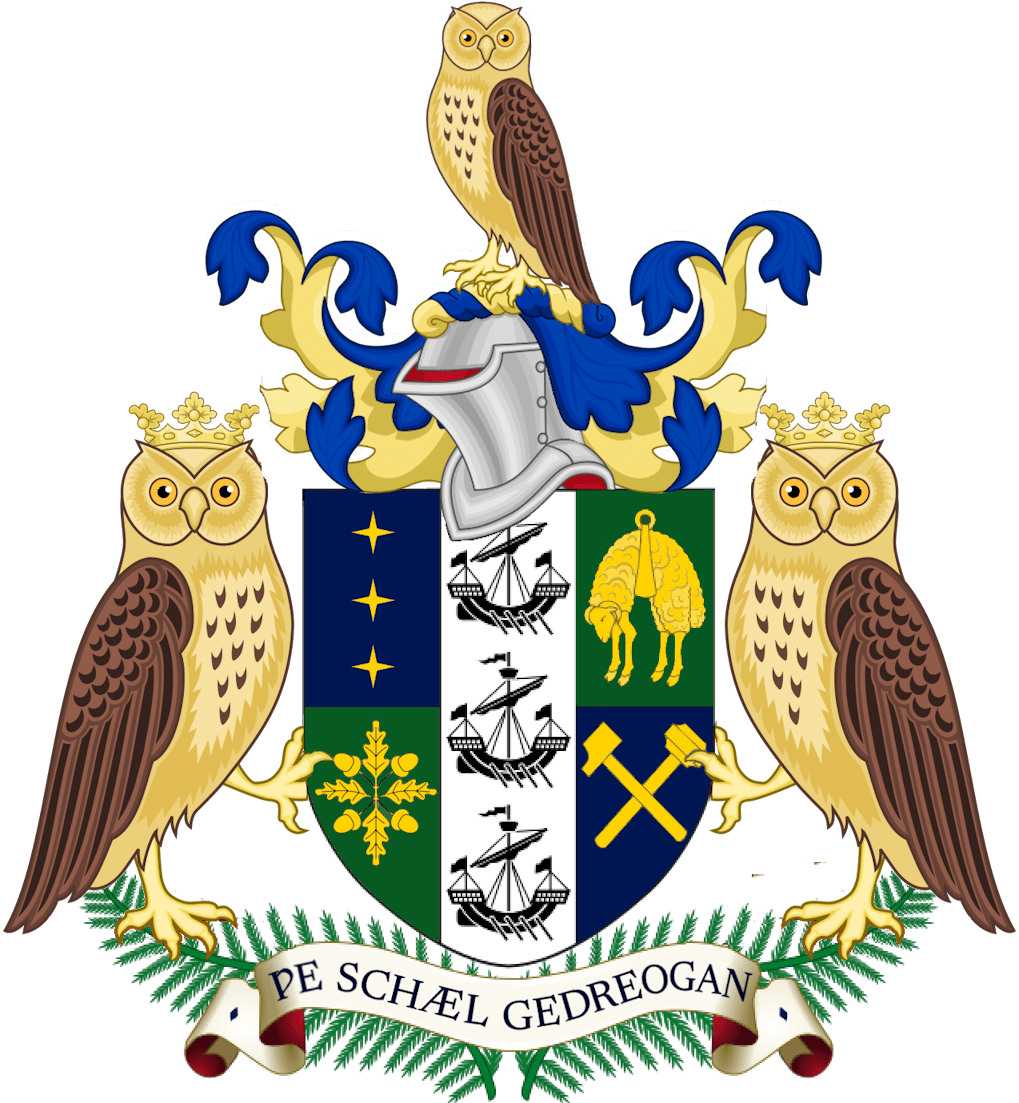
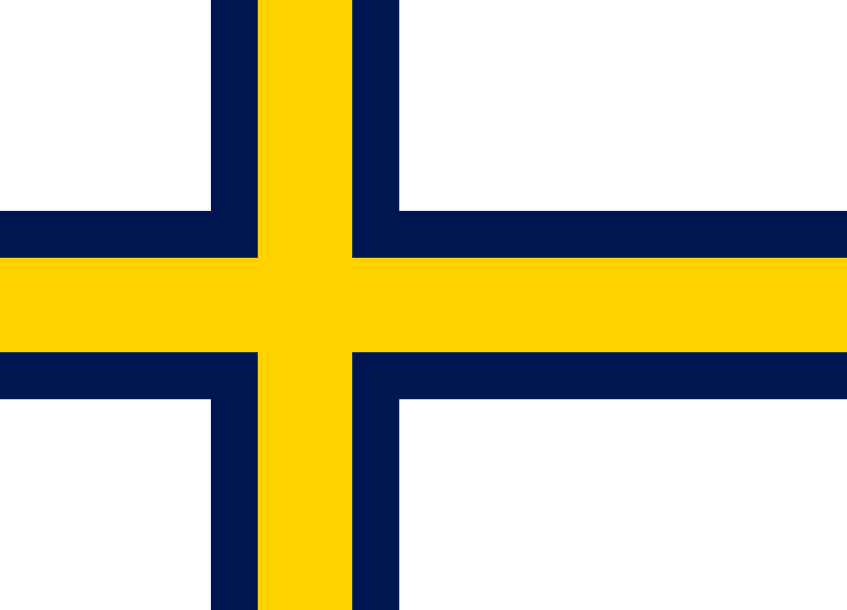
Nation Name: Commonwealth of Great Sutherland
Population: 139,146,141 (2024 est.)
Area - 696,369.27km²
... population density therein: 199.82/km²
Government type: Semi-presidential federal democratic republic
Capital: Eamont (11,093,593 pop'n.; 2024)
National language: Atlish
Recognised official languages: Mercanti (Meridional/Southern), Southern Sign Language, Beiran, Rosalian
... regional languages: Tirrish, Cumbric, Byszean, Melhese, Aiksher, Esteiran
Religion: 61% Irreligious, 31% Messianist (15% Amendist, 13% Courantist, 3% Orthodox/Auroralist), 4% Taslimi, 1% Shaddaist, 3% Other
Head of State: President, Aleixo Correira-Rhodes (Labour, 2023–)
Head of Government: Chancellor, John Blake Sægan (Labour, 2025–)
... Head of Councils: Speaker, Seren Vaughan (Labour, 2023–)
Legislature: Statsmoot
... upper house: Almoot (850 members; Labour-Green majority)
... lower houses: Landsþing (Ledesmoot and Folksmoot)
Constitution - Constitution of the Commonwealth of Great Sutherland (MSO, passed 1926)
GDP:
... nominal: $7,084,116,049,400 (2024)
... PPP: $7,241,981,961,730 (2024)
Currency: Sutherlander shilling (ʃ / SSH; 1ʃ = $0.65)
HDI: 0.967
Gini: 25.7
National animals: Penguin (official), puffin, owl, dolphin
Tree - silver fern
Flower - ceibo, primrose
Personification - Lady Cambria
Sports - curling, kickball (association football), Viessian skiing
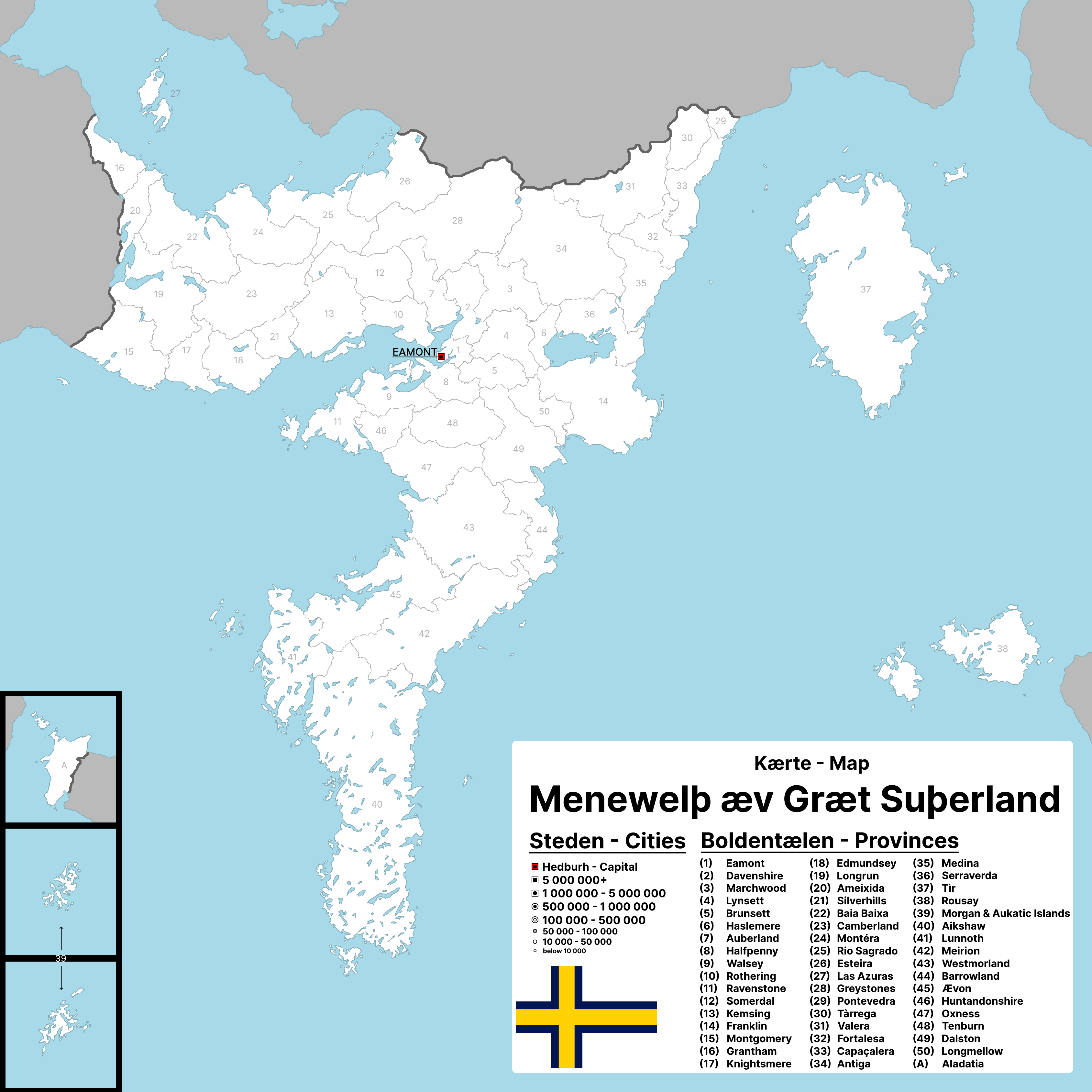
Lore:
Prehistory and Brigantia
The Mæland-Jønson oscillation, a warm period for the Southern Hemisphere which took place around 25,000 years ago, began most of Sutherland's pre-history, as it melted the ice north of Westmorland. Throughout the following ten to fifteen thousand years, early humans and Neolithic cultures largely arrived and left in waves as the climate became more and less habitable, until the end of the Last Glacial Maximum around 10,000 BCE, at which point settlement of the northern half to two-thirds of Sutherland was continuous. This period in Sutherlander history is largely characterised by relatively small, egalitarian hunter-gatherer societies relying on flint. Long-distance contacts were however established towards the end of this period of prehistory in Sutherland, through prehistoric "highways" known as songlines, whilst more advanced civilisations with more developed food storage and gathering techniques developed social stratification and chiefdoms.
The Peninsular Cumbric culture largely inhabited Sutherland by the start of the Common Era, while tribes were increasingly heavily centralised into city-states that controlled the surrounding expanses fluidly. These cities, most famously Brigantias, were highly developed and flourished into Classical Era civilisations, with substantial trade, urban infrastructure like aqueducts, and advanced metallurgy. Brigantias was by far the largest centre for Cumbric culture and power, and developed a legal system, imperial monarchy, and extensive network of mercantile trade. The rest of the country was comparatively underdeveloped during this time, and largely consisted of proto-feudal subsistance farming.
Brigantias faced an increasing challenge from the Trelluoedd tribes (known to Gotic settlers as Trellewth) during the 4th and 5th centuries, leading to the Sack of Brigantias in 550CE. While the Trelluoedd tribes who seized control of Brigantias into the 6th and 7th centuries largely ran the city as if they were the Brigantian elite, the city fell into decline and eventually disrepair by 700CE. By the time of the arrival of the Sutherlander settlers from Gothis, Brigantias was deserted and reputed by the locals to be cursed, with its only inhabitants being bandits; settlers found it overgrown, abandoned, but largely intact.
Viking Age
The first wave of Gotic settlers arrives in Sutherland during the 8th century; scholars generally believe the raid on Morduno monastery in 770CE marks the first recorded event of a Viking force landing and raiding Sutherland, however some historians have claimed the first wave stretches slightly further back to the mysterious burning and destruction of Trelewkan, on the shores of what is now Helgen, Ravenstone.
The first Sættish settlements in Sutherland date to the end of the 8th century, with Helgen, Rothsey, Eamont, Jorrunsby, and Cartsey all dating to before 800CE. These developed into the Sevendom by the early-to-mid 9th century, in which seven relatively stable kingdoms were formed and began to compete for power, especially over control of trade through the Sound. Westrasæt was initially the strongest of these kingdoms; this developed into a hegemony during the reign of Halvand Ivarsson, considered by some historians to be the first true King of Sutherland because of his predominance over the other kingdoms after the Battle of Reisa in 901, after which Westrasæt controlled Lund and had the largest force in the Sound. This settlement lasted until around 930, when Austrasæt rose into the position as the dominant kingdom.
The development of the city of Eamont was gradual, but by the mid-10th century, Eamont had become the obvious capital city, thanks to its advantageous location and predominance in trade. Austrasæt, whose capital city was Eamont, as a result gained prominence as the most powerful kingdom after this period, and after roughly 945, there was only one king in Sutherland, who was crowned in Eamont. This relatively feeble convention was strengthened by the seizure of the throne from Thored Eírikrsson by his younger brother Guthred Hardears in c. 961, and then became the law of the land under his successor Æthelred the Steadfast.
High Middle Ages
The Middle Ages of Sutherland are generally held to have started after the Battle of Æyrstede, at which Guthred Hardears was routed by a somewhat smaller army led by Æthelred the Steadfast, as a part of a wider conflict between the Viking warlords and their increasingly Sættish knights, lords, and earls. The defeat of Guthred also saw the death of both himself and much of the Viking warrior class, which devastated its ability to maintain control of the country; Guthred's sole surviving son, Áslagr the Exile, took most of the remaining Vikings to Aikshaw, far to the south of Sutherland proper. Viking attacks and raids on Sutherland resumed as they had done before Vikings settled the then-Cumbrish lands, however these were gradually mitigated by the increasing presence of the standing army, Æthelred's burh system of fortified towns, and the waning size and willingness of the Viking armies.
The reign of Æthelred, from the late 10th to early 11th century, saw Sutherland develop rapidly. Cognisant of the threat of Viking attacks in retaliation to his seizure of the country, Æthelred commissioned the construction of "burhs", which were fortified towns capable of withstanding the short, sharp style of assaults that Vikings utilised. He later developed these burhs, commissioning public wells, libraries, garrisons, drainage and aqueducts, and centres for learning, as well as roads between burhs kept relatively safe by patrols and watchmen. The reign of Æthelred also saw Sutherland's legal system flourish, and Æthelred's focus on education allowed the arisal of literacy amongst the ruling classes, as well as liberal arts education. His eldest son and successor as King, Edmund, continued this legacy into the 11th century, by guaranteeing the right to a free trial from 1121.
Renascença
The House of Osborn seized power after the conclusion of the War of Harts and Swans in 1364, a succession crisis between two cadet houses that lasted 70 years, however King Osborn the Victorious himself died two years later. The Osbornian dynasty, which lasted from 1364 to the death of Godwin IV in 1602, oversaw the Sutherlander Renessance (Renaissance).
This era, particularly in the 15th, 16th, and 17th centuries, saw a period of social change; architecture, the arts, literature, politics, philosophy, and science developed rapidly during this era. Humanism was developed during this period. Meanwhile, the Age of Exploration during this period of early modern history saw Sutherlander explorers rediscover most of the world gradually, including expeditions to the Aukatic, and this resulted in the rediscovery of the Via. The rediscovery of the existence of the Pope resulted in the Schism; most Sutherlander Messianists believed that the changes sustained to their type of Messiandom were indispensible, and chose to maintain them into a Protestant denomination known as Amendism, while a significant number – particularly in Atinea and less particularly in the south of Sutherland – chose to return to Courantism and congress with the Pope in Via.
Republican era
The Sutherlander Spring took place in 1829, following the rule of Frederick the Last, which was repressive in character and saw a number of democratising reforms reversed. The Spring resulted in the disestablishment of the monarchy, and the succession of Sutherland into a democratically-elected republic.
Richeism
Post-Richeist consensus and the AFW
Late 20th-century
Modern
Menewelþ æv Græt Suþerland
Nation Name: Commonwealth of Great Sutherland
Population: 139,146,141 (2024 est.)
Area - 696,369.27km²
... population density therein: 199.82/km²
Government type: Semi-presidential federal democratic republic
Capital: Eamont (11,093,593 pop'n.; 2024)
National language: Atlish
Recognised official languages: Mercanti (Meridional/Southern), Southern Sign Language, Beiran, Rosalian
... regional languages: Tirrish, Cumbric, Byszean, Melhese, Aiksher, Esteiran
Religion: 61% Irreligious, 31% Messianist (15% Amendist, 13% Courantist, 3% Orthodox/Auroralist), 4% Taslimi, 1% Shaddaist, 3% Other
Head of State: President, Aleixo Correira-Rhodes (Labour, 2023–)
Head of Government: Chancellor, John Blake Sægan (Labour, 2025–)
... Head of Councils: Speaker, Seren Vaughan (Labour, 2023–)
Legislature: Statsmoot
... upper house: Almoot (850 members; Labour-Green majority)
... lower houses: Landsþing (Ledesmoot and Folksmoot)
Constitution - Constitution of the Commonwealth of Great Sutherland (MSO, passed 1926)
GDP:
... nominal: $7,084,116,049,400 (2024)
... PPP: $7,241,981,961,730 (2024)
Currency: Sutherlander shilling (ʃ / SSH; 1ʃ = $0.65)
HDI: 0.967
Gini: 25.7
National animals: Penguin (official), puffin, owl, dolphin
Tree - silver fern
Flower - ceibo, primrose
Personification - Lady Cambria
Sports - curling, kickball (association football), Viessian skiing
Lore:
Prehistory and Brigantia
The Mæland-Jønson oscillation, a warm period for the Southern Hemisphere which took place around 25,000 years ago, began most of Sutherland's pre-history, as it melted the ice north of Westmorland. Throughout the following ten to fifteen thousand years, early humans and Neolithic cultures largely arrived and left in waves as the climate became more and less habitable, until the end of the Last Glacial Maximum around 10,000 BCE, at which point settlement of the northern half to two-thirds of Sutherland was continuous. This period in Sutherlander history is largely characterised by relatively small, egalitarian hunter-gatherer societies relying on flint. Long-distance contacts were however established towards the end of this period of prehistory in Sutherland, through prehistoric "highways" known as songlines, whilst more advanced civilisations with more developed food storage and gathering techniques developed social stratification and chiefdoms.
The Peninsular Cumbric culture largely inhabited Sutherland by the start of the Common Era, while tribes were increasingly heavily centralised into city-states that controlled the surrounding expanses fluidly. These cities, most famously Brigantias, were highly developed and flourished into Classical Era civilisations, with substantial trade, urban infrastructure like aqueducts, and advanced metallurgy. Brigantias was by far the largest centre for Cumbric culture and power, and developed a legal system, imperial monarchy, and extensive network of mercantile trade. The rest of the country was comparatively underdeveloped during this time, and largely consisted of proto-feudal subsistance farming.
Brigantias faced an increasing challenge from the Trelluoedd tribes (known to Gotic settlers as Trellewth) during the 4th and 5th centuries, leading to the Sack of Brigantias in 550CE. While the Trelluoedd tribes who seized control of Brigantias into the 6th and 7th centuries largely ran the city as if they were the Brigantian elite, the city fell into decline and eventually disrepair by 700CE. By the time of the arrival of the Sutherlander settlers from Gothis, Brigantias was deserted and reputed by the locals to be cursed, with its only inhabitants being bandits; settlers found it overgrown, abandoned, but largely intact.
Viking Age
The first wave of Gotic settlers arrives in Sutherland during the 8th century; scholars generally believe the raid on Morduno monastery in 770CE marks the first recorded event of a Viking force landing and raiding Sutherland, however some historians have claimed the first wave stretches slightly further back to the mysterious burning and destruction of Trelewkan, on the shores of what is now Helgen, Ravenstone.
The first Sættish settlements in Sutherland date to the end of the 8th century, with Helgen, Rothsey, Eamont, Jorrunsby, and Cartsey all dating to before 800CE. These developed into the Sevendom by the early-to-mid 9th century, in which seven relatively stable kingdoms were formed and began to compete for power, especially over control of trade through the Sound. Westrasæt was initially the strongest of these kingdoms; this developed into a hegemony during the reign of Halvand Ivarsson, considered by some historians to be the first true King of Sutherland because of his predominance over the other kingdoms after the Battle of Reisa in 901, after which Westrasæt controlled Lund and had the largest force in the Sound. This settlement lasted until around 930, when Austrasæt rose into the position as the dominant kingdom.
The development of the city of Eamont was gradual, but by the mid-10th century, Eamont had become the obvious capital city, thanks to its advantageous location and predominance in trade. Austrasæt, whose capital city was Eamont, as a result gained prominence as the most powerful kingdom after this period, and after roughly 945, there was only one king in Sutherland, who was crowned in Eamont. This relatively feeble convention was strengthened by the seizure of the throne from Thored Eírikrsson by his younger brother Guthred Hardears in c. 961, and then became the law of the land under his successor Æthelred the Steadfast.
High Middle Ages
The Middle Ages of Sutherland are generally held to have started after the Battle of Æyrstede, at which Guthred Hardears was routed by a somewhat smaller army led by Æthelred the Steadfast, as a part of a wider conflict between the Viking warlords and their increasingly Sættish knights, lords, and earls. The defeat of Guthred also saw the death of both himself and much of the Viking warrior class, which devastated its ability to maintain control of the country; Guthred's sole surviving son, Áslagr the Exile, took most of the remaining Vikings to Aikshaw, far to the south of Sutherland proper. Viking attacks and raids on Sutherland resumed as they had done before Vikings settled the then-Cumbrish lands, however these were gradually mitigated by the increasing presence of the standing army, Æthelred's burh system of fortified towns, and the waning size and willingness of the Viking armies.
The reign of Æthelred, from the late 10th to early 11th century, saw Sutherland develop rapidly. Cognisant of the threat of Viking attacks in retaliation to his seizure of the country, Æthelred commissioned the construction of "burhs", which were fortified towns capable of withstanding the short, sharp style of assaults that Vikings utilised. He later developed these burhs, commissioning public wells, libraries, garrisons, drainage and aqueducts, and centres for learning, as well as roads between burhs kept relatively safe by patrols and watchmen. The reign of Æthelred also saw Sutherland's legal system flourish, and Æthelred's focus on education allowed the arisal of literacy amongst the ruling classes, as well as liberal arts education. His eldest son and successor as King, Edmund, continued this legacy into the 11th century, by guaranteeing the right to a free trial from 1121.
Renascença
The House of Osborn seized power after the conclusion of the War of Harts and Swans in 1364, a succession crisis between two cadet houses that lasted 70 years, however King Osborn the Victorious himself died two years later. The Osbornian dynasty, which lasted from 1364 to the death of Godwin IV in 1602, oversaw the Sutherlander Renessance (Renaissance).
This era, particularly in the 15th, 16th, and 17th centuries, saw a period of social change; architecture, the arts, literature, politics, philosophy, and science developed rapidly during this era. Humanism was developed during this period. Meanwhile, the Age of Exploration during this period of early modern history saw Sutherlander explorers rediscover most of the world gradually, including expeditions to the Aukatic, and this resulted in the rediscovery of the Via. The rediscovery of the existence of the Pope resulted in the Schism; most Sutherlander Messianists believed that the changes sustained to their type of Messiandom were indispensible, and chose to maintain them into a Protestant denomination known as Amendism, while a significant number – particularly in Atinea and less particularly in the south of Sutherland – chose to return to Courantism and congress with the Pope in Via.
Republican era
The Sutherlander Spring took place in 1829, following the rule of Frederick the Last, which was repressive in character and saw a number of democratising reforms reversed. The Spring resulted in the disestablishment of the monarchy, and the succession of Sutherland into a democratically-elected republic.
Richeism
Post-Richeist consensus and the AFW
Late 20th-century
Modern
Last edited:

Longboard
Participant
- Pronouns
- He/Him
Hexastalia
Country Name: Hexsztalia Köztársaság/Republic of Hexastalia
Government type: Unitary Parliamentary Republic
Capital City: Hexstal
Head of State: President Imre Pethes
Head of Government: Prime Minister Ilona Istvan
Legislature: Parlament/Parliament
Currency: Hexastalian Dinár (HD)
Motto: Az Emberek Által, az emberekért/By the People, For the People
National Anthem: A Szabadság Himnusza/Hymn of Liberty
Official Languages: Folyan, Mercanti
Recognized Minority Languages: Északi, Khoyat, Sosva
Demonym: Hexastalian
Population: 18,489,035
Area: 150,548 km²
GDP (Nominal): $848.2 Billion IBU
GDP Per Capita: $45,875 IBU
HDI: 0.921
GINI: 28.7
National Symbols: Brown Bear, Aurorian Magpie, Spruce Tree, Marsh Marigold
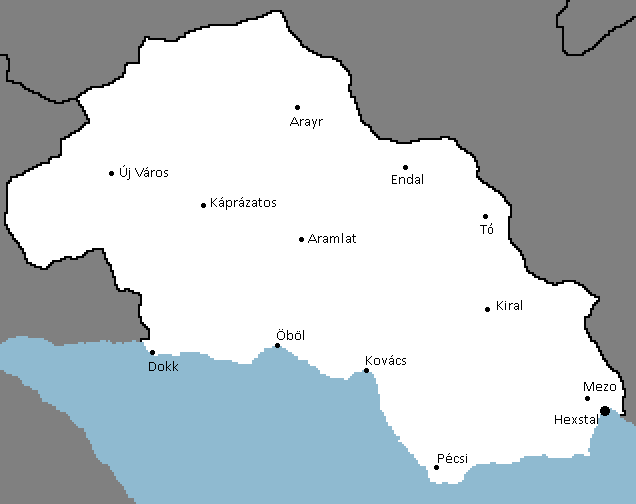
Lore:
TBD
Country Name: Hexsztalia Köztársaság/Republic of Hexastalia
Government type: Unitary Parliamentary Republic
Capital City: Hexstal
Head of State: President Imre Pethes
Head of Government: Prime Minister Ilona Istvan
Legislature: Parlament/Parliament
Currency: Hexastalian Dinár (HD)
Motto: Az Emberek Által, az emberekért/By the People, For the People
National Anthem: A Szabadság Himnusza/Hymn of Liberty
Official Languages: Folyan, Mercanti
Recognized Minority Languages: Északi, Khoyat, Sosva
Demonym: Hexastalian
Population: 18,489,035
Area: 150,548 km²
GDP (Nominal): $848.2 Billion IBU
GDP Per Capita: $45,875 IBU
HDI: 0.921
GINI: 28.7
National Symbols: Brown Bear, Aurorian Magpie, Spruce Tree, Marsh Marigold
Lore:
TBD
Last edited:
Gichiganian (geology)
Fossils from the Gichiganian, found in Fölurpunktur, Prydania
The Gichiganian is a subperiod in the geologic timescale or a subsystem of the geologic record. It is the earlier of two subperiods of the Carboniferous period lasting from roughly 358.86 to 323.4 million years ago. As with most other geochronologic units, the rock beds that define the Gichiganian are well identified, but the exact start and end dates are uncertain by a few million years. The Gichiganian is so named because rocks with this age are exposed in the Gichiganian Valley.
The Gichiganian was a period of marine transgression in the Northern Hemisphere: the sea level was so high that only the Fennoscandian Shield and the Laurentian Shield were dry land. The cratons were surrounded by extensive delta systems and lagoons, and carbonate sedimentation on the surrounding continental platforms, covered by shallow seas.
In Ethia, where the interval consists primarily of marine limestones, it is treated as a geologic period between the Devonian and the Abishkasippian. During the Gichiganian an important phase of orogeny occurred in the St. Joseph Mountains. The Commonwealth of Scalvia Geological Survey (CSGS) geologic time scale shows its relation to other periods.
In Craviter, the Gichiganian and Abishkasippian are grouped together as the Carboniferous system, and traditionally referred to as the "Upper Carboniferous" and "Lower Carboniferous" instead.
Fossils from the Gichiganian, found in Fölurpunktur, Prydania
The Gichiganian is a subperiod in the geologic timescale or a subsystem of the geologic record. It is the earlier of two subperiods of the Carboniferous period lasting from roughly 358.86 to 323.4 million years ago. As with most other geochronologic units, the rock beds that define the Gichiganian are well identified, but the exact start and end dates are uncertain by a few million years. The Gichiganian is so named because rocks with this age are exposed in the Gichiganian Valley.
The Gichiganian was a period of marine transgression in the Northern Hemisphere: the sea level was so high that only the Fennoscandian Shield and the Laurentian Shield were dry land. The cratons were surrounded by extensive delta systems and lagoons, and carbonate sedimentation on the surrounding continental platforms, covered by shallow seas.
In Ethia, where the interval consists primarily of marine limestones, it is treated as a geologic period between the Devonian and the Abishkasippian. During the Gichiganian an important phase of orogeny occurred in the St. Joseph Mountains. The Commonwealth of Scalvia Geological Survey (CSGS) geologic time scale shows its relation to other periods.
In Craviter, the Gichiganian and Abishkasippian are grouped together as the Carboniferous system, and traditionally referred to as the "Upper Carboniferous" and "Lower Carboniferous" instead.
In the international geologic timescale, the Gichiganian is subdivided into three stages:
- Serpukhovian (330.3 to 323.4 mya)
- Visean (346.7 to 330.3 mya)
- Tournaisian (358.86 to 346.7 mya)
The lower two come from Craviterian stratigraphy, the top from Khastenian stratigraphy. Besides Craviter and Iteria, there are many local subdivisions that are used as alternatives for the international timescale. In the Ethian system, the Gichiganian is subdivided into four stages:
- Chesterian (top of the Visean plus the Serpukhovian)
- Merethian (middle Visean)
- Osagean or Osagian (top of the Tournaisian and bottom of the Visean)
- Kinderhookian[/URL] (the lower two-thirds of the Tournaisian)
- Serpukhovian (330.3 to 323.4 mya)
- Visean (346.7 to 330.3 mya)
- Tournaisian (358.86 to 346.7 mya)
The lower two come from Craviterian stratigraphy, the top from Khastenian stratigraphy. Besides Craviter and Iteria, there are many local subdivisions that are used as alternatives for the international timescale. In the Ethian system, the Gichiganian is subdivided into four stages:
- Chesterian (top of the Visean plus the Serpukhovian)
- Merethian (middle Visean)
- Osagean or Osagian (top of the Tournaisian and bottom of the Visean)
- Kinderhookian[/URL] (the lower two-thirds of the Tournaisian)
Last edited:

Nev
Member
Þeksmark
country in the Eutavia


Obverse and Reverse sides of the Flag of Þeksmark

Coat of Arms of Þeksmark
Official name: The Gallanthood Meanwealth of Þeksmark
Motto: Independence, Freedom, and Justice!
Capital: (de facto) Joarton
Largest city: Eiderwig-by-the-Tangerine
National anthem: Our Big Iron
National language: Lower Seaxonyan
Religion: 71% Messianist ; 21% Others; 8% Unaffiliated
Demonym(s): Þekskarl (or sometimes referred to as "Þeksian")
Government Type: Federal presidential, constitutional republic
Current Foresitter (or President): Vekkan Sudentoft
Current Writereeve of the Moot (or Secretary): Thesia Korrunndóttir
Legislature: The Bundsmoot of Þeksmark
Area: Total: 396,536 km² (153,103 sq mi)
Population (2025 est.): 3,988,745
Density: 10.1 km²
GDP (PPP): 212,953,290,278 IBU
Per capita: 52,694 IBU
GINI (2024): 41.6 medium inequality
HDI (2024): 0.747 very high
Currency: Þeksmarks (Þ)
Currency Exchange Rate: 1 IBU equals 5.7005= Þeksmarks
Date format: mm/dd/yyyy
Calling code: +101
Internet TLD: .pk
country in the Eutavia
Obverse and Reverse sides of the Flag of Þeksmark
Coat of Arms of Þeksmark
Official name: The Gallanthood Meanwealth of Þeksmark
Motto: Independence, Freedom, and Justice!
Capital: (de facto) Joarton
Largest city: Eiderwig-by-the-Tangerine
National anthem: Our Big Iron
National language: Lower Seaxonyan
Religion: 71% Messianist ; 21% Others; 8% Unaffiliated
Demonym(s): Þekskarl (or sometimes referred to as "Þeksian")
Government Type: Federal presidential, constitutional republic
Current Foresitter (or President): Vekkan Sudentoft
Current Writereeve of the Moot (or Secretary): Thesia Korrunndóttir
Legislature: The Bundsmoot of Þeksmark
Area: Total: 396,536 km² (153,103 sq mi)
Population (2025 est.): 3,988,745
Density: 10.1 km²
GDP (PPP): 212,953,290,278 IBU
Per capita: 52,694 IBU
GINI (2024): 41.6 medium inequality
HDI (2024): 0.747 very high
Currency: Þeksmarks (
Currency Exchange Rate: 1 IBU equals 5.7005= Þeksmarks
Date format: mm/dd/yyyy
Calling code: +101
Internet TLD: .pk
Þeksmark is a sovereign republic located in the South Ethian subcontinent of the Aurorias. It covers an area of 396,536 square kilometres (153,103 square miles) and has a population of 3 million, making it one of the world's most sparsely populated sovereign states. Þeksmark is located north of the Wardernate of Lyvenntia and south of North Ibissia. Located between the Narve Highlands to the south and the Great Plains to the north, the republic occupies a region historically marked by waves of cultural collision, conquest, and hybridisation. Modern Þeksmark traces its origins to the early coastal landings of Prydanian longship fleets returning from Aria, the settlements they built and their interactions with the native Þeks, and the subsequent colonisation and independence war against Eigyland.
The republic has no official capital, but Joarton, a ceremonial and administrative city located on a sandstone bluff overlooking Joarmere (Lake Joar), is regarded as its de facto capital. Its largest and most economically powerful city is Eiderwig-by-the-Tangerine, a major industrial and harbour centre home to roughly a quarter of the republic's population. The national legislature, known as the Bundsmoot of Þeksmark (or, in Mercanti, simply "Congress"), is unicameral, composed of delegates appointed by the legislatures of the modern twelve states. The Bundsmoot controls all legislative and executive functions of the confederation and is presided over by the Foresitter, a member of the Bundsmoot elected by the other delegates to serve as a neutral discussion moderator during meetings. They are supported by the Writereeve, who serves as the keeper of the Bundsmoot's records, minutes, and correspondence.
Today, approximately 37% of the population is nomadic or semi-nomadic; horse culture remains integral. Messianism is the majority religion (71%), with other indigenous native religions being the second-largest group (21%) concentrated among ethnic Þeks and Markfolk. Nonaffiliation is the third-largest religious identification (8%). The nation's demographic makeup includes Miðfolk, Súðkaxar (southern Kaxonnyan-descended settlers), and ethnically blended Markfolk, who are especially concentrated in the Great Plains region. Þeksmark is a member of the Food Security Organisation, Prydanian Cultural Community, and a signatory of the Saintes and Savattenstad Convention. Þeksmark is an observer to the Association of Nations.
The republic has no official capital, but Joarton, a ceremonial and administrative city located on a sandstone bluff overlooking Joarmere (Lake Joar), is regarded as its de facto capital. Its largest and most economically powerful city is Eiderwig-by-the-Tangerine, a major industrial and harbour centre home to roughly a quarter of the republic's population. The national legislature, known as the Bundsmoot of Þeksmark (or, in Mercanti, simply "Congress"), is unicameral, composed of delegates appointed by the legislatures of the modern twelve states. The Bundsmoot controls all legislative and executive functions of the confederation and is presided over by the Foresitter, a member of the Bundsmoot elected by the other delegates to serve as a neutral discussion moderator during meetings. They are supported by the Writereeve, who serves as the keeper of the Bundsmoot's records, minutes, and correspondence.
Today, approximately 37% of the population is nomadic or semi-nomadic; horse culture remains integral. Messianism is the majority religion (71%), with other indigenous native religions being the second-largest group (21%) concentrated among ethnic Þeks and Markfolk. Nonaffiliation is the third-largest religious identification (8%). The nation's demographic makeup includes Miðfolk, Súðkaxar (southern Kaxonnyan-descended settlers), and ethnically blended Markfolk, who are especially concentrated in the Great Plains region. Þeksmark is a member of the Food Security Organisation, Prydanian Cultural Community, and a signatory of the Saintes and Savattenstad Convention. Þeksmark is an observer to the Association of Nations.
Header 1
Lore Lore Lore
Header 2
Lore Lore Lore
Header 3
Lore Lore Lore
Lore Lore Lore
Header 2
Lore Lore Lore
Header 3
Lore Lore Lore
Last edited:

The Meterran Flu 1912-13

[Port of Tyrooz in 1912]
Introduction
It spread across Eras in the space of a single year and left millions dead before ultimately burning itself out, it's arrival both sudden and devastating to many nations.
Origins
Despite its name the flu has never been conclusively linked to Meterra, universities and medical institutes continue to debate the possible origins of the virus to this day. What is known for certain is that on january 3rd 1912 the passenger ship Eudoxia Galgo left its port in Metterra and headed on a fateful voyage that would take it to Iteria and beyond. The flu is believed to have incubated in carriers amongst the ship's passengers,examinations of the virus have revealed a unique quirk in its structure, the virus was able to maintain a dormant state for extended periods of time and modern theorists have speculated that the illness may have been a mutation from conventional pnemonia. In any case the Eudoxia Galgo reached Bayyah Na Tyrooz on monday January 5th 1912 and within hours had unleashed its unknowing carriers into the capital of Astragon.

[Emergency Field Hospitals set up in the wake of the spread]
Outbreak
The first cases of the flu occured in Tyrooz old city within three days of the Eudoxia Galgo's arrival, several guests at the Tyrooz grand hotel were hospitalised with persistent cough, bleeding from orifices and fever symptoms, within 48 hours all hospitalised guests had died and the infection had spread through the population of Bayyah Na Tyrooz via hospital workers and infected citizens. The Imperial government was blindsided by the speed at which the virus spread and by the time a formal quarantine had been enacted the illness had spread across the Exalted empire. Importantly the quarantine had come days too late to prevent sea traffic from carrying the virus further afield. Kaskaran II imposed travel restrictions upon every major city in Astragon, this move was too little too late.The urbanised nature of the stone coasts ensured that large clusters of the population were contained in a relatively small region, this allowed the virus to spread to countless hosts. by late january the virus was killing thousands every day and had spread into Iraelia and wider Iteria. Tyrooz old city was quarantined and public mass burials set up in Inkatha square in an attempt to stave off the sickness.
Spread to the wider Eras
By the time the Galgo reached its final destination in South Ethia's Port Wilhelm the virus was rapidly spreading across Eras, the Aurorian strain would blanket South Ethia and neighbouring Scalvia, killing hundreds of thousands. Estimates in South Ethia suggest that the virus killed between 150-250,000 people, an immense number given the nation's population in 1912 being just above 8 million. In the wider Eras the virus would over the course of 1912 spread to places as far afield as Yalkan, Prydania, Astragon, Hessunland, Iraelia, Scalvia and South Ethia to name just a few. Millions died as the hemorhagic fever caused the body to break down and drown in its own blood, so fierce were the symptoms that by early 1913 the virus had killed the majority of its hosts.

[Scalvians with masks]
Social impacts
Fear caused by the outbreaks led to wide ranging responses, some such as the introduction of mask wearing and cough ettiquette helped to limit the spread of the illness especially when combined with travel restrictions. Not all responses proved as useful, in Astragon folk magic was increasingly turned to by desperate citizens with practices such as burying mojos under doorframes and shaving heads to prevent witches from stealing hairs becoming commonplace, worse still so called "Cough battalions" formed in poorer urban areas and prowled slums and downtrodden neighbourhoods driving out or murdering anyone who they deemed sick or "cursed" to this day many victims of the virus met their ends not due to sickness but rather because of their neighbours actions.
In South Ethia, millenial cults emerged proclaiming the end times, the so called "Proclaimers" and "Doomspeakers" were outlawed and actively hunted by the imperial police due to their dangerous habit of engaging in public gatherings and spreading misinformation. In many corners of Eras the human element proved as detrimental to survival as the viral.
End
Much like a wildfire the virus burned fiercely but dissipated quickly, with its pool of hosts exhausted the flu receded and by the early months of 1913 the emergency was over. Due to the ferocity and short duration of the illness comparitively few facts are known for certain, universities across Eras continue to study the few frozen samples of the virus but concrete facts remain limited.The virus has never again emerged but it spurred the growth of both public health systems across Eras and the study and application of epidemiology.In particular the virus was responsible for wide ranging social consquences, in Astragon the loss of millions led to a long period of decline that would not be halted until the end of the fascist wars, in Scalvia the first public health authority was formed in response to the virus and in South Ethia a depleted populace opened the door to immigration in order to rebuild. Today the virus remains a vivid and frightening period in Erasian history, in one year it turned Eras upon its head and to this day epidemiologists work to ensure it never returns.
[Port of Tyrooz in 1912]
Introduction
It spread across Eras in the space of a single year and left millions dead before ultimately burning itself out, it's arrival both sudden and devastating to many nations.
Origins
Despite its name the flu has never been conclusively linked to Meterra, universities and medical institutes continue to debate the possible origins of the virus to this day. What is known for certain is that on january 3rd 1912 the passenger ship Eudoxia Galgo left its port in Metterra and headed on a fateful voyage that would take it to Iteria and beyond. The flu is believed to have incubated in carriers amongst the ship's passengers,examinations of the virus have revealed a unique quirk in its structure, the virus was able to maintain a dormant state for extended periods of time and modern theorists have speculated that the illness may have been a mutation from conventional pnemonia. In any case the Eudoxia Galgo reached Bayyah Na Tyrooz on monday January 5th 1912 and within hours had unleashed its unknowing carriers into the capital of Astragon.
[Emergency Field Hospitals set up in the wake of the spread]
Outbreak
The first cases of the flu occured in Tyrooz old city within three days of the Eudoxia Galgo's arrival, several guests at the Tyrooz grand hotel were hospitalised with persistent cough, bleeding from orifices and fever symptoms, within 48 hours all hospitalised guests had died and the infection had spread through the population of Bayyah Na Tyrooz via hospital workers and infected citizens. The Imperial government was blindsided by the speed at which the virus spread and by the time a formal quarantine had been enacted the illness had spread across the Exalted empire. Importantly the quarantine had come days too late to prevent sea traffic from carrying the virus further afield. Kaskaran II imposed travel restrictions upon every major city in Astragon, this move was too little too late.The urbanised nature of the stone coasts ensured that large clusters of the population were contained in a relatively small region, this allowed the virus to spread to countless hosts. by late january the virus was killing thousands every day and had spread into Iraelia and wider Iteria. Tyrooz old city was quarantined and public mass burials set up in Inkatha square in an attempt to stave off the sickness.
Spread to the wider Eras
By the time the Galgo reached its final destination in South Ethia's Port Wilhelm the virus was rapidly spreading across Eras, the Aurorian strain would blanket South Ethia and neighbouring Scalvia, killing hundreds of thousands. Estimates in South Ethia suggest that the virus killed between 150-250,000 people, an immense number given the nation's population in 1912 being just above 8 million. In the wider Eras the virus would over the course of 1912 spread to places as far afield as Yalkan, Prydania, Astragon, Hessunland, Iraelia, Scalvia and South Ethia to name just a few. Millions died as the hemorhagic fever caused the body to break down and drown in its own blood, so fierce were the symptoms that by early 1913 the virus had killed the majority of its hosts.
[Scalvians with masks]
Social impacts
Fear caused by the outbreaks led to wide ranging responses, some such as the introduction of mask wearing and cough ettiquette helped to limit the spread of the illness especially when combined with travel restrictions. Not all responses proved as useful, in Astragon folk magic was increasingly turned to by desperate citizens with practices such as burying mojos under doorframes and shaving heads to prevent witches from stealing hairs becoming commonplace, worse still so called "Cough battalions" formed in poorer urban areas and prowled slums and downtrodden neighbourhoods driving out or murdering anyone who they deemed sick or "cursed" to this day many victims of the virus met their ends not due to sickness but rather because of their neighbours actions.
In South Ethia, millenial cults emerged proclaiming the end times, the so called "Proclaimers" and "Doomspeakers" were outlawed and actively hunted by the imperial police due to their dangerous habit of engaging in public gatherings and spreading misinformation. In many corners of Eras the human element proved as detrimental to survival as the viral.
End
Much like a wildfire the virus burned fiercely but dissipated quickly, with its pool of hosts exhausted the flu receded and by the early months of 1913 the emergency was over. Due to the ferocity and short duration of the illness comparitively few facts are known for certain, universities across Eras continue to study the few frozen samples of the virus but concrete facts remain limited.The virus has never again emerged but it spurred the growth of both public health systems across Eras and the study and application of epidemiology.In particular the virus was responsible for wide ranging social consquences, in Astragon the loss of millions led to a long period of decline that would not be halted until the end of the fascist wars, in Scalvia the first public health authority was formed in response to the virus and in South Ethia a depleted populace opened the door to immigration in order to rebuild. Today the virus remains a vivid and frightening period in Erasian history, in one year it turned Eras upon its head and to this day epidemiologists work to ensure it never returns.
Last edited:
Nev
Member
Taslim
religion

Umm al-Qurā: Mihrab Mihrab (Miḥrāb), shrine in the Great Mosque, Umm al-Qurā, Rafhazan
Taslim (also known informally as Mehrabism for the Afari word Mihrab (Miḥrāb), shrine) is a major world religion promulgated by the Prophet Abu-Karib (ﷺ) in Iteria Petraea in the 9th century CE. The Yazani term taslīm, literally "submission", illuminates the fundamental religious idea of Taslim—that the believer (called a Mutasallim, from the adjective form of "one who submits" or "a submitter", or informally, Mehrabist) accepts submission to the will of Al-Aziz (in Yazani; Al-ʿAzīz; The Mighty). Al-Aziz is viewed as the sole God—creator, sustainer, and restorer of the world. The will of Al-Aziz, to which human beings must submit, is made known through the sacred scriptures, the Umm al-kitāb (often simplified as the Kitab in Mercanti), which Al-Aziz revealed to his messenger, Abu-Karib (ﷺ). In Taslim, Abu-Karib (ﷺ) is considered the last of a series of prophets (including Adam, Noah, Abraham, Moses, Solomon, and Jesus), and his message simultaneously consummates and completes the "revelations" attributed to earlier prophets.
Retaining its emphasis on uncompromising monotheism and strict adherence to certain essential religious practices, the religion taught by Abu-Karib (ﷺ) to a small group of followers spread rapidly through Iteria to the Aurorias, Craviter, Collandris, Gothis, Meterra, Kian, Icenia, and Eutavia. By the early 21st century, there were hundreds of millions of Mutasallims worldwide. Many sectarian movements have arisen within Taslim. However, all Mutasallims are bound by a common faith and a sense of belonging to a single community.
This article examines the fundamental beliefs and practices of Taslim and the relationship between religion and society in the Taslimic world. The history of the various peoples who embraced Taslim is covered in the article Taslimic world.
The foundations of Taslim
The legacy of Abu-Karib (ﷺ)
From the very beginning of Taslim, Abu-Karib (ﷺ) had inculcated a sense of brotherhood and a bond of faith among his followers, both of which helped to develop among them a feeling of close relationship that was accentuated by their experiences of persecution as a nascent community in Umm al-Qurā (Al-Qura in Mercanti). The strong attachment to the tenets of the Kitabic revelation and the conspicuous socioeconomic content of Taslimic religious practices cemented this bond of faith. In 899 CE, when the Prophet (ﷺ) migrated to Al-Qura, his preaching was soon accepted, and the community-state of Taslim emerged. During this early period, Taslim acquired its characteristic ethos as a religion uniting both the spiritual and temporal aspects of life and seeking to regulate not only the individual's relationship to God (through conscience) but also human relationships in a social setting. Thus, there is not only a Taslimic religious institution but also a Taslimic law, state, and other institutions governing society. Not until the 20th century were the religious (private) and the secular (public) distinguished by some Mutasallim thinkers and separated formally in certain places, such as Aydin.
This dual religious and social character of Taslim expresses itself in one way as a religious community commissioned by God to bring its own value system to the world through the sihār ("endeavour," commonly mistranslated as "holy war" or "holy endeavour"), which explains the astonishing success of the early generations of Mutasallims. Within a decade after the Prophet's assassination in 927 CE (ﷺ), they had brought a large part of Ityriyya al-Wusṭā ("iterian centre") under a new Yazani Mutasallim empire.
The period of Taslimic conquests and empire-building marks the first phase of the expansion of Taslim as a religion. Taslim's essential egalitarianism within the community of the faithful and its official discrimination against the followers of other religions won rapid converts. Shaddaists, Shavians, and Messianists were assigned a special status as communities possessing scriptures and were called the "people of the Book" (ahl al-kitāb), and therefore were allowed religious autonomy. They were, however, required to pay a capita tax called jizyah, as opposed to pagans, who were required to either accept Taslim or die. The same status of the "people of the Book" was later extended in particular times and places to worshipers of other religions (particularly those in the Aurorias and Craviter), but many "people of the Book" joined Taslim in order to escape the disability of the jizyah. A much more expansive transmission of Taslim occurred after the First Crusade in the 11th century. It was primarily inaugurated by the Suffas (Taslim mystics), who were mainly responsible for the spread of Taslim outside of Iteria.
Besides the sihār and Suffa missionary activity, another factor in the spread of Taslim was the far-reaching influence of Taslim traders, who not only introduced Taslim quite early to the Aurorian Western Continent and South Craviter but also served as the main catalytic agents (alongside the Suffas) in converting people to Taslim. Taslim was introduced to the Aurorias in the 12th century, and had hardly had time to consolidate itself before Western colonial powers dominated the region.
The wide variety of races and cultures embraced by Taslim (an estimated total of a few hundred million adherents worldwide in the early 21st century) and the demise of the Prophet (ﷺ) have produced important internal differences. All segments of Mutasallim society, however, are bound by a common faith and a sense of belonging to a single community.
religion
Umm al-Qurā: Mihrab Mihrab (Miḥrāb), shrine in the Great Mosque, Umm al-Qurā, Rafhazan
Taslim (also known informally as Mehrabism for the Afari word Mihrab (Miḥrāb), shrine) is a major world religion promulgated by the Prophet Abu-Karib (ﷺ) in Iteria Petraea in the 9th century CE. The Yazani term taslīm, literally "submission", illuminates the fundamental religious idea of Taslim—that the believer (called a Mutasallim, from the adjective form of "one who submits" or "a submitter", or informally, Mehrabist) accepts submission to the will of Al-Aziz (in Yazani; Al-ʿAzīz; The Mighty). Al-Aziz is viewed as the sole God—creator, sustainer, and restorer of the world. The will of Al-Aziz, to which human beings must submit, is made known through the sacred scriptures, the Umm al-kitāb (often simplified as the Kitab in Mercanti), which Al-Aziz revealed to his messenger, Abu-Karib (ﷺ). In Taslim, Abu-Karib (ﷺ) is considered the last of a series of prophets (including Adam, Noah, Abraham, Moses, Solomon, and Jesus), and his message simultaneously consummates and completes the "revelations" attributed to earlier prophets.
Retaining its emphasis on uncompromising monotheism and strict adherence to certain essential religious practices, the religion taught by Abu-Karib (ﷺ) to a small group of followers spread rapidly through Iteria to the Aurorias, Craviter, Collandris, Gothis, Meterra, Kian, Icenia, and Eutavia. By the early 21st century, there were hundreds of millions of Mutasallims worldwide. Many sectarian movements have arisen within Taslim. However, all Mutasallims are bound by a common faith and a sense of belonging to a single community.
This article examines the fundamental beliefs and practices of Taslim and the relationship between religion and society in the Taslimic world. The history of the various peoples who embraced Taslim is covered in the article Taslimic world.
The foundations of Taslim
The legacy of Abu-Karib (ﷺ)
From the very beginning of Taslim, Abu-Karib (ﷺ) had inculcated a sense of brotherhood and a bond of faith among his followers, both of which helped to develop among them a feeling of close relationship that was accentuated by their experiences of persecution as a nascent community in Umm al-Qurā (Al-Qura in Mercanti). The strong attachment to the tenets of the Kitabic revelation and the conspicuous socioeconomic content of Taslimic religious practices cemented this bond of faith. In 899 CE, when the Prophet (ﷺ) migrated to Al-Qura, his preaching was soon accepted, and the community-state of Taslim emerged. During this early period, Taslim acquired its characteristic ethos as a religion uniting both the spiritual and temporal aspects of life and seeking to regulate not only the individual's relationship to God (through conscience) but also human relationships in a social setting. Thus, there is not only a Taslimic religious institution but also a Taslimic law, state, and other institutions governing society. Not until the 20th century were the religious (private) and the secular (public) distinguished by some Mutasallim thinkers and separated formally in certain places, such as Aydin.
This dual religious and social character of Taslim expresses itself in one way as a religious community commissioned by God to bring its own value system to the world through the sihār ("endeavour," commonly mistranslated as "holy war" or "holy endeavour"), which explains the astonishing success of the early generations of Mutasallims. Within a decade after the Prophet's assassination in 927 CE (ﷺ), they had brought a large part of Ityriyya al-Wusṭā ("iterian centre") under a new Yazani Mutasallim empire.
The period of Taslimic conquests and empire-building marks the first phase of the expansion of Taslim as a religion. Taslim's essential egalitarianism within the community of the faithful and its official discrimination against the followers of other religions won rapid converts. Shaddaists, Shavians, and Messianists were assigned a special status as communities possessing scriptures and were called the "people of the Book" (ahl al-kitāb), and therefore were allowed religious autonomy. They were, however, required to pay a capita tax called jizyah, as opposed to pagans, who were required to either accept Taslim or die. The same status of the "people of the Book" was later extended in particular times and places to worshipers of other religions (particularly those in the Aurorias and Craviter), but many "people of the Book" joined Taslim in order to escape the disability of the jizyah. A much more expansive transmission of Taslim occurred after the First Crusade in the 11th century. It was primarily inaugurated by the Suffas (Taslim mystics), who were mainly responsible for the spread of Taslim outside of Iteria.
Besides the sihār and Suffa missionary activity, another factor in the spread of Taslim was the far-reaching influence of Taslim traders, who not only introduced Taslim quite early to the Aurorian Western Continent and South Craviter but also served as the main catalytic agents (alongside the Suffas) in converting people to Taslim. Taslim was introduced to the Aurorias in the 12th century, and had hardly had time to consolidate itself before Western colonial powers dominated the region.
The wide variety of races and cultures embraced by Taslim (an estimated total of a few hundred million adherents worldwide in the early 21st century) and the demise of the Prophet (ﷺ) have produced important internal differences. All segments of Mutasallim society, however, are bound by a common faith and a sense of belonging to a single community.
Last edited:
Nev
Member
Verran
country in Verran

This region, originally populated by the Navish people in humanity's early prehistory, was later settled by the Orang Laut (or, in Mercanti, "the people of the sea"), who migrated into the continent from beyond the Sea of Stars (or Latuan Bintang) around 2800 to 2500 BCE, as a persistent drought caused the population of Old Verran to scatter from large urban centres in the interior and highlands to smaller coastal villages. The earliest kingdoms in this region we know of were established soon after. By 1900 BCE, there were many prosperous coastal independent city-states, exporting vast quantities of spices and other luxury goods, primarily to the northwest to ancient Aria and the inhabitants of Greater Auroria, and ancient Verran coinage was excavated as far west as the coast of Gothis. The Orang Laut heavily influenced these early kingdoms, creating a unique Simmaggarian culture, and were sometimes themselves under the influence of the ancient dynasties of Aria to the northwest. These kingdoms predominantly converted to Zunism, Sevanism, Simanggarianism, the ancient Arianese religion, and sometimes combined with local Navish and indigenous religious practices.
Fast forward to 351 BCE, the kingdom of Rob is believed to have changed dynasties, and the city's importance has shifted from Rob to Harihaha, evolving into the Harihaha Hegemony. The Harihaha were master sea-farers, whose merchant ships were a common sight on the coast of Greater Auroria and the Tangerine Sea, Eutavia, and Iteria. The Harihaha Hegemony would become the suzerain of other coastal city-states and interior kingdoms, with a unique, decentralised political system known as the Rajamandala. They embark on many great projects, including Zunduhur (also known as the Temple of Zun the High in Mercanti), the largest Zunist structure on Eras. By the late 2nd century BCE, the Harihaha Hegemony had expanded to its greatest extent, forming the modern-day borders of Verran. Taking advantage of their newfound position, the Harihaha drew on their accumulated knowledge of the trade winds and, as the sole naval power in Verran, became the central maritime commercial hub for trade and the movement of rare, precious goods between the East and Western hemisphere of Eras. They took advantage of the situation and significantly increased the taxes on merchant ships not affiliated with Harihaha, resorting to piracy and toll collection against ships that refused to cooperate. This policy not only angered the Arianese dynasty in the north but also the civilisations of Eutavia and the Greater Auroria, leading to numerous sea skirmishes.
The Harihaha Hegemony would meet its end in an event known as the Crisis of the 1st Century. Following the trend of human migration by sea in Eras, the Harihaha faced an unprecedented wave of "migration invasion" from the west. A record of oral history at the time spoke of "the largest fleet in the history of our four-cornered world", which modern scholars believed to be multiple large waves of migration from events that happened concurrently in the western hemisphere of Eras and Greater Auroria.
From the far west came the ancient Arlonese, fleeing the destruction of their homeland by their own waves of foreign migrant-invasion. Modern Arlonese findings show that the events that led to their migration eastwards coincided with the invasion of the sea people in Iteria and the fall of the Argent Imperium further northwest, leading to modern scholarly theories that the Arlonese were in some way related to these people. These theories were controversial, as modern genetic tests have not shown any results indicating a relationship between the Arlonese in Verran and the people in Iteria and Craviter.
From Greater Auroria came two distinct cultural groups, known today as the Aethians and Auroreans (not to be confused with the modern designation Aurorians). Though small waves of Aethians and Auroreans have migrated to Verran, a sudden large wave of migration in the latter half of the first century CE weakened the already fragmented Harihaha Hegemony. This sudden migration coincided with the Narxenmere Impact Event (modern-day Þeksmark), when a meteorite that broke into nine fragments as it entered the atmosphere fell to Eras. The largest of these fragments measured up to 110 m (360 ft) in diameter and 22 m (72 ft) in depth, and caused an explosion theorised to be comparable to an impact energy of 50 megatons of TNT. The area at the time of impact was the centre of a large population, and the devastation that followed led to significant societal changes and religious and political consequences in the region. Huge urban centres were avoided, and small bands of nomadic groups were favoured. At the same time, the Naxernmere inland sea (now a lake 1/5 of its original size) was considered sacred by the local inhabitants. Many myths were formed during this time, such as the indigenous Þeks mythology of the death of the old sun and the birth of the new sun.
Together, these migratory waves led to the disorganised sack and abandonment of Harihaha cities, the depopulation of tributary city-states, and the breaking of vassalage and alliances by the various interior kingdoms. These undoubtedly sent the Harihaha Hegemony into rapid decay and decline.
country in Verran
Spanning 675,254 km^2, the Verran, the Navish, or Simanggarian subcontinent has been known by many names throughout the centuries. It is home to 149 million people, descended from a plethora of unique ethnic groups who speak hundreds of different dialects and languages. It is the main global producer of cloves, cinnamon, nutmeg, and many other things that make food taste great. Today, this territory predominantly comprises the economic powerhouse of Verran, the Abode of Peace, which shares its namesake with the region.Official name: Verran, The Abode of Peace
Motto: We all lift together, for the end is our glory!
National anthem: We all lift together!
Capital: Veṟṟiyūr
(and largest city)
Official language: Mercanti
Official recognised language: Navish, Aethian, Nán hǎi yǔ, Aurorean, Afari, Simanggarian, Arlonese
Unofficial languages: Vercanti (Mercanti-creole)
Demonym(s): Verran
Government: Constitutional mixed directorial republic
Current Director General: Rajendra B. Sreenivas
(Head of Government and State)
Legislature: The Grand Assembly of Verran
Upper house: Chamber of Estates
Lower house: Civic Chamber
Area: 675,254 km^2
water (%): 1.4
Population (2025 est.): 149,828,911 (2026 estimate)
Density: 222 km^2
GDP (PPP): 7,013,574 trillion IBU (2026 estimate)
Per capita: 46,811 IBU
GINI (2024): 32.6 medium inequality
HDI (2024): 0.925 very high
Currency: Verran Gobog(G) (1G= 1.36 IBU)
Date format: dd/mm/yyyy
Calling code: +13
Internet TLD: .vr
This region, originally populated by the Navish people in humanity's early prehistory, was later settled by the Orang Laut (or, in Mercanti, "the people of the sea"), who migrated into the continent from beyond the Sea of Stars (or Latuan Bintang) around 2800 to 2500 BCE, as a persistent drought caused the population of Old Verran to scatter from large urban centres in the interior and highlands to smaller coastal villages. The earliest kingdoms in this region we know of were established soon after. By 1900 BCE, there were many prosperous coastal independent city-states, exporting vast quantities of spices and other luxury goods, primarily to the northwest to ancient Aria and the inhabitants of Greater Auroria, and ancient Verran coinage was excavated as far west as the coast of Gothis. The Orang Laut heavily influenced these early kingdoms, creating a unique Simmaggarian culture, and were sometimes themselves under the influence of the ancient dynasties of Aria to the northwest. These kingdoms predominantly converted to Zunism, Sevanism, Simanggarianism, the ancient Arianese religion, and sometimes combined with local Navish and indigenous religious practices.
Fast forward to 351 BCE, the kingdom of Rob is believed to have changed dynasties, and the city's importance has shifted from Rob to Harihaha, evolving into the Harihaha Hegemony. The Harihaha were master sea-farers, whose merchant ships were a common sight on the coast of Greater Auroria and the Tangerine Sea, Eutavia, and Iteria. The Harihaha Hegemony would become the suzerain of other coastal city-states and interior kingdoms, with a unique, decentralised political system known as the Rajamandala. They embark on many great projects, including Zunduhur (also known as the Temple of Zun the High in Mercanti), the largest Zunist structure on Eras. By the late 2nd century BCE, the Harihaha Hegemony had expanded to its greatest extent, forming the modern-day borders of Verran. Taking advantage of their newfound position, the Harihaha drew on their accumulated knowledge of the trade winds and, as the sole naval power in Verran, became the central maritime commercial hub for trade and the movement of rare, precious goods between the East and Western hemisphere of Eras. They took advantage of the situation and significantly increased the taxes on merchant ships not affiliated with Harihaha, resorting to piracy and toll collection against ships that refused to cooperate. This policy not only angered the Arianese dynasty in the north but also the civilisations of Eutavia and the Greater Auroria, leading to numerous sea skirmishes.
The Harihaha Hegemony would meet its end in an event known as the Crisis of the 1st Century. Following the trend of human migration by sea in Eras, the Harihaha faced an unprecedented wave of "migration invasion" from the west. A record of oral history at the time spoke of "the largest fleet in the history of our four-cornered world", which modern scholars believed to be multiple large waves of migration from events that happened concurrently in the western hemisphere of Eras and Greater Auroria.
From the far west came the ancient Arlonese, fleeing the destruction of their homeland by their own waves of foreign migrant-invasion. Modern Arlonese findings show that the events that led to their migration eastwards coincided with the invasion of the sea people in Iteria and the fall of the Argent Imperium further northwest, leading to modern scholarly theories that the Arlonese were in some way related to these people. These theories were controversial, as modern genetic tests have not shown any results indicating a relationship between the Arlonese in Verran and the people in Iteria and Craviter.
From Greater Auroria came two distinct cultural groups, known today as the Aethians and Auroreans (not to be confused with the modern designation Aurorians). Though small waves of Aethians and Auroreans have migrated to Verran, a sudden large wave of migration in the latter half of the first century CE weakened the already fragmented Harihaha Hegemony. This sudden migration coincided with the Narxenmere Impact Event (modern-day Þeksmark), when a meteorite that broke into nine fragments as it entered the atmosphere fell to Eras. The largest of these fragments measured up to 110 m (360 ft) in diameter and 22 m (72 ft) in depth, and caused an explosion theorised to be comparable to an impact energy of 50 megatons of TNT. The area at the time of impact was the centre of a large population, and the devastation that followed led to significant societal changes and religious and political consequences in the region. Huge urban centres were avoided, and small bands of nomadic groups were favoured. At the same time, the Naxernmere inland sea (now a lake 1/5 of its original size) was considered sacred by the local inhabitants. Many myths were formed during this time, such as the indigenous Þeks mythology of the death of the old sun and the birth of the new sun.
Together, these migratory waves led to the disorganised sack and abandonment of Harihaha cities, the depopulation of tributary city-states, and the breaking of vassalage and alliances by the various interior kingdoms. These undoubtedly sent the Harihaha Hegemony into rapid decay and decline.
Last edited:
Nev
Member
Betterton
country in Eutavia

WIP
*constructed language by the first Alta kaj Eterna Ĉefo
country in Eutavia
Official name: Betterton, Democratic Republic of
Motto: Every deed and every thought, 'tis for thee 'o Betterton
National anthem: Betterton, 'Tis for Thee
Capital: Port Better
(and largest city)
Official National language: Betteric*
Demonym(s): Betten
Government: Unitary Betherist State
Plej Alta kaj Eterna Ĉefo (Supreme and Perpetual Leader): Luciano Lumportanto
(Head of Government and State)
Legislature: Tutlanda Popolkunveno; All-National People’s Gathering (or simply La Kunveno; “The Gathering” for short)
Area: 15,798 km^2
water (%): 2.6
Population (2025 est.): 1,354,662 (2026 estimate)
Density: 86 km^2
GDP (PPP): $542 million IBU (2026 estimate)
Per capita: 400 IBU
GINI (2024): 16.6 low inequality
Currency: Betten Bet(B) (1B = 0.00111115 IBU)
Date format: dd/mm/yyyy
Calling code: +140
Internet TLD: .rb
WIP
*constructed language by the first Alta kaj Eterna Ĉefo
Last edited:
DISEASES OF ERAS: ABSHUR'S SICKNESS

[Abshur in a candid photo]
When Carl Heinrich Abshur* led his ill fated 3rd expedition into the Northpoint crater he could not have known that he would make Erasian history for a very different reason, the journey would be his last but the impact would extend far beyond his lifetime. The Northpoint crater is rightly considered a natural wonder, the impact site for vast meteor that struck Eras sometime during the Gichigan era, to this day it remains a strange landmark that is disconnected from the wider land. within the immense walls of the crater, unusual fauna and flora has continued to thrive and expand in isolation from the wider biosphere. During the first(1909) and second (1911) northpoint expeditions botanists classified over a dozen new species of plantlife including the famed northpoint blue rose*, animal life was found to be equally diverse with the crater hellbender (a form of salamander) and giant Ethian butterfly being amonst the unusual fauna discovered. However, where most discoveries were considered merely benign curiosities, the third expedition was to identify far less savoury things that lurked in the crater.

Whilst the first and second expeditions had focused on the so called rampart lands (that is the lands hugging closest to the crater walls), expedition three in 1915 aimed to penetrate into the marshlands that had formed in the central zone, Abshur and a party of 40 men arrived in the northpoint wetlands in August 1915 and promptly began cataloguing the region. within a month of their arrival, Abshur fell ill and complained of itching skin and a high fever, his condition steadily worsened and by early September a decision was made to abandon the expedition and make for the nearest settlement. As the party journeyed back across the crater walls, the stricken Abshur became increasingly erratic and incoherant, babbling of ancient gods and terrors from the stars, he was plagued by night terrors and frequently needed to be restrained as due to psychotic episodes. By the time the party reached Powa'kan Abshur was emaciated and incapable of coherant thought, his brief stay at the local hospital proved fruitless and he died on November 1st 1915 from symptoms consistent with a brain bleed.
Autopsies soon followed and Abshur's brain was removed for further study, this inspite of protests from his comrades and immediate family, it was found that the mans brain and spinal cord had been heavily inflamed and that the lining of his brain tissue was swollen with fluids. Further investigation was carried out at the University of Port Wilhelm, their epidemiological faculty only recently formed following the Metteran flu's outbreak, via blood and tissue samples were taken from Abshur's autopsy. What was discovered shocked the medical examiners, immense parasitic cells were discovered to have spread via the bloodstream and entered the mans brainstem and frontal lobes, while similar to standard malaria the newly christened "Abshur's sickness" was quite clearly a parasite spread by insect bites. Future expeditions would bring back samples of the Ethian Black Nymph, a large mosquito that thrived in the wetlands of the crater, examination of one such specimen in 1926 confirmed earlier hypothesis regarding the source of transmission.

While the illness bore similarities to both malaria and meningitis, the tendency for parasitic cells to attack the frontal lobes of the brain added a terrifying dimension to an already lethal illness, victims could expect an agonising and deeply disturbed end as their brains swelled and produced nightmarish visions and psychotic episodes. The Northpoint was promptly quarantined and has only been explored sparingly since, in 1989 calls to further prevent the spread of dangerous illnesses led to the DVT bombings of the crater wetlands,this however did not succeed in eradicating the black nymph. For now the Abshur's sickness remains a medical curiosity, a horrific episode in virology that has thankfully never spread beyond its point of origin. Still, conspiracy theorists and horror writers have long seized upon the illnesses symptoms as proof that it has some deeper,supernatural meaning, for most its simply another tropical nightmare that makes for good episodes on Geographic International*.
*Famed South Ethian Explorer noted for his circumnavigation of three continents, daring international flights and expeditions in the northern polar region and ultimately, the northpoint crater. Considered a masculine everyman by his contempories, Abshur's diaries later revealed a deeply anxious man who suffered from OCD and utilized the adventures as a means of therapy.
*The northpoint rose is famed for its deep blue colour and because it is phospheresent and thus glows at night.
*A major television network and journal focusing on travel and the natural world.
[Abshur in a candid photo]
When Carl Heinrich Abshur* led his ill fated 3rd expedition into the Northpoint crater he could not have known that he would make Erasian history for a very different reason, the journey would be his last but the impact would extend far beyond his lifetime. The Northpoint crater is rightly considered a natural wonder, the impact site for vast meteor that struck Eras sometime during the Gichigan era, to this day it remains a strange landmark that is disconnected from the wider land. within the immense walls of the crater, unusual fauna and flora has continued to thrive and expand in isolation from the wider biosphere. During the first(1909) and second (1911) northpoint expeditions botanists classified over a dozen new species of plantlife including the famed northpoint blue rose*, animal life was found to be equally diverse with the crater hellbender (a form of salamander) and giant Ethian butterfly being amonst the unusual fauna discovered. However, where most discoveries were considered merely benign curiosities, the third expedition was to identify far less savoury things that lurked in the crater.
Whilst the first and second expeditions had focused on the so called rampart lands (that is the lands hugging closest to the crater walls), expedition three in 1915 aimed to penetrate into the marshlands that had formed in the central zone, Abshur and a party of 40 men arrived in the northpoint wetlands in August 1915 and promptly began cataloguing the region. within a month of their arrival, Abshur fell ill and complained of itching skin and a high fever, his condition steadily worsened and by early September a decision was made to abandon the expedition and make for the nearest settlement. As the party journeyed back across the crater walls, the stricken Abshur became increasingly erratic and incoherant, babbling of ancient gods and terrors from the stars, he was plagued by night terrors and frequently needed to be restrained as due to psychotic episodes. By the time the party reached Powa'kan Abshur was emaciated and incapable of coherant thought, his brief stay at the local hospital proved fruitless and he died on November 1st 1915 from symptoms consistent with a brain bleed.
Autopsies soon followed and Abshur's brain was removed for further study, this inspite of protests from his comrades and immediate family, it was found that the mans brain and spinal cord had been heavily inflamed and that the lining of his brain tissue was swollen with fluids. Further investigation was carried out at the University of Port Wilhelm, their epidemiological faculty only recently formed following the Metteran flu's outbreak, via blood and tissue samples were taken from Abshur's autopsy. What was discovered shocked the medical examiners, immense parasitic cells were discovered to have spread via the bloodstream and entered the mans brainstem and frontal lobes, while similar to standard malaria the newly christened "Abshur's sickness" was quite clearly a parasite spread by insect bites. Future expeditions would bring back samples of the Ethian Black Nymph, a large mosquito that thrived in the wetlands of the crater, examination of one such specimen in 1926 confirmed earlier hypothesis regarding the source of transmission.
While the illness bore similarities to both malaria and meningitis, the tendency for parasitic cells to attack the frontal lobes of the brain added a terrifying dimension to an already lethal illness, victims could expect an agonising and deeply disturbed end as their brains swelled and produced nightmarish visions and psychotic episodes. The Northpoint was promptly quarantined and has only been explored sparingly since, in 1989 calls to further prevent the spread of dangerous illnesses led to the DVT bombings of the crater wetlands,this however did not succeed in eradicating the black nymph. For now the Abshur's sickness remains a medical curiosity, a horrific episode in virology that has thankfully never spread beyond its point of origin. Still, conspiracy theorists and horror writers have long seized upon the illnesses symptoms as proof that it has some deeper,supernatural meaning, for most its simply another tropical nightmare that makes for good episodes on Geographic International*.
*Famed South Ethian Explorer noted for his circumnavigation of three continents, daring international flights and expeditions in the northern polar region and ultimately, the northpoint crater. Considered a masculine everyman by his contempories, Abshur's diaries later revealed a deeply anxious man who suffered from OCD and utilized the adventures as a means of therapy.
*The northpoint rose is famed for its deep blue colour and because it is phospheresent and thus glows at night.
*A major television network and journal focusing on travel and the natural world.
Last edited:
Share: