Zanatian Worldbuilding Thread

Pronouns
he/his
TNP Nation
Alsatian Island
wxscbh.png
s0cv6b.png


The Serene Kingdom of Zanatia
Rennu Selenu di Zanàtza (Γαλήνιο Βασίλειο της Αζανατζία)

WIP

Overview
Area
- 145,530.11km²
Population - 29,422,506
… density - 202.17/km²
Capital, and largest city - Ilacchja (ⵍⵇⵍⵉⵄⴰ/Laclea/Ἰλακκία)
... Second city - Αναστασιον (Anastaçu)
... Other cities
-
Official languages - Zanatian (Zanàtçu): 72.1% L1, Epiphani (Επιφάνιος): 13.7% L1
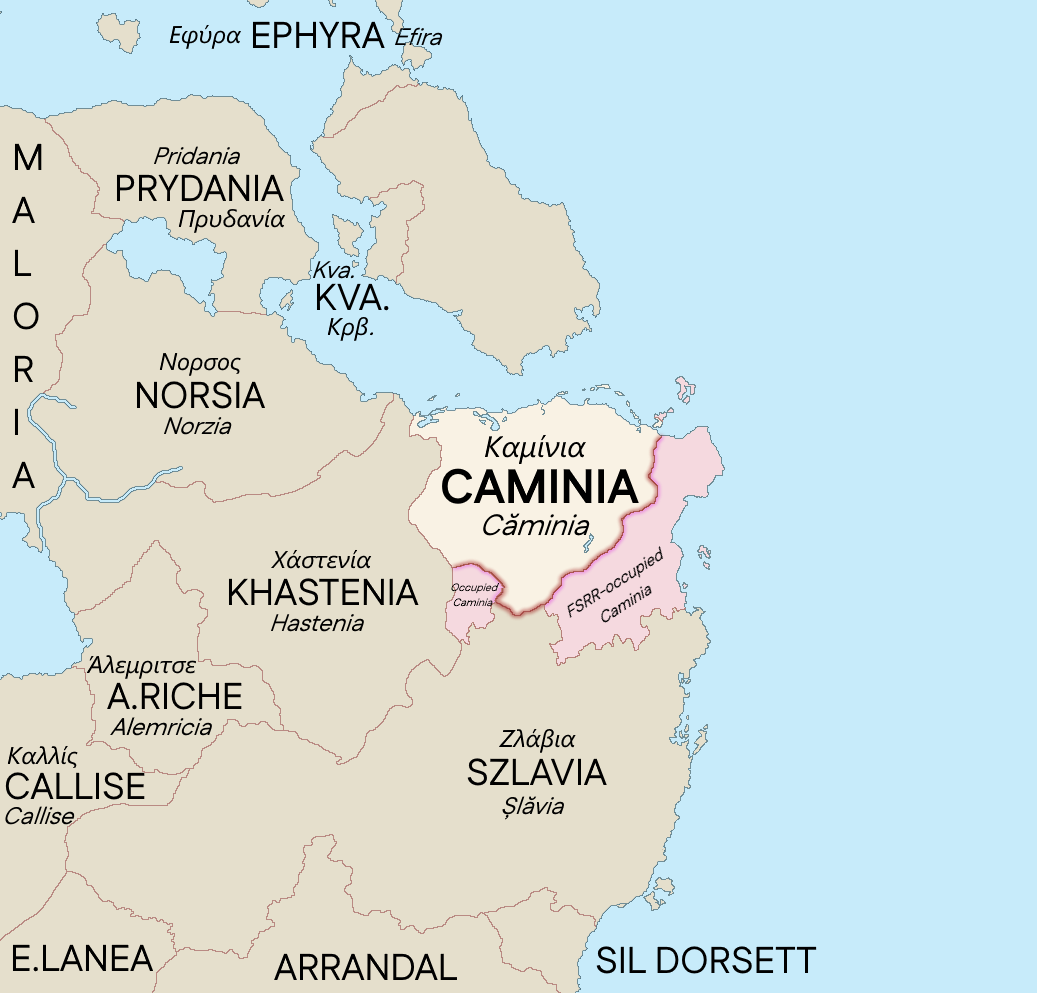
Regional languages - Tazarebht (ⵜⴰⵣⴰⵔⵉⴱⵀⵜ "tazaribht", RW Tamazight languages): 10.2% L1, Caminian (Căminiei): 4.4% L1
Religion - Messiandom: 74.6% (Zanatian Auroral: 70.3%, Courantist: 2.2%, Protestant: 1.6%, Other 0.5%); Irreligious: 18.8%; Epiphanistic: 3.2%; Zmeyist: 1.3%; Shaddaist: 1.2%; Azarebh religions: 0.9%
Demonym(s) - Zanatian (Zanà), Zanate
Government - Unitary parliamentary constitutional monarchy
King: Konstançinu X (1998-, born 1969)
Prime Minister: Màrtija Esçatti (Rìnuba!)
Leader of the Opposition: Vijjant di'Zoddàne (Nòva Dèstra)

Formation -
Azarebh culture develops across modern-day Zanatia – ~2000BCE
Thalassocratic period – first millennium BCE
Settlement of Anastasion and Ilakkia – 600s BCE
The Symphony – 523BCE
Exegerseis of the Azarebh – 433BCE; 389-388BCE
Katastasian Wars – 251BCE-244BCE
Tramorian Wars – 173BCE; 147BCE-94BCE
First Imperio-Epiphanistic Wars – 142BCE–93BCE
Battle of Aulucium (Awluẓ) – 72BCE
Provincia Zanaticae – 93BCE–344CE
Revolt of the Zanates – 344–340CE
Despotate of Zanatikos – 340-396CE
Second Imperio-Epiphanistic Wars – 388-396CE
Provinciae Zanaticae Inferior & Superior – 396CE–688CE (Plague of the Suavidici 678CE)
Migration of the Asarevians (Azarebh) – 500s CE–900s CE
Exarchate of Illakia & Dioceses of Martzia, Korsaria, Campumonte, Silianna (Sijjanna), Fforennu, and Liparia, while remaining Zanaticae Superior returns to Azarebh – 688CE–746CE
Viking raids on Zanatia – 600s–757
Invasion of Vsevolod the Great into modern-day Caminia – 712–717CE
Sack of Laclea – 746CE
Great Pagan Army – 754–757CE
Vaitorian (Norse/Germanic) Kingdom of Zanatia – 757CE–846CE
Dominium Zanatiae (Suavidici client state reimposed) – 846CE–980CE
Caminian War of Conquest; Fall of Zanatia – 980CE
Republic of Altauresia (Zanatian rump state), Kingdom of the Camines (Szlavo-Zanatian state allied to Zmeyism in west) – 980CE–1100s CE
Azarebh era – 980CE–1300s CE
Caminio-Azarebh War – 1163–1178
Su Riccuberaçone - 1271–1614
Rinaçamentu Zanàttu - 1400s–1600s
Tçiarħia – 1430–1614
Second Revolution of Iaragos (alt. Second Epiphani Revolt) - 1811
Red Rising - 1922->1923
People’s Socialist State of Zanatia (the SSPZ era) - 1923-1971
Hyacinthe Revolution - 1988
Current constitution - 1 January, 2000
(Historical events currently in flux/implied)

GDP (nominal) - 834.2bn IBU
… per capita - 27,713.98 IBU
GDP (PPP) - 1,481.5bn IBU
… per capita - 49,216.64 IBU
Debt to GDP - 95.9% of GDP
Gini - 0.313
HDI - 0.878
Currency - Zanatian dugàd (Δ1 = IBU 0.092)
Time zone - OSZ (Zanatian Standard Time), UTC+2:30 (DST +3:30)​

jh6wy4.png
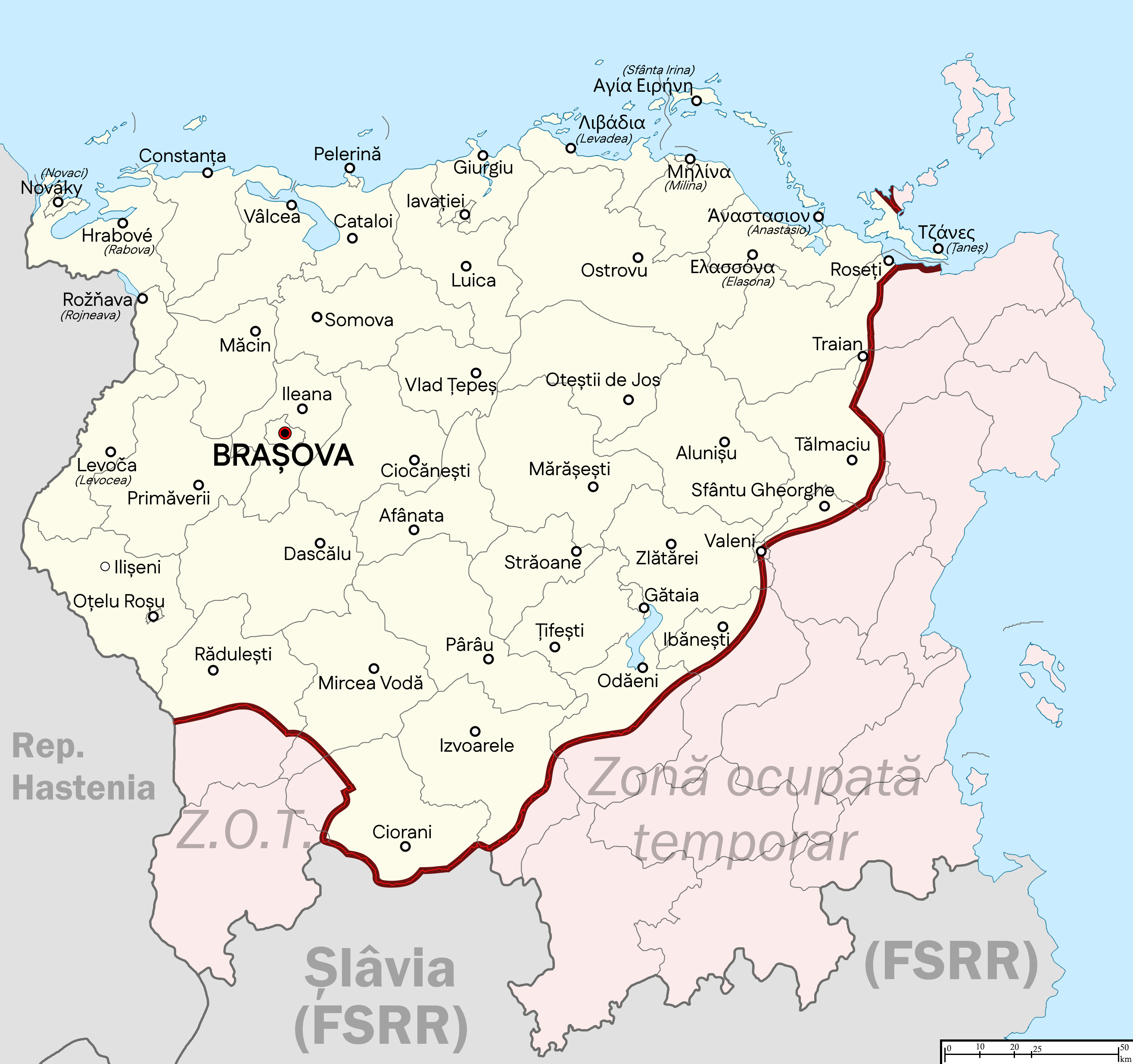
Map of Caminia*, as of 2026 *(Zanatian update pending)
 
Last edited:
History of Zanatia

Fall of Aulucium​


images-1.jpeg

Ruins of the Collis Gratiani (Zanatian: Cojju Gratzianu; "Gratian Hill")

Background

The fall of the city of Aulucium marks the abrupt end of direct Suavidici imperial rule over Zanatia, and indeed the end of a unified Zanatia for roughly 200 – or 900 – years, depending on how total one counts this unification.

The Crisis of the Seventh Century, or the Final Crisis as Zanatian historians refer to it, was the culmination of a number of factors both within the wider Imperium, and within the Zanatian province. After a period of relative stability in the 6th–early 7th centuries, the Imperium entered a period of internal tumult; provinces were split into "themes", with greater empowerment of military officials within those themes, while a plague in 678CE (known to Zanates simply as "Plague of the Suavidici" / "Bèstulessia Tzoabìdighi") heavily disrupted the supply chains and power structures keeping the Imperium afloat.

Meanwhile, a series of poor governors, known as the Dynasty of Avarice (Zanatian: Dinàstia Abrarra), had institutionalised extortion and corruption into the Zanatian provincial infrastructure. Governor Severius (Sebreiu; r.656–668), for instance, was renowned in records for his susceptibility to bribery for favours. This ran deep enough that unrest broke out sporadically and the tax-farming system broke down partly. Reorganisation around themes did alleviate these pressures in some areas, but critically undermined the loyalty of many of the recently enriched elites, while also producing heavily centralised pockets of corrupt government with heavy self-autonomy. Zanatia, once a prosperous province, had been split into several themes, which would later become the framework for the dioceses.

At the same time, Zanatia had faced a wave of assaults from all sides. From the west, the Zmeyist Szlavs repeatedly tried to enter Zanatian Imperial lands, demanding tribute; the disparity between the themes resulted in tacit acceptance of such settlements and payments to avoid conflict or save their focus for internal conflict. From the south, the Azarebh – the native people of Zanatia, but who were increasingly unumbrialised to the south – repeatedly raided Zanatian marches for better farmland as well as pottery and other goods to trade with. From the north, the Vikings had begun to conduct raids, subjecting towns with weaker defences to repeated lootings. With tax revenue and the bureaucracy heavily disrupted by the plague, governors were forced to use heavier methods of extraction, as well as rely on their own armies and patronage networks to avoid being removed, raided, or overthrown.


(image: Aolean Mountains; then Tacanesis, now southwestern Zanatia/northern Szlavia)
S_317178.jpg


Surge for Power

In 681, Mastanesosus (Zanatian: Mastanesosu), as governor of the most heavily-mobilised Zanatian theme (covering most of the southern half of the province) of Tacanesis, declared himself the Governor of Zanatia as a whole. Commanding 25,000 men, whom he appears to have provisioned for generously and introduced reforms for to improve their quality of life, while earning their honour by reversing the incursions of Azarebh polities under Avarius (Iabdas) unmitigated by his predecessor by winning a decisive battle and agreeing a settlement of sustained trade and non-aggression. With autonomy over the vast majority of Zanatia's active legions, he faced futile resistance in Fforenno and Korsaria – the latter of which he ordered the sacking of its capital of the same name – while Silianna declared for Mastenesosus to avoid a similar fate. Illakia, ruled by the pragmatic Ioannes, had been closely allied with Tacanesis for several years (possibly to assert Illakia city as an alternative port between the main Suavidici forces/legions and the outer world), much to the chagrin of Aulucium. Mastenesosus encountered fierce resistance at Aulucium, the capital of Zanatia before its provincial dissolution, who hoped to withstand a siege long enough for Suavidici aid to arrive. Arcanus, governor of Aulucium, petitioned Suavidicum for aid and demanded Mastenesosus surrender himself. Fearing it would be used as a foothold to receive Suavidici reinforcements from or an alternate power base for his allies to defect to (or be hesitant about supporting him instead of) if left alone, Mastanesosus reluctantly determined that nothing short of capitulation of Aulucium would ensure he could take control, reform, and secure either Suavidicum's assurance, or at least some security against its wrath.

Fortunately for Aulucium, their granaries remained relatively well-supplied. Arcanus demanded rationing of food supplies, which theoretically could buy them about a year in total. As the site of the final outpost of Suavidici overlordship during the near-miss at the Battle of Aulucium, it had since been built into a great imperial fortress city, and its walls remained "impenetrable" centuries later.

Mastenesosus was therefore subjected to holding a siege, which frayed his own coalition for support, especially as a bout of disease in August 681 ripped through his own ranks, decimating his forces. Overconfidence or impatience on Mastenesosus' part led him to attempt a naval battle against Aulucium near its harbour using the naval forces of Illakia and Fforenna in October, but – partly due to naval inexperience, and partly because Illakia did not send a full force – the navy was nearly destroyed, almost breaking the blockade entirely. Mining merely caused a part of the wall to fall on the mining soldiers, while efforts to scale the walls were met with easy resistance and more minor losses, and the walls remained too strong to breach with trebuchets and catapults. It is likely that damage was deliberately limited to the city too, as Mastenesosus' supporters were unlikely to support the destruction of the symbolic capital of Umbrial Zanatia. Mastenesosus moderated from his initial demand for Arcanus to be presented for execution to merely demanding entrance, likely under pressure by the other themes, who possibly still thought the relationship with Suavidicum was salvageable.


(image: First Siege of Aulucium / "Ppìmu Obsèzu di Aolucchju", 681-682 CE)
42-manasses-chronicle.jpg


Mastenesosian conquest


Mastenesosus' fate reversed when violence and unrest broke out in the winter of 681-2, eight months after the siege began, over dwindling food supplies and apparent complaints of hoarding. In the chaos, the governor of Aulucium, Arcanus, appeared to have been killed; in fact, he had gone into hiding. Regardless, despite a brief restoration of power under the governor's wife Idicia, the bribing of a number of guards on 6 February allowed Mastenesosus' men entry to a city whose defenders were exhausted, disloyal, and starved. Contemporary Suavidici sources praised her resolve, although later Zanatian chronicles generally portray her efforts as futile, and modern historians view the dire situation she inherited as largely uncontrollable. Upon hearing of the breach of the walls, Idicia disappears from the records along with her husband, with numerous rumours saying they both drank poison, fell on their swords, or sailed over the seas to Suavidicum proper. Historian Ajjanus of Ilacchja (1342-1395) discovered correspondences between Mastenesosus and the governor of Illakia, Ioannes, where he appears to suggest killing only them would be preferable to having to "decapitate [the administration] from the shoulders not below the chin".

Most accounts appear to paint Mastenesosus' capture of Aulucium in a relatively moderate light for the time. He declared himself as Governor of All Zanates – even choosing to request his appointment be assented to by Suavidicum – and largely spared the city, executing only the leading officials under its previous administration who refused to recognise him or were otherwise disloyal. However, he swiftly found the city, and his own situation in dire straits.

The siege had emaciated Aulucium. Of the 250,000 inhabitants it had in ~650CE roughly one-quarter were dead or unaccounted for from the siege, another one-third lost to plague in the last decade, and many more had fled to the surrounding countryside in successive months now that the siege was broken. The city's food and money had both depleted critically, its city watch was emaciated, undersupplied, and riotous, and his own force was half the size it had been when it first laid siege.

Mastenesosus aggressively used what remained of the province's naval forces, relying increasingly on the patronage network that got him to power, to restore an end to piracy in the Channel of Zanatia and re-establish the trade he himself had cut off, but this only partly alleviated Aulucium's decline and shortages. A campaign he accompanied to the western frontier in 682 killed the Szlavic Camine king, Mojmír (Moimarus) III, giving Fforenna respite for several years from Zmeyist incursions.


(image: Ruins at Atamalia [now Aθàmail], the site of the disastrous battle in 685)
Sbeitla_Arch_of_Antoninus_Pius.jpg


War on all fronts

In 685, the retainer force Mastenesosus had left in his home theme of Tacanesis had been routed and destroyed in a devastating battle at Aït Tamlil (Atamalia) against the Azarebh tribe of Hirzal, depleted of their main frontier force. This left the southern frontier wide open, and his own remaining men were now hundreds of miles north, weakened, and retaining control of the capital. To make the matter worse, reinforcements of Suavidicum finally answered the disappeared Arcanius' calls for help, found Aulucium weakened and seized, and its commander Lucius Cassius chose to begin landing around the city. Aulucium, which became more deeply affected by the Bèstulessia/plague than the rest of Zanatia due to its maritime ties and urbanisation, was struggling to recover from the loss of one-third of its population, but was beginning to consolidate.

Mastenesosus received a reply from Lucius to his request for recognition; "dedere aut occidi (surrender or die)". Historian Arius of Laclea (650–720) speaks of Mastenesosus' "apoplectic" reaction, and wrote that he sent messengers to "demand, then request, then beg to be permitted safe passage out in return for the city [of Aulucium]", in order to take his men south and face the Azarebh armies. These requests were refused by Lucius, and with Aulucium now surrounded, Mastenesosus found his support base out of the capital abandon him and declare against him once again. Once again, Aulucium was under siege; this time, it lasted three months, and depleted yet more of its reserves and health.

In June 685, Mastanesosus appears to begin styling himself as "Emperor of the Zanates", yet still asked for recognition from the Suavidici. On 6 July 685, Mastanesosus – probably learning of the raid of his home city of Cannasium – determined there was no choice to save Zanatia but to face and break the Suavidici armies. Arius tells us that the Suavidici, themselves in crisis, had sent "no more than fifteen thousand, and maybe below ten thousand" men, "many grey in hair and long in tooth"; this was roughly the same, if not possibly fewer, than Mastenesosus had left. Mastenesosus broke out from the city, and decisively beat Lucius' men at the gates of the city; however, he failed to stop their retreat, and Lucius determined to follow and ambush with his now diminished army.

The succession of battles outside Aulucium were brutal, and resulted in heavy casualties on both sides. The Suavidici armies were routed, but repeatedly caught up and harassed Mastenesosus' men as they drove south. Under instruction to capture Mastenesosus rather than allow him to gather strength and return at will, the city was left to the small retainer force Mastenesosus had left without targeting by Lucius, which was resupplied by his remaining allies in Illakia to the east. In August, having made it just half the way to Tacanesis – by now overrun by Azarebh peoples and defenceless, its last cities sending out pleas for help unreachably – Mastenesosus finally handed himself over to Lucius Cassius and the Suavidici, hoping to bargain his life for the freedom of his troops and a united force against the Azarebhs. Despite Lucius' respect for Mastenesosus (by Arius' relatively biassed account, it appears Lucius showed increasing restraint and hesitance in his communications to Mastenesosus, leading the latter to believe his word would be honoured; Suavidici sources either claim Lucius was tricked but did not relent, or that Mastenesosus simply was handed over by his men who were not willing to march south to their apparent increasingly-certain death) he was still under direct instruction to do two things – kill the usurper, and retake Aulucium. He was taken prisoner and killed, but his force decimated as punishment – with many more deserting with the loss of their leader and for some, their nation – and his army turned north to reassert and project power from Aulucium. They quickly found the city a ghost of its former self under the protection of a small Illakian force along with the few hundred men Mastenesosus had left there, and killed all those who did not pledge loyalty, making them pass under the yoke to be spared.

(image: A depiction of the Umbrials' practice of "passing under the yoke" / "sub iugum transiens", which symbolised humiliation through total defeat and submission; the Suavidici commander in Zanatia, Lucius Cassius, required all of the slain Mastenesosus's men to pass under the yoke to keep their lives on 4 August 685)

roman-soldiers-passing-under-the-yoke-after-defeat-by-v0-t0nzpz4ekb5g1.jpeg


Aftermath and the Fall

While the previous order had nominally been restored, Zanatia quickly fell apart. Infrastructure began to decay, Suavidici armies found themselves merely stemming losses to Azarebhs in the south – who were increasingly encroaching beyond Tacanesis – by a mixture of playing tribes off one another, paying tribute, and retreating into walled cities. This rapidly depleted Zanatian food supplies, while piracy and Viking raids returned to the Channel of Zanatia, worsening shortages further. By 687, much of the outer wall remained unrepaired, the city's population had fallen below a third of its pre-siege level, and several districts had already been abandoned to bandits, walled off as bubbles for the elite, or converted into makeshift villages. Grain shipments were in permanent decline and irregular, while much of the surrounding countryside had passed beyond imperial control. Arius tells of how "paint peeled from the walls, roads became rough, pottery only flowed out, people starved and begged in the dirty streets, and the city itself shirked away from the rising tide on all sides of decivilisation". Archaeological evidence shows many pottery fragments dating to the mid-to-late 7th century made in Aulucium but distributed across the countryside in the central-north of the country, displaying the rapid abandonment and return of people to agrarian, rural, subsistence farming-based existence.

Total disaster was narrowly averted with the victory over the Camines at Pranonum in 686, but the failure of the new governor at Aulucium, Caius, to pay tribute (likely because the city simply ran out of goods and money to give) led to the city's ultimate sacking in 688. With its defences broken and supplies and men exhausted, it fell within hours. Much of the city was set ablaze or destroyed, many of its inhabitants killed, and what little remained – usually hoarded in the elites' homes – was stolen. Caius was killed, and hung upside down at the gates of the city. The remaining inhabitants fled. With the city now a ruin, and many people believing it to be inhabited or cursed by Mastenesosus and the dead Zanates, efforts to repopulate the city failed, and it lay abandoned.

(image: Illakian depiction of the Sack of Aulucium / "Saccu di Aolucchju" dating to ~690-700CE)

Siege_of_Amorium.jpg


Legacy

The province of Zanatia was never re-established, nor imperial control over southern Zanatia regained, although the situation along the northern half of Zanatia stabilised under the dioceses, with Lucius destroying the conjoined Azarebh armies with Ioannes' Illakian reinforcements under their leader Avanius (Iabdas) in 694, buying the dioceses time to restructure. Suavidicum increasingly allowed the dioceses/themes to operate with quasi-independence, ending nearly 700 years of direct imperial rule, while Zanatia fell into poverty, productivity loss, and decline.

Southern Zanatia would slowly begin to convert away from Messianism and Umbrial would fall into an undocumented minority language below Tazarebht, while Zanatian Umbrial would accelerate its divergence from the standard Umbrial towards the modern language/dialect continuum in the rest of the country. Illakia, meanwhile, would secure its status as the main port and Ioannes' maneouvring would make it one of the few winners, even if Epiphani culture receded eastward in succeeding centuries; today in 2026, Illachja is the prosperous maritime capital of Zanatia.


(image: Ilacchja, the modern capital of Zanatia)
1600-X1000-Palermo-Hero.jpg


Approved by Palpasteve
 
Last edited:
Language of Zanatia
Zanatian language


Introduction
Zanatian is a language in the Àjjucan Umbrial (named for the distinctive sounds, especially “u” word endings and “jj”/”zz”/”tt” compounds common to all Àjjucan languages) family that forms the standard form of Àjjucan spoken in Zanatia (Zanatian: Zanàtçu; /zæ’nɘttu/).

Zanatian is relatively unique, due to its heavy influence from the Tazarebht people (including the Zanates, who were the original inhabitants of much of the core of modern-day Zanatia and who were nearly all Umbrialised by the Fall of Aulucium in the 7th century), as well as Epiphani and Szlavic languages in the region. While Umbrials did note the "dialect" of Zanatian Umbrial from at least the 200s-300s CE, it only began to be treated as separate languages (though interchangeably with the theme, e.g. Fforenna, as with Zanatia fully) during the Eftarchic period (late 600s–700s), before most of these offshoots converged somewhat in the Vaitorian era (700s–900s) into Old Zanatian. The language has spent most of its history since the 600s isolated from the other Kyllian languages, while it was relegated to vernacular form during the Szlavic era (900s–12/1400s), emerging from the Rinaçamentu as Middle Zanatian.

Rules and morphology
Innovations common to Àjjucan languages include:
• development of vowel system from Classical Umbrial follows the changes of short /i/ [ɪ] and /u/ [ʊ] > /i, u/ (instead of > /e, o/ as in northern varieties.)

• preservation of Umbrial velar stops /k, g/ before /e, i/ without palatalization as occurring in northern Kyllian varieties

• betacism, merging of Classical Umbrial b /b/ and v /w/ ([w] > [β])

• definite article drawn from Umb. ipse/ipsa (instead of ille/illa as in northern varieties)

• preservation of geminate consonants

• preservation of Umb. final /t/ (often as /d/, as in Imazitano-Kyllian or with paragogic vowel inserted, as in Zanatian), a phenomenon strengthened informally by Amazigh t- -t formation (e.g. Umb. ‘amat’ 3rd person “love” > ‘amat', compare ‘il aime’ or ‘lui ama’)

• diphthong /au/ is either preserved or reduced to /a/

Developments specific to Zanatian include:
• vowels largely resemble near !Sicilian; of the 7 Western Kyllian vowels, /e - i/ is merged as /i/, /e/ is preserved as /ɛ - e/ (not only e as in Sicilian), /o - u/ as /u/, and /ɔ/ as /o/.

• due to Amazigh influence, nouns can be made from verbs by W-tà (e.g. azzar (to gather) > azzartà (gathering)). A few early borrowings do the full old ta-W-ta, but this became unproductive relatively early on in Middle Zanatian. This is productive; e.g. cantare > kanta (verb root) > kantatà (“singing”). This has also shifted the meaning of “-mentu” (from Umb. ‘-mente') to mean formal use, occupation, institutions or activity; one would not describe a professional singer as merely being one practising “kantatà” in the same way one would not say a cook is merely “someone who cooks” (but can, as in the Zanatian example, say the “cook is cooking”), instead they are a “kantadore” who practises “kantamentu” occupationally.

• development of retroflex consonants in sequences involving liquids /rt, rd/ > /ʈʈ, ɖɖ/, e.g. !-thago, !-rdinia > ‘-ṭághine’, ‘-đinnja’; /tr, dr/ > /ʈʂ, ɖʐ/, e.g. tres, Hadrian > ‘tçes’ ('three;), ‘Adjan’ (city name); /ll, lj/ > /ʐʐ/ (exc. lj which becomes /ʝʝ/), e.g. terra (only at end of word before /a/), pullus, filius > ‘pujju’, ‘fijju’ ('earth, chicken, son') (with additional merger of older /dʒ/ (< Umb. /j/) > /ɖʐ/, in 19th c.). Most /rr/ remain as /rr/ (*as /ɹ/), e.g. accurro > accurriru, but before /a/ they have generally become /ʐʐ/ (terra > tejja)
/rt/ → /ʈʈ/ (spelt ț)
/rd/ → /ɖɖ/ (đ)
/tr/ → /ʈʂ/ (tç)
/dr/ → /ɖʐ/ (dj)
/rs/ → /rʃ/ (rx)
/sj/ → /ʃ/ (x)
/ll, lj/ → /ʐʐ/, /ʝʝ/ (jj)
/rra/ → /ʐʐa/ (jja)
/rr/ → /rr/ (rr)
/sk/ static and now often spelt sk (retained hard sound of k)

• “ng(u)” > “mb”; “lingua” (Umb.) > “jimboa”

• palatalization of Umb. /j/ > /ʝ/ except at word start where it becomes > z, e.g. Ioannes > 'Zuanne', iusticia > ‘zusticchja’, /lj/ > /ʝʝ/, e.g. filius > 'fijju', [-Cj-] clusters > /çç/, e.g. facio > ‘facchjo’, /l/ > /ʝ/ before /i/ (via [ʎ]), e.g. lingua > 'jingua’ (Middle form; modern form is “jimboa”). Since the early modern centuries, under Suavidici (Umb.) influence/prestige, for start of word (e.g. lingua/”jingòa” or Ioannes/”Ghjuanne/Zuanne”) “j” before “l” specifically at the start of words has become unproductive and has been rolled back as part of a conservative linguistic push, leading to examples like “jimbòa”>”limboa”. This is treated as an overcorrection when speech changes rather than mere spelling.

• while most /v/>/β/, before a voiceless consonant (e.g. “t”) or next to “s”, /v/>/f/

• /ua/ endings typically shift to /oa/, apparently an innovation from the western Szlavic-influenced dialect of Zanatian during Zanatia's time of Szlavic occupation. e.g. “lingua” > “jingoa”

• /r/ assimilation to following consonant in pre-consonantal position, e.g. arbor > 'ábbore', persona > ‘pessona’ (> ‘pexona’)

• in words with multiple liquid consonants, the first will assimilate to the second and the second will frequently be deleted, plorare > ‘proare’

• in clusters /pl, kl, fl/, /l/ is absorbed into preceding consonant, e.g. plus > ‘ppus’, clavis > ‘ccae’, flos > ‘ffore’, pluvium > ‘ppuviu’, clamare > ‘ccamaz’

•a between two vowels, /p/ usually shifts to /b/. Lupum > “lubu”. Although some /b/ shifts to /v/ (particularly between vowels), no /p/ ever shifts to /v/.

• clusters involving /st/ or /ts/ (mostly between word boundaries) /sç/ or /çs/, e.g. nostrum > ‘nosçu”, but struere > “strujìr”

• Words with -ti- before vowels (typically -tia) will become ç, except for second instance in same word where they become tz > patientia > “paçentza”

• Tazarebht (!Tamazight) discourse markers are borrowed into Zanatian. “Ad” before the verbs indicates an ongoing action, while “là” a future one. “-dà” (pronounced ta) indicates an action towards the speaker, “-nnà” away. “I saw” goes from the !Sardinian “deu apu biu” to equivalent for “deu ma'-apu biu” (“I apparently saw”) when hearsay/uncertain origin.

• /d/ before historic /i/ will often palatise to /z/. e.g. hodie (today) > oze; compare calidum > kalidu

• /g/ shifts /ɣ/ before historic i or e. e.g. gelum (cold) > ghelu

• /m/ ending usually dropped, while l and n usually preserved. e.g. -um to -u very regular ending

• gn becomes nn. e.g. regnum > rennu

• r becomes /ɹ/ or /r/ (north removed tap due to same prestige dialect which causes “lingoa”). /reC/ usually becomes /riC/ e.g. remancere > rimaniz.

• “c” sometimes slips to “tz” to distinguish from the hard k, or to “k’ to distinguish *as* the hard k (the latter almost exclusively limited to before e/i) e.g. centralis > tzentral[u/a]

• /ex/ slips to /s/ usually, e.g. exgarrere > sgaraz, or drops, e.g. regem > rey

• Topicalisation (moving the object to the front of a sentence/phrase) is common, to emphasise the topic of the sentence; ‘normal’ sentences are still somewhat the standard

• /kʷ/ is the sound of “q”, and the “u” is dropped. E.g. “quattuor” > “qattçu”, while /q/ is represented by a “qq”, virtually exclusively in loan words (and in the prestige dialect, pronounced increasingly closely to the ordinary Latinate q).

• quite a few “si” have become “tz(i)” under Epiphanistic (!Greek) influence as well as comparable to !Old Sardinian and !Tamazight, as well as “di”>”tz(i)”. Ratio (Umb.) > rasionem(?) > ratzòne. Contrast: most “s” remain

• as an inherited feature of Tazarebht (!Tamazight) languages, Zanatian uses the word “ki” invariably for the equivalent “che/que/chi/qui”. Similarly “di” for of, “la(s)/lu(s)” for the.

• as an inherited feature of Tazarebht (!Tamazight) languages, Zanatian principally uses Verb Subject Object order. Subject Verb Object is valid, especially in formal settings. It also has a form for “to not be” – us (i.e. ki es vs. ki us, “it is” vs “it isn't”)

• as an inherited feature of Tazarebht (!Tamazight) languages, Zanatian uses resumptive pronouns. “The man that I saw” becomes “The man that I saw him”; “L'umini ke deu lu bisu.” (The man that I him saw)

• Greek loanwords, and “s” after “i” at the start of words (spiritus > ispiritu > iθpiritu), as well as a few exceptional words (e.g. calidum > kalidu > kaliθu), have gained the letter θ.

Examples
Lord's Prayer (Patçe Nosçu)
Ki es patçe nosçu in kelu,
Santifikatu síate su nómine tuu.
Bègghjat'tà ad nos su rennu tuu,
Síate ad fatta sa boluntate tua,
como in kelu eccusì in tejja.
Su pane junnale, da'tà nos oze nosçu,
ete pugga nos desos peccatos nosços,
Como nos puggamus’nnà sos devitores nosços.
Ete non lasses nos rúere ad tenntatzçone,
Tàmes lívera nos de male.”

[ki ɛz ˈpaʈʂɛ ˈnɔʂʂu in ˈkɛlu
santifiˈkatu ˈziatɛ zu ˈnɔminɛ ˈtuu.
ˈbɛɲɣat tə an nɔs su ˈɾɛnnu ˈtuu,
ˈsiatɛ ad ˈfatta za β̞ɔlunˈtatɛ ˈtua,
ˈkɔmɔ in ˈkɛlu ɛkkuˈzi in ˈtɛʐʐa.
zu ˈpanɛ ˈð̞ɔnnɛz da tə nɔz ˈɔzɛ ˈnɔʂʂu ˈdiɛs,
ɛp ˈpugga nɔz dɛzɔs pɛkˈkatɔz ˈnɔʂʂɔs,
ˈkɔmɔ nɔs pugˈgamus ɲə sɔz dɛβ̞iˈtɔɾɛz ˈnɔʂʂɔs
ɛn nɔn ˈlassɛz nɔz ˈɾuɛɾɛ at tɛntatˈtsɔnɛ,
tamɛs ˈliβ̞ɛɾa nɔz dɛ ˈmalɛ]

Numbers (Nùmunus)
1: ūnus > unu/una (nominally unu)
2: duo > duus/duas (nominally duu)
3: trēs > tçes
4: quattuor > qattçu
5: quīnque > qinqu
6: sex > ses
7: septem > sebte
8: octō > ottu
9: novem > nobe
10: decem > deghe
11: ūndecim > ùndeghe
12: duodēcim > dudeghe
13: trēdecim > tçedeghe
14: quattuordecim > qattçudeghe
15: quīndecim > qindeghe
16: sēdecim > sedeghe
17: septendecim > sebdeghe
18: duodēvīgintī (20 minus 2) > dudebinti
19: ūndēvīgintī (20 minus 1) > ùndebinti
20: vīgintī > bighinti
21: vīgintī ūnus > bighinti ete unu
22: vīgintī duo > bighinti ete duu
23: vīgintī trēs > bighinti ete tçes
24: vīgintī quattuor > bighinti ete qattçu
25: vīgintī quīnque > bighinti ete qinqu
26: vīgintī sex > bighinti ete ses
27: vīgintī septem > bighinti ete sebte
28: duodētrīgintā (30 minus 2) > dudetçinta
29: ūndētrīgintā (30 minus 1) > ùndetçinta
30: trīgintā > tçighinta
40: quadrāgintā > qadçaghinta
50: quīnquāgintā > qinqughinta
60: sexāgintā > sesaghinta
70: septuāgintā > sebtaghinta
80: ottoaghinta
90: nonnaghinta
98: dudekentu
99: ùndekentu
100: kentu
1000: mijji

Greetings (Sajjutatzùnes)
Paghatçu! (Hello! Cognate from Pax tecum (Umb. Peace be with you))
Sarbè (Hello; formal, from salve)
Sajjutu / Salù (Hello; informal)
Azòsu (Goodbye; cognate to adios/adieu)
Bena junnata (Good morning)
Benças (akin to Buenas)
Ben’agrunna (Good afternoon)
Bena tracojju (Good evening/sunset)
Bena sairra (Good night)
Co es? (How are you? Informal)
Ita pajji? (Ite pares > How do you seem?)
Coment istu? (How are you?)
Suribìdere! (Farewell/Bye - cognate with Arrivederci / Au revoir)
Bonabènnere! (Welcome!)
Gràtzias (multus)! (Thanks [a lot]!)
Nighilès! (It's nothing)
Di rèxi! (It's nothing)
Cun gusto/praìxi! (My pleasure)
Praìx! (Nice to meet you!)

Zanatian Universal Declaration of Human Rights (Deklaratzùne Unibirsale Zanàtçu de sus Dèstros de s'Uminis)
Onni ses èsseres uminis nacchjint lìveros et’èttuneveç aughalos ìn dinnidaç ete ìn destros. Ixos tènnent sa ratzòne ete sa sineìdetzu ete dèbent obràre s'unu çin s’àltreu çin ìθpiritu di fratrenidaç ete aθelfosetzu.
 
Last edited:
Back
Top