LONGFORM: Sutheran transgender moral panic nearly won; we are a warning to the world
Dr. Halfred Þyrilsson
Sutherland has been a secular, relatively socially-permissive liberal democracy compared to its international neighbours for generations, hosting the IACJ (International Associated Court of Justice) in the modern-day; yet its cultural, countermajoritarian, and democratic norms have been put to the test recently.
The Sutheran Spring, condemned abroad by some contemporaries for its brutality but later commemorated at home as the birth of mass liberal democracy in the Sutherlands, remains a key source of this liberalisation; homosexuality was first decriminalised (through its non-inclusion in the Great Law of 1831, rather than any active intention or consideration, naturally) in the Republic's first criminal code, which was explicitly written without the Messianist influence that had defined over 800 years of Sutheran bureaucracy and law. This was largely influenced by a mixture of the
Il·luminismó (Enlightenment) that had permeated secular Atinean circles in the late 17th to early 19th centuries, and the proliferation of Illuminist ideas south of the border in Sutherland.
Benjamí-Cosme Despuig, 1838, "Glòria a la República"
While this protection was briefly rescinded by the recriminalisation of sodomy in 1852 until 1857, and again in 1888 until 1905, this principle held fast until the rise of Richeism in the late 1910s to early 1920s.
The Richeist campaign against minorities whose existence it viewed as contradictory to the national duty (from the Atinean "transvesti(t/da)" population, who had received limited licenses by the Sutheran government through the 1910s, to homosexuals, Cumbric people, the disabled, the infertile, and the political opposition like social-democratic, liberals, activists, trade unionists, and councilists; the list knew no true end, and favoured groups were commonly shuffled out of party favour as the in-group shrank) led to a counterwave in favour of protecting vulnerable minorities and refraining from state intervention in moral and cultural politics. This was largely under the pressure of the same
folksdrivnings (peoples' associations) who had proliferated in the pre-Richeist era; the incumbent Labour, and opposing Liberal/VDA, both largely favoured preserving the anti-sodomy laws of the 1920s.
Santiago "Tiago" Bráz, Chancellor of Great Sutherland (2011-2018); pictured in 2017
The countercultural wave following the Flaming Fifties in the late 1950s and 1960s heralded the rise of explicitly-social
folksdrivnings rather than the largely economic, such as trade unions and employer associations, that had been emphasised into the mid-20th century prior. Franklin Argall's Labour government entered government by landslide in the mid-1960s, and heralded a liberalisation of social issues - from introducing legal abortion and contraception, to formally recognising and legalising homosexuality for all over-21s, ending its longstanding treatment as a symptom of mental illness - that would set the stage for a further half-century of liberalisation.
By the start of the Ramsay government - himself a right-of-centre market Liberal, he led a liberal-conservative government of Liberals, the conservative VDA, while his second term coalition included the free-market libertarian FRP and left-conservative Messianist CDP too - a series of increasingly liberalised social-democratic and liberal-conservative governments had introduced a gender recognition law, same-sex marriage, widespread gender-affirming care had been implemented in the general LHA - albeit with significant waiting lists - and sex education now included LGBT+ issues.
This is despite a number of provinces' pushback in the 1980s and 1990s that briefly culminated in a national "Reason Law" against LGBT+ sex education in the mid-to-late 1980s under conservative-liberal Chancellor Malcolm Lamont and his Liberal-VDA government. Gender self-identification was introduced by Labour Chancellor Tiago Bráz in 2017, following party consensus on the issue. The Ramsay government had finalised the introduction of the legal third-gender "X" on passports in 2020 on its entry to power.
Origin
The Primrose Fellowship is an international NGO focussed on human rights and the preservation of international law under democratic norms; assembly pictured in 2021
The difference from the opposition to the near-unanimous passage of the KSIL in the Almoot in 2017 from previous rounds of conservative "moral panic" is that it largely originated from nominally centrist or even left-leaning spaces. Both the opposition to the countercultural wave in the 50s-70s, and the successive opposition in the following decades that rolled back a number of liberalising laws under Malcolm Lamont, were largely external, right-wing influences on a somewhat more social-democratic sphere.
These oppositions therefore, to some extent, proved dependent upon the social-democratic liberalised consensus being overturned; this did not happen, as much as economic liberalism fared much better in its war against old-style interventionist social democracy, so these conservative limits on LGBT+ sex education and pressure groups proved superficial and limited by both time and constitutionality.
Instead, the gender-critical movement arose from establishment circles. Long-term Labour donor and well-known journalist for the Daily Franklin, Clara Ilkstoun, called for a "rally cry" against the "radical anti-truth of the nominally moderate government", and raised concerns that trans self-ID would endanger "female prisoners, female safe spaces, children, and even the use of public bathrooms".
What followed was quite simple; that rally cry, about an issue that once was regarded as an edge-case, snowballed. Transgender people were mentioned by right-wing and centrist newspapers roughly 10,000 times over the following eight years, although a vanishingly small amount of those would include any trans perspectives. Only two distinctly pro-restriction of trans peoples' rights organisations were in existence before 2017; this number rose to sixty-three in 2022, and ninety-four in 2025, before declining to ninety this year.
The Primrose Foundation, an organisation set up in the 1920s by Sutherans protesting Richeist human rights abuses that now campaigns on international law and human rights preservation across the world, held a study which found that these organisations have been proliferating with the wider aim to roll back LGBT+ rights and protections, gender equality, and abortion rights, as well as increasingly immigration too. They have spent a total of ʃ240 million (~$170mn) since 2017, and are heavily interconnected to global networks of similar organisations, as well as increasingly the radical-right network in the mid-2020s.
Many of these operate informally, however they typically all support the revocation of gender recognition (whether self-ID or approved following medical procedure), the restriction of education and gender-affirming healthcare, and exclusion of transgender people from public spaces, activities, and services. There is also an increasing crossover between Sutheran anti-trans groups, and "mental health scepticism", according to Primrose. Between 2017 and 2022 in particular, the level of spending, attention, and coverage towards anti-trans issues rose dramatically. Dr. Mack Buchanan, meanwhile, has been linked from his initial psychology advocacy and opposition to the KSIL to his "lecture tour" and increasing affiliation with the manosphere and extreme-right.
Institutional reaction
Macedoni Decaralt (AdN) Ameixida governor from 2010 to 2024 and advocate for the struck-down "bathroom ban", pictured in 2022
This campaign had a major effect on public discourse, and quickly meshed with existing social conservatism in some circles. The VDA was known to be sceptical of the coalition government's abolition of conversion therapy in 2020, with the eventual abolition only being voted through with Labour, FRP, Venstre, and Green support and refusing to include transgender people. The Labour party's Rosamund Hallowell, meanwhile, was a noted "trans-exclusive" politician; her leadership, having very initially been celebrative of the Labour government's previous legacy on gender self-ID, rolled back support for expanding gender-affirming care, endorsed "bathroom bans", and supported the prohibition of puberty blockers for under-18s.
One of Hallowell's key donors was the same Clara Ilkstoun who had formed the "Advocacy for Common Sense" (ACS) pressure group in 2018. The Liberal party, however, remained most sceptic. The Green party and Free Reform both gained a reputation as being the two "pro-trans rights" parties, and both gained significant support from young people in the 2022 election, while Hallowell's leadership would unexpectedly founder in 2022, causing a recalcitrant Blake Sagan to take charge of the party and dial down the connections to trans-exclusive folks like Ilkstoun. Meanwhile, a number of provinces began to institute limits on gender-affirming care, bathroom bans, and other rollbacks of transgender rights amid the rise of influence at the provincial level.
The quieter tragedy that this had on the "debate" was that it drowned out any sensible handling of the data, studies, and transgender perspectives. Many people had very legitimate concerns, whether or not they were supported by the evidence. These issues could have been dealt with in a protective, humane, all-encompassing style to inform and build towards conclusions on issues like transgender peoples' identity in sports, prisons, healthcare, and surrounding concerns thereabout. Instead, we were strongarmed into a "with us, or with them" narrative on every issue. That way lies madness, of a very ideological form. Any middle-ground has been more or less totally squeezed out - someone who, say, only opposed self-identification on a first glance but held no prejudice against transgender people widely in 2017 has a very high likelihood of now carrying all sorts of internalised suspicion and prejudice, and of jumping to conclusions before they're made. Societal trust was eroded - and in a high-trust society like Sutherland, it erodes furthest.
The first line of institutional opposition, however, was the judiciary. Sutherland has a well-noted tradition of "defensive democracy" and constitutionalism, and its Constitution is potentially the world's most progressive (or burdensome, depending on whom you ask), while a combination of these factors and its high level of social mobility led to a significant independent streak amongst its judiciary. The first case came when a women's refuge sued the central government in 2021 over the definition of "woman", claiming that they were unable to legally maintain sex-based protective services because "woman" was defined privately and administratively, alleging that this breaches Cavels 8 (privacy) and 14 (freedom from discrimination) of the SCRM; the Constitutional Court heard the verdict, and released a judgement that pleased essentially nobody, in both "affirming sex-based organisations' right to differentiate where proportionate and necessary" (meaningless legalese, of course) and affirming the KSIL essentially in full.

The Constitutional Court of Great Sutherland (ODGS), pictured in 2024
At a time when the Ramsay government was warming to the argument that provinces like Ameixida should be permitted to introduce a "bathroom ban" based on "sex at birth", the Constitutional Court ruled in a 9-3 verdict that the bathroom ban, a second verdict in 2023 more or less clarified the situation. As gender identity was introduced to the Constitution in 2015 along with a number of other characteristics, and the court (or nine of the deemers, at least) viewed that the discrimination as per Cavel 14 did not pursue a legitimate aim in a proportionate, necessary, evidenced, and minimalist manner, striking the bathroom ban down.
Gender identity was further said to "constitute a part of the central sphere of private life", thus entitling people to Cavel 8 rights. The court stopped short of judging the treatment of transgender people as being subject to degrading treatment, but noted that situations such as "public humiliation, routine harassment, exclusion from a significant share of public bathrooms without option, threats of litigation and custodial arrest, and denial of shelter access" could constitute unconstitutional degradation depending on the context. Most notably, Ameixida's government was said to have:
"failed to prove to persuasion that transgender-inclusive facilities create a statistically significant increase in assaults, voyeurism, or threats to women’s safety, nor that this policy would materially help the existing criminal law that already prohibits harassment, assault, voyeurism, and sexual violence irrespective of the gender identity of the perpetrator to the satisfaction of this court."
This ruling both struck down Ameixida's bathroom ban - and with it, eleven other provinces' trans-exclusionary bathroom bans - and strengthened Liberal-VDA opposition to trans inclusion. Ramsay issued a statement on 30 January 2023 that, while stopping just short of condemning the court openly, branded the ruling "objectively based on falsehoods" and "mostly indefensible in the modern context." VDA leader Márcia Téixeira called on the government to "set an example" by introducing a constitutional amendment, although this would never materialise.
Labour leader John Sagan stated that the Constitutional Court "may have gone too far" on 4 February, although in an interview on 5 March, he contradicted this and stated that the court had "brought clarity" and "protected vulnerable people". Another notable "TERF", Jannik Ericson, began the petition to repeal Article 14's self-standing nature, getting over a million signatures; Ericson, a tech billionaire of Ericson Computing, became a prolific supporter of trans-exclusionary movements.
The comedown
John Blake Sagan (Labour leader 2022-present, Chancellor 2025-present), pictured in 2023
This was the first alarm bell for the gender-critical movement, but at the time, it seemed as if it gave more fuel to the fire than it starved. The gender-critical movement adopted what can only be described as a victim mentality, rattling against the Constitutional Court's "bias and moneyed interests", while the unity of the gender-critical movement and the insurgent hard-right under the VDA hardline. More controversially, the far-right NFP provided a stable base for the ecosystem.
The criticism forked off; on the left, the "TERF" movement emphasised women's rights, "sex over gender", and protection, while on the right, the movement increasingly became indistinguishable from the same blob of illiberals that had opposed homosexuality in the 50s-60s, LGBT+ inclusive sex education in the 80s, and same-sex marriage in the 00s.
The second alarm bell was initially not noticed. Clara Ilkstoun had increasingly railed against the Liberal left and Labour party under John Sagan, calling them "radical liberal-progressives" and "misogynist middle-class white male extremists", however this quickly resulted in a frosty response from the left of politics. While before, the TERF movement had enjoyed some degree of co-habitation and legitimacy in left-wing circles, the Liberal left began to castigate the Ilkstouns and Ericsons of Sutherland as Ramsay-aligned has-beens who needed to be removed as the party fell into unpopularity in its second government term.
Ilkstoun, meanwhile, had lost much of her respectability as she dug deeper into the same culture war, and drew into a number of controversies of downplaying Richeist atrocities and using slurs against LGBT+ people. The Labour party took longer, but Sagan's promise to renew the party's image and move on from Nyarverth resulted in the loss of the same patronage networks that Clara Ilkstoun and her compatriots had depended upon to influence the halls of Labour, and the somewhat more progressive outlook of the "One Labour" pseudo-faction he relied upon tempered their influence further. After Hallowell had gone, the problem became clear; even the few still sympathetic to Ilkstoun, despite her increasingly poor reputation, were too pro-institutionalist to support an active campaign against the entire country's judiciary and constitutional streak, especially as their voters soured to the radical noise. This only became clear when Ilkstoun declared war on the Labour party after the judgement for its "complicity" in the KSIL, likely leading to Sagan's about-turn on the Constitutional Court verdict.

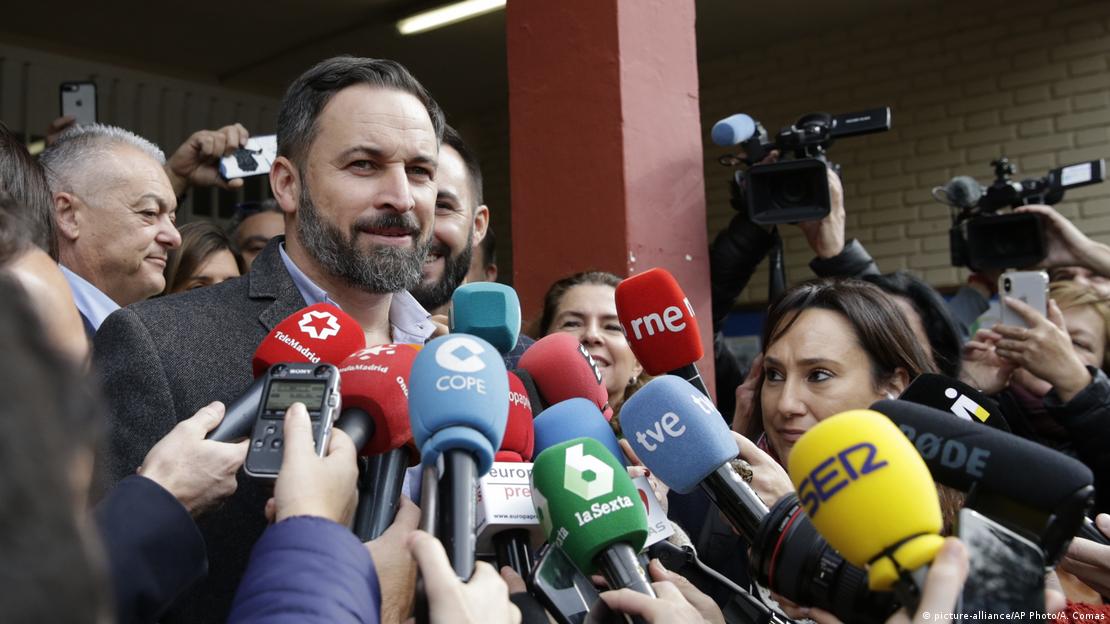
Salvador Renau Regaunt (leader of Progress) seized on the moral panic to capitalise for the far-right; pictured in 2024
Nevertheless, trans-exclusionary policies - loudly - continued. Gender-affirming care was stripped back disproportionately, causing five-year long waiting lists, while universities were required to sign "free speech" clauses to platform TERFs, which caused issues when a small number of those TERFs were essentially far-right politicians getting to grandstand, and the government pressured some sports organisations to exclude transgender women from women's sports.
The sweeping Alberton Review in 2024 recommended a set of bureaucratic restrictions, age and capacity limits, "forced neutrality" and other reforms such as the segregation of transgender women from women's prisons; this Review was widely criticised as being partial, however was implemented at high speed by the incumbent government, until it lost its majority unexpectedly over prisoner voting in 2025.
Progress' support for transphobia, however, became more overt - and dominant in the public media, even despite the clearly-imported "religious values" arguments into a heavily secular country - than the government's "careful safeguards" narrative ever could. By 2025, some of Ramsay's ministers were openly supporting the "end of recognition of transgender identity" wholesale, and measures increasingly explicitly excluding them from society; they had converged on the ending point that the gender-critical organisations had been pushing for a decade, but too late to effect the change that may have been possible a few years prior or if they had made a few fewer enemies. The conflation of free private or moral dissent, and the entitlement they had to enforce that dissent from our democratic structures to exclude them from all facets of society they can argue for, had been achieved - too late.
Allister Ramsay resigned in 2025 amid record unpopularity; pictured in 2025
This government, however, had become massively unpopular - whether this was a happy coincidence for transgender rights' preservation, or partially influenced by youth anger towards an increasingly vocally transphobic government, is hard to tell, although the Greens' second-place result over the Liberals with many of their own former voters may offer an answer. The new government, largely comprised of Sagan's Labour but buoyed by the more overtly socially-progressive Greens and given confidence by the pro-institution liberal Venstre, marked a quiet U-turn from this drift away from transgender inclusion. "Free speech" clauses were repealed within days, with Sagan criticising them as "giving Progress a voice in the heart of the democratic institutions they most despise", while gender-affirming care cutbacks were reversed gradually in the first few months as part of wider anti-austerity moves.
Interestingly, the measures that got reversed fastest and most overtly were
because of a tangential concern, quite often. His about-turn did not make Sagan a vocal ally of transgender people, and his refusal to return roughly 500 prisoners with gender self-identification was upheld by the Constitutional Court in a close 7-5 verdict as "proportionate and necessary", despite dissent that the approach was not necessary or justified. His initial reluctance to scrap what the Greens had nicknamed "mandatory outing of trans schoolkids" in the early days, until his agreement to do so in April, underscored this lack of willingness where a secondary concern did not underpin the reform.
Despite intervention from the Reeve for Culture and Equalities Ulf Jonas Ibsen (Green), sports organisations have sometimes proved unwilling to reverse restrictions - the tavel (chess) federation, Evening Run, and many kickball organisations have proven an exception to this reluctance. This reluctance, however, underscores the general mood of the Sutheran public to the issue - disinterest and fatigue, mixed with the overexposure to the issue leading to backlash. As of 2026, 60% of Sutherans support gender self-ID, and a similar 50-75% majority can be seen on most trans rights issues. Sagan has also introduced the Green policy of legal recognition of transgender parents' legal, not at-birth, gender on their birth certificates in March 2026. There is also a mooted ban on medical intervention without informed consent on intersex folks, but that seemingly remains in the wings, while Labour did explicitly promise to ban conversion therapy for transgender people, following the incomplete compromise "ban" introduced and then gutted by the VDA in the coalition government. Calls for an explicit policy push against hatred based on gender identity, despite its "on-the-books" inclusion in the constitution, have been warmly received by the halls of government; but, as of 25 May, that reception has not been followed by much of anything.
Whether Sagan's policies mark a reluctant partial appeasement of his Green partners, a symbolic and meaningful de-escalation from the moral panic without triggering a major backlash, or a betrayal of socially progressive people who voted to dismantle the infrastructure to protect trans people fully and honestly rather than nearly fight with the Constitution to keep it partly intact... that's up to you.
The warning
International observers may be surprised to read how close Sutherland came to such radically illiberal policies, based on its status as one of the world's socially progressive and tolerant nations. The warning, however, is clear: democratic societies are at peril the moment that people believe inclusion is, in and of itself, dangerous enough to give the state a mandate to make free life in that society conditional.
The KSIL was introduced as an edge-case law to protect a numerically tiny population, and itself took a tiny proportion of legislative time. Yet, the same people who drew on the age-old narrative that it "dominated" parliamentary time and "wasted" the government's mandate, were themselves intent on dominating democratic spaces and wasting incumbent governments' attention on the marginal issue.
Our moral panic came when people were told we are entitled to that choice over peoples' inclusion in society again. This call became so self-contained that the advocates for "women's rights" trans-exclusionary politics never have to waste a breath justifying why they oppose abortion or constitutional norms, and that euphemistic insulation attracted the grifters in.

It would be wrong to write off the moral panic as a total flop. It shaped public discourse for years, and while regulations are reducing the spending power and "lying" power of organisations like the ACS, it had a significant cultural impact. The story that Sutheran liberals would protect the constitution proved even more false; from the start until months ago, it was liberals who led increasingly radically illiberal and unconstitutional views in under the disguise of liberal "women's rights" and "safeguarding" language. Suspicion, and resulting hatred and violence towards, transgender people remains alarming, while their mental health has been degraded pointlessly.
The gender-criticals succeeded in one thing, albeit temporarily; a tiny minority were turned into a national obsession, all while the edge of the Overton window screamed rightward past "we should abolish parts of the constitution". We may never fully fix that; entirely reasonable people now carry deep-rooted prejudices, safeguarding issues, and concerns - some reasonable, some not - about transgender rights.
The view that a transgender person must out themselves, undergo full surgery, is on the surface reasonable - but it requires a total loss of bodily autonomy and self-determination, and deprives people who can't undergo surgery to the state's arbitrary one-size-fits-all satisfaction of any transition at all. In forcing them to undergo invasive, irreversible, risky, and expensive surgery, and being misgendered until that point, their privacy is undermined; despite numerous studies saying that transition is as social and psychological as it is physical. It is one thing for a conservative society informed by yesterday's prejudices and neglect that never were broken down - though still incongruent with, and exclusionary from, any liberal democracy worth its word - but another to allow millions within a liberalised or social-democratic society to revert to that prejudice and neglect.
The "manosphere" podcasters, and "experts" like Dr. Mack Buchanan, are producing a demon of their own out of this same panic, meanwhile. The countermajoritarianism that is so important to Sutheran constitutional social democracy - the principle that majority prejudice or neglect on its own should not be a licence to discriminate, exclude, or deny rights, and that rights are inherent to us all of which only some can be removed just when absolutely necessary - is heavily under threat by these popular movements seeking to persuade the majority that their grievances (whether economic, social, cultural, or moral) are exactable by excluding a minority from their fundamental rights.
Dr. Mack Buchanan (as on right) is described by the Daily Herald as the "posterchild" of the alt-right, having originated as an academic who spoke out against the KSIL and became affiliated with the "manosphere" ecosystem
Few countries have the institutional safeguards that Sutherland has, though. The SCRM remains - this being the operative word, after one of the key failures was to enact constitutional change - steadfast in protecting civil
and social rights, and the Constitutional Court - as unpopular and vacillating as it sometimes is - proved pivotal in deflating the movement. The Constitutional Court itself hardly covered itself in glory - it has backed Sagan's trans-exclusionary law, and a number of its deemers have consistently opposed transgender rights, while their dissents often draw - directly, and with named acknowledgement - from the same several dozen organisations.
Even a deeply social-democratic republic nearly drifted into full-throated institutionalised exclusion through elite panic and media amplification, even when the advocates for that exclusion were so often neo-Richeists; and many of the deciding factors were happy accidents.
What if Hallowell had narrowly
won, not lost?
What if public opinion had moved a bit further, and been a bit more fervent?
What if Ilkstoun had not launched an assault on Sagan so readily?
What if Ramsay had been persuaded earlier and faster to restrict transgender freedoms, or governed for longer?
What if Progress had appeared later and the shift of gender-criticals in the public's eyes went from "quiet technocratic 'sensible' guys" to "suited neo-Richeists?"
What if Ameixida hadn't introduced a full bathroom ban?
We cannot look back at this as an inevitable victory of liberal values, but as a near miss aided - but not guaranteed - by them, and the obsessive, radical, undemocratic nature of the movement appears not to have even dented its potential until Ilkstoun went properly off the wall.
We can only hope to prepare for the next go-around the moral panic rollercoaster - and there will be one - or the tepid proceduralism of Blake Sagan will look like the last light of a dying progressive streak in a rising tide of normalised hate and suspicion as exists in far-flung nations, as we all convince ourselves we have "bigger problems" to also fail to deal with. Democracies don't become more fragile when they expand rights - they become more fragile when they become paranoid about it.
Dr. Halfred Þyrilsson has been a professor of political studies at the Lorestead of Irwell in south-eastern Great Sutherland since 2009.