

Alsatian Island
TNPer
- Pronouns
- he/his
- TNP Nation
- Alsatian Island
World Health Authority and Tribunal (WHAT)
Signatories and Participants
Great Sutherland, the Meanwealth of
Caminia, the Serene Kingdom of
Friedensstadt
Eigland, the Realm of
Scalvia, the Commonwealth of
Transamara, the Union State of
Þeksmark, the Gallanthood Meanwealth of
South Ethia, the Empire of
Aubervijr, the Republic of
Hexastalia, the Republic of
Lyvenntia, the Wardenate of
Great Sutherland, the Meanwealth of
Caminia, the Serene Kingdom of
Friedensstadt
Eigland, the Realm of
Scalvia, the Commonwealth of
Transamara, the Union State of
Þeksmark, the Gallanthood Meanwealth of
South Ethia, the Empire of
Aubervijr, the Republic of
Hexastalia, the Republic of
Lyvenntia, the Wardenate of
The Viessehus, 2B Alvastrand, Sevenoak [HSL], Great Sutherland (1SV3 AU28)
Overview
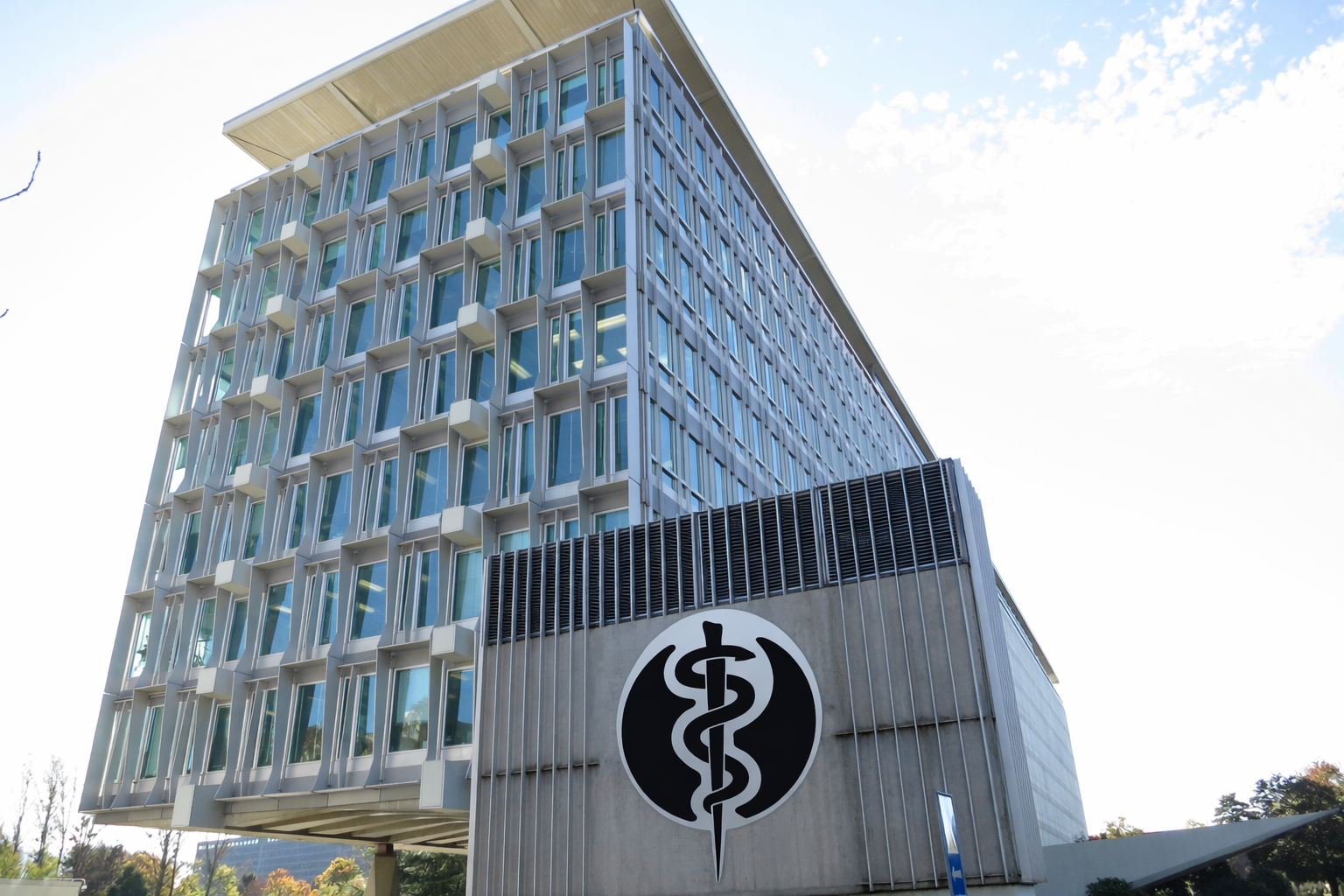
The World Health Authority and Tribunal (WHAT, WHA-T, or World Health Authority; Atlish: Wereld Helþsbord ond Deeming, WHD) is a specialised agency and organisation based in Sevenoak, Great Sutherland, which handles international public health issues, as well as emergencies related thereto. It has a number of international subsidiary offices. The WHAT's purpose is to maintain the Leiria Statute's "right to health", as ensured by the treaty of that name in 1916, in the aftermath of the Meterran flu pandemic, and was formally established in 1929. The Leiria Statute defines health as "a state of complete physical, mental and social well-being and not merely the absence of disease or infirmity."
The key functions of the WHAT are:
- Promoting and co-ordinating the control, surveillance, and mitigation of epidemics and pandemics, as well as endemic diseases;
- Promoting and co-ordinating the training of healthcare professionals, especially in countries lacking in the capacity for domestic training (e.g. LMIC countries);
- Co-operation on production, and funding, for world-leading research on medicines, vaccines, life sciences, and other public health issues;
- Promoting and co-ordinating international standards for biological and medicinal products, as well as the classification of diseases;
- Collective procurement of research and medicines.
History and Foundation
The Meterran flu pandemic hit the world, particularly the Eastern Hemisphere, in 1912; countries including Sutherland, Yalkan, Prydania, Astragon, Hessunland, Iraelia, Scalvia, and South Ethia were all impacted by the disease. Over the course of the pandemic, millions died (with 180,000 dying in Sutherland alone), while the death rate reached roughly one-half of all infected; this overwhelmed many health systems, and critically harmed their economies, while co-ordination was often difficult due to poor public health awareness and insufficient healthcare infrastructure. This led to the signature of the Leiria Statute by a number of countries in its aftermath, agreeing to codify the right to health, and to co-operate on public health issues, however the eventual formation of the WHAT was delayed by international events such as the rise of Richeism in Sutherland until its eventual formation in 1929; official work began in January of 1930.
Process
The WHAT creates a Health Authority Report (HAR) each December, assessing and analysing international health and trends therein, while its current priorities include communicable diseases, diseases "ignored" by pharmaceutical companies (e.g. NTDs/neglected tropical diseases) in hotter and less developed countries, heart disease and cancer research, diet and obesity prevention, food and nutrition security, occupational health, and substance abuse, as well as the dissemination of vaccines. The agency advocates for universal health care coverage, engagement with the monitoring of public health risks, coordinating responses to health emergencies, and promoting health and well-being generally.
The WHAT appoints an executive board, with one member per country, as well as a Director-General, who together control the budget and priorities of the association. The WHAT is primarily funded by member governments, as well as private donors. This executive board then meets yearly, at the WHA (World Health Assembly).
The WHAT also has a WHT (World Health Tribunal) to enforce the Leiria Statute; this is comprised of 9 judges, who are elected by the WHA on fixed 7-year terms, with required qualifications (no active politicians; must have a senior regulatory or legal background and qualifying degree thereof). The Tribunal also has a Chief Prosecutor, appointed by the Director-General, whose role it is to oversee investigations, whose office (the Secretariat) is staffed by legal investigators, epidemiologists, data analysts, and auditors. The Tribunal may also be referred to by the IACJ (ICHR), on human rights issues that involve the right to health. Where violations are found, reductions of voting access, fines, oversight missions, in loco visits, data-sharing mandates/transparency reforms, and authorised inspections may result.
Finally, the WHAT operates an Emergency Response Force (ERF); its role is to contain epidemics and pandemics, stabilise problematic or collapsing health systems or those in war zones, provide emergency care in disasters, and work with Blue Cross / Red Heart societies to deliver humanitarian and medical aid. It is split into two organisations; the Full-Time ERF and Reserve, the former of which are the core permanent staff (from field epidemiologists, doctors, and trauma surgeons/nurses to technicians, logistics officers, and engineers or IT specialists), and the latter of which are seconded staff from international national health services who are activated during the deepest emergencies, to prevent a repeat of the disconnect during the Meterran flu pandemic. The ERF also has control over the Logistics and Supply Command (LS-Com), who handle airlifts, mobile hospitals, power and water in these situations, and vaccine storage. They are based at Command Centre One (CC-1), in Eamont, with regional offices in each continent; each continental HQ hosts storage for stockpiles, and staff, while the ERF is provided training under the WHAT umbrella. Thus, the ERF holds a small, independent force of airlift assets, but largely relies on secondment from member nations for most of its typical operations.
Member nations, including Sutherland, usually release yearly reports on health issues and services to maintain their obligation to the right to health, as well as to co-ordinate responses to trends in public health and epidemiology. Funding is controlled by core assessed contributions (CACs) based on a nation's GDP (with Sutherland contributing, excluding its voluntary commitments, 160mn IBU/ʃ250mn in 2025), as well as specified and thematic voluntary contributions (SVCs and TVCs) that are not mandated in order for full participation in WHAT to be enabled (with Sutherland contributing, excluding its core commitments, 790mn IBU/ʃ1.1bn).
Current debates within the WHAT include the potential reform to make it able to move past IP (intellectual property) law during pandemics, the enforcement of reports and rulings from the Tribunal, the use of the "Red Alert" protocol within the WHAT and standing visas to allow entry for ERF personnel/taskforces into participating WHAT nations, and friction over regulation of "high-security" laboratories.
NB: For the time being, the Leiria Statute is background canon equivalent to the WHO Constitution. This may be changed in coming months/years
World Health External Network (WHEN)
The World Health External Network is an associate organisation of the WHAT, specifically established for states that do not want to take part in the Tribunal, Secretariat, or international law mechanisms of the WHAT organisation, but who do wish to maintain their ties to international public health, maintain the benefits of co-operation on public health issues, and commit to the WHAT's core principles of ensuring the right to health is maintained. This has been described as "WHAT without the T", as a result of its derogation from the Tribunal.
Set up in 1966, WHEN members agree to pay an amount similar to the core assessed contributions, known as the "associate assessed contributions" (AACs), for observer status in the WHAT. WHEN members may appoint a non-voting representative to the executive board, and can gain access to most WHAT supply chains. The ERF still has an obligation to aid WHEN members, but as a result of the prima facie rule, operational priority is accorded to WHAT members if resources are constrained. WHEN members do not have binding influence on the standardisation and classification goals of WHAT, but still follow WHAT standardisation and have non-binding influence. Finally, WHAT-subsidised medicines and vaccines, as well as production thereof, are subject to market rates for WHEN members rather than preferential collective procurement rates as apply to WHAT. WHEN members gain (solely reciprocal) access to the global epidemic/pandemic/disease surveillance network and related public health data, and have the freedom to choose (for a set thematic voluntary contribution level) which thematic specific WHAT programmes they wish to participate in. WHEN membership does not preclude members from future membership in the WHAT. WHEN members may also participate in working groups on a non-voting basis, and their researchers will still contribute to reports and research.
OOC Application:
Greetings!
Code:
[b]Nation Name:[/b]
[size=5][b]World Health Authority and Tribunal[/size][/b]:
[b]Does your nation accede to the WHAT and the Leiria Statute?[/b] [Aye / No]
[b]Name of your nation's representative on the executive board:[/b] -
[b]Notes: [Put anything you want here about that representative][/b] -
[b]Does your nation wish to nominate a judge to the Tribunal?[/b] [Aye / No]
[b]If so; name of your nation's judge on the Tribunal:[/b] -
[b]Notes: [Put anything you want here about that judge][/b] -
[b]Does your nation NOT accede to the WHAT and Leiria Statute (and thus NOT appoint any judge, and their representative's vote does NOT bind), but wish to join the World Health External Network (WHEN)?[/b] [Aye / No]
Example application
Nation Name: Great Sutherland, the Commonwealth of
World Health Authority and Tribunal:
Does your nation accede to the WHAT and the Leiria Statute? [Aye]
Name of your nation's representative on the executive board: Dr. Alva Marske (since 31 October, 2023)
Notes: Anesthesiologist (since 1990), professor at the Loresteads of Yrwell and Maltash (2007-2010, 2016-2019), author of several articles and two books, member of the Association of Specialist Practitioners of Eamont (ASPE; 2011-2016), notable protester against cuts and privatisations to Eamont health services from within LHA boards (late 2010s), Chairman of the LHA (2020-2023), appointed to replace predecessor Dr. Carew Kinsey (who is now Sutherland's state epidemiologist) in 2023
Does your nation wish to nominate a judge to the Tribunal? [Aye]
If so; name of your nation's judge on the Tribunal: - Konstantinu-Xandru Muscat (since 31 January, 2021)
Notes: Degree in law and masters in healthcare law from the Università ta' Lavada; professor at the ULE (United Loresteads of Eamont; 2010-2014), judge on the Provincial Court of Halfpenny (2014-2019), Attorney General of Halfpenny (2019-2020), IACJ Ad Hoc Judge (2020-2021)
Last edited:


